Amanda Palmer Tarot Cards
Browse the recovered Amanda Palmer Tarot card fronts from the original embedded Pinterest board. The surviving source is partial, so this Gallery stays transparent rather than being padded with uncertain cards.
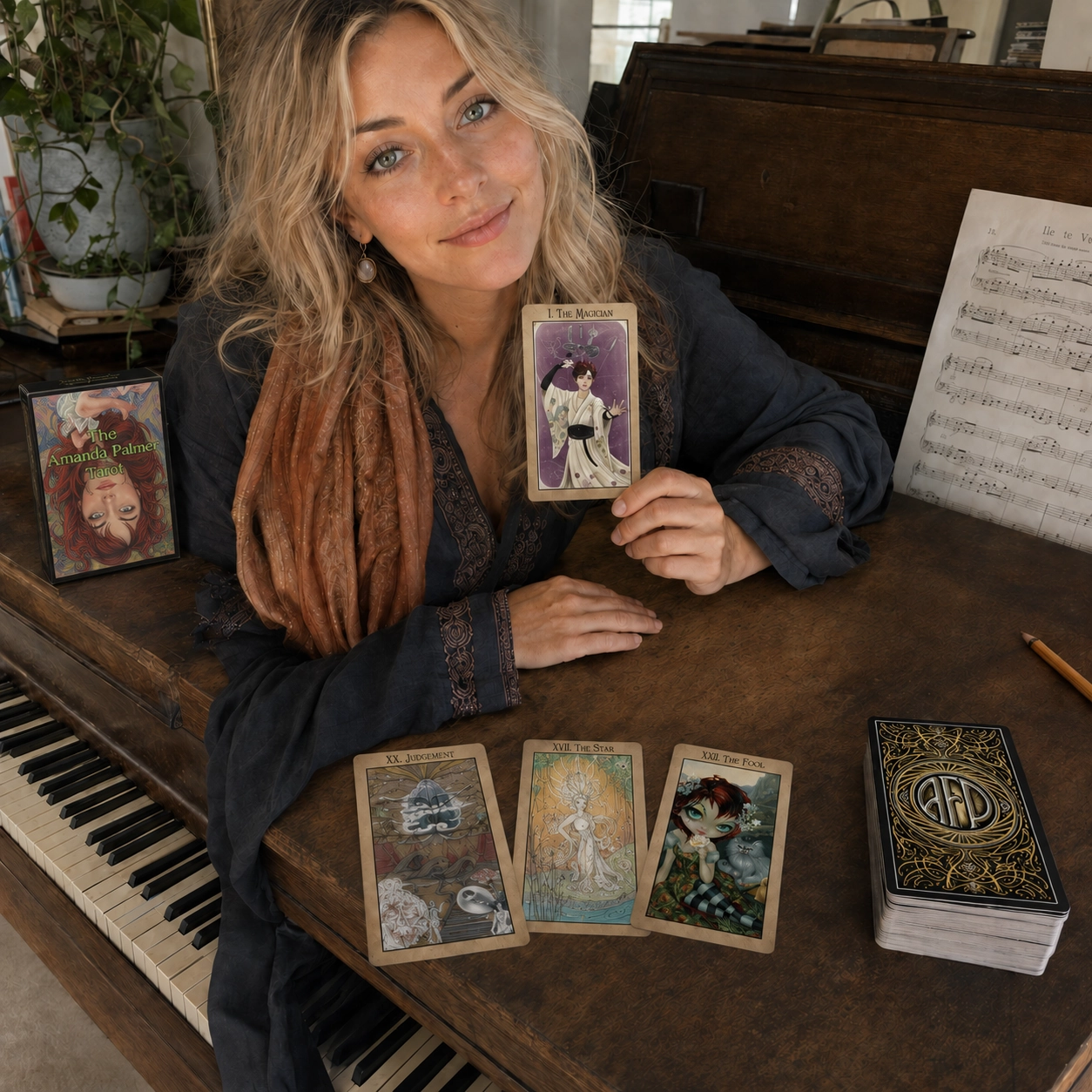
Aurica’s Quick Take
The Amanda Palmer Tarot is a fan-made, collaborative art deck inspired by Amanda Palmer, her songs, her performance world, and the emotional electricity around her audience. It is not a quiet beginner deck that politely repeats the Rider-Waite-Smith images. It is a messy, theatrical, heart-on-the-table tarot deck: part tribute album, part indie art show, part magical scrapbook.
If you already love Amanda Palmer, the deck feels like opening a room full of artists responding to the same storm from 78 different windows. If you are new to her work, the deck can still read beautifully, but it asks you to enjoy collage, symbolism, fan culture, and big emotional tone.
Best for: collectors, Amanda Palmer fans, intuitive readers, art-deck lovers, shadow work, creativity spreads, journaling, and readings where mood matters as much as textbook meaning.
Less ideal for: absolute beginners who want one consistent illustration style on every card, or readers who need a fully traditional visual clue on every minor arcana card.
I love how this deck lets beauty and discomfort share the same piano bench. I begin with the image that catches in my chest, then test that feeling against the card’s traditional role and the cards beside it. The shift from tenderness to theatre often reveals where a reading wants honesty rather than polish.
For creative questions, I reach for it when the answer may arrive as a lyric, a colour, or an awkward truth before it becomes a neat sentence. Even when the stage lights wobble, this deck reminds me that one honest note can become the first brave chord of something beautiful.
What Is the Amanda Palmer Tarot?
The Amanda Palmer Tarot began as a fan-powered creative project and grew into a full tarot deck made with the help of many artists. Each card is a separate interpretation of tarot through the lens of Amanda Palmer’s music, theatre, vulnerability, punk-cabaret spirit, and community.
That means the deck has a very different personality from a single-artist tarot. A single-artist deck often feels like one dream. This one feels like a festival: different voices, different media, different moods, and a shared emotional thread. Photography, illustration, digital art, portraiture, collage, and surreal scenes all sit together.
The result is not perfectly smooth, and that is part of the point. Amanda Palmer’s creative world is rarely about smoothness. It is about honesty, intensity, confession, performance, grief, humor, anger, tenderness, and the strange relief of being seen. The deck carries that same edge.
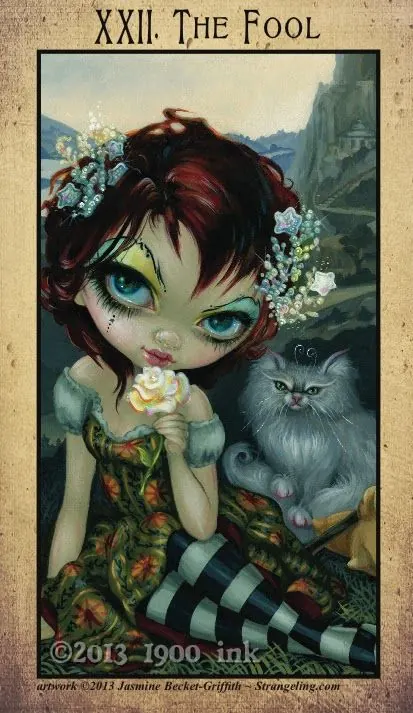
The Fool: brave, strange, and ready to leap
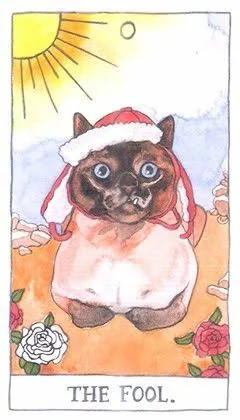
The Fool in this deck feels less like a blank beginner and more like an outsider stepping into a story with full theatrical courage. In a reading, I would use it for the moment before a creative risk: starting the project, telling the truth, booking the gig, leaving the safe script behind.
Reader tip: ask, “What part of me is ready before the rest of me feels ready?” That question fits this deck better than a dry “new beginnings” keyword.
Art Style and First Impressions
The artwork is the main reason to spend time with this deck. Some cards are lush and polished. Some are raw and handmade. Some feel like posters from a secret theatre. Others feel like private journal pages. The deck does not try to hide the fact that many artists are involved; it celebrates it.
For collectors, that variety is the magic. You are not just collecting a tarot system; you are collecting 78 little conversations between tarot, Amanda Palmer, and the artist who made that card. The majors especially feel like a gallery walk, while the suits carry flashes of song, stage, grief, absurdity, and defiance.
For readers, the variety can be both inspiring and challenging. A consistent deck lets your eye settle quickly. This deck makes your eye wake up. You may need an extra breath with each card. But that extra breath can open deeper intuitive detail.
How the Amanda Palmer Tarot Reads
This is an intuitive, mood-forward tarot deck. It can absolutely follow Rider-Waite-Smith structure, but it does not always hand you the answer in a beginner-friendly way. The best readings happen when you let the image, the songlike atmosphere, and the traditional card meaning speak together.
For example, a Cups card may not show the exact classic scene you expect, but it may show longing, performance, intimacy, or the strange way emotion becomes art. A Swords card may speak through tension, posture, or theatrical sharpness rather than a literal sword-counting scene. A Wands card may feel like creative fire, stage presence, rebellion, or burnout.
In simple daily pulls, I would read this deck as a mirror for emotional weather. In deeper spreads, I would use it for questions about creativity, visibility, identity, devotion, fandom, and the cost of making art in public.
Card moment: the deck’s creative voltage
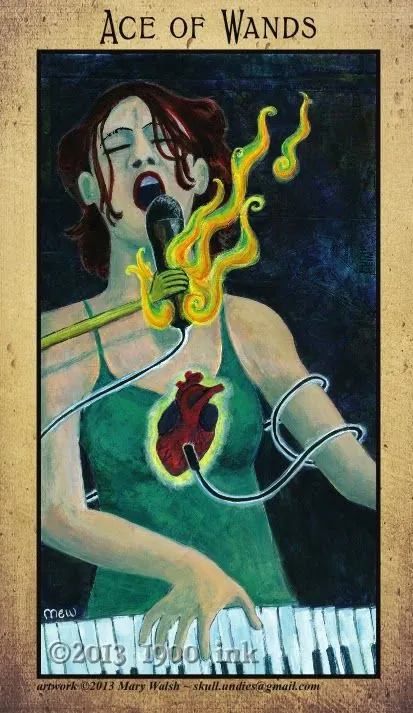
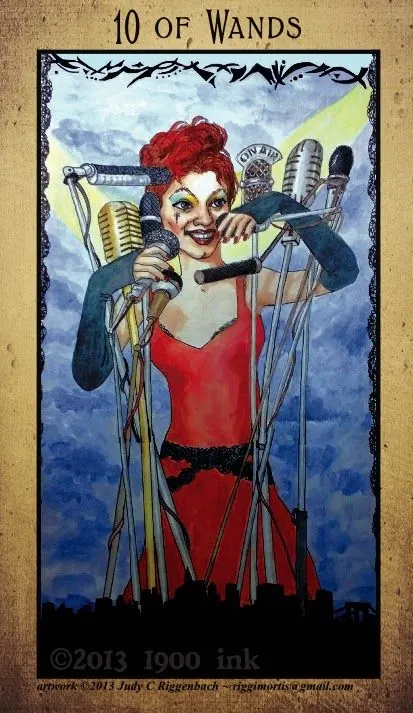
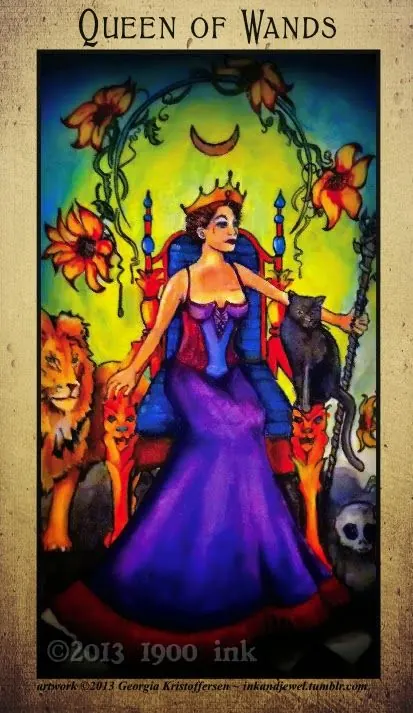
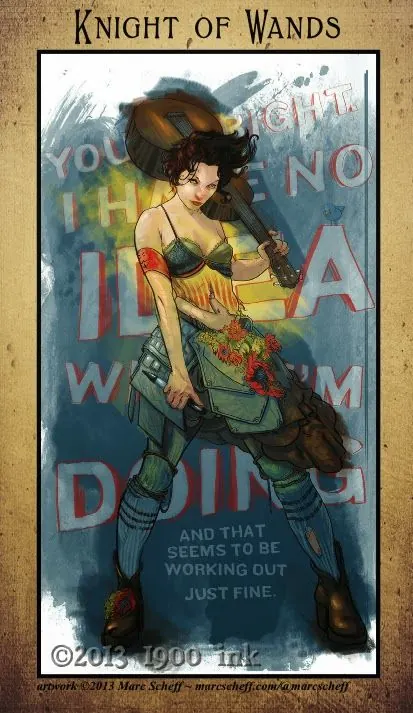
These Wands cards show why the deck works so well for creative readings. The fire here is not only motivation. It can be performance, pressure, exhaustion, audience energy, and the wild spark that keeps an artist moving.
Beginner Friendliness
I would not choose the Amanda Palmer Tarot as a first-ever learning deck unless the reader is already very connected to Amanda Palmer or very comfortable with art interpretation. The card meanings are there, but they are sometimes filtered through a fan-art, music, and performance language that beginners may find less direct.
For a beginner who loves the deck, I would pair it with a clear Rider-Waite-Smith guidebook or a standard deck. Pull the same card from both decks and compare. Ask: what does the traditional image tell me, and what does the Amanda Palmer version make me feel?
For intermediate readers, this deck can be excellent. It pushes you away from memorized phrases and into actual reading. That is where tarot becomes alive.
Easy, Medium, and Hard Reading Examples
Easy question: “What energy should I bring into my creative work today?” If you pull the Ace of Wands, the answer is simple: begin with heat. Do the first passionate thing before you over-plan it.
Medium question: “Why do I feel blocked around sharing my work?” If the 7 of Swords appears, I would look at secrecy, self-protection, and the fear of being judged. The question becomes: are you hiding because the work is not ready, or because being seen feels dangerous?
Hard question: “What is my relationship with the audience I want?” If The Lovers, The Hierophant, and 10 of Cups appear together, this deck may speak about belonging, community, worship, projection, and the blurry line between devotion and performance. A skilled reader would not flatten that into “love is coming.” They would ask where connection becomes identity.
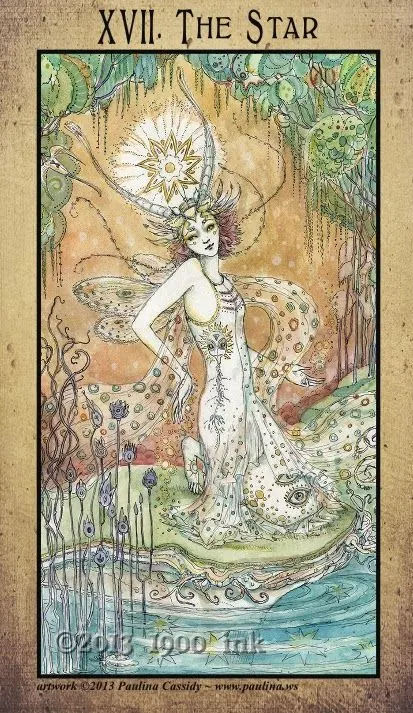
The Star: healing after the performance
The Star is one of the gentler places in the deck. After the louder cards, it feels like a candle still burning after the show is over. In a reading, I would connect it with recovery, hope, and the tender work of becoming whole after exposure.
Reader tip: when The Star appears here, do not rush straight to optimism. Ask what kind of care the nervous system needs before hope can feel real.
Best Uses for the Amanda Palmer Tarot
- Creative blocks: especially when fear, audience pressure, or perfectionism is involved.
- Shadow work: the deck is comfortable with grief, intensity, awkwardness, and contradiction.
- Music and art journaling: pull a card, choose a lyric or memory, and write from the emotional overlap.
- Collector study: compare how different artists solve tarot symbolism across one shared theme.
- Identity readings: useful for questions about public self, private self, and the masks we choose.
Card moment: tension, choice, and truth-telling
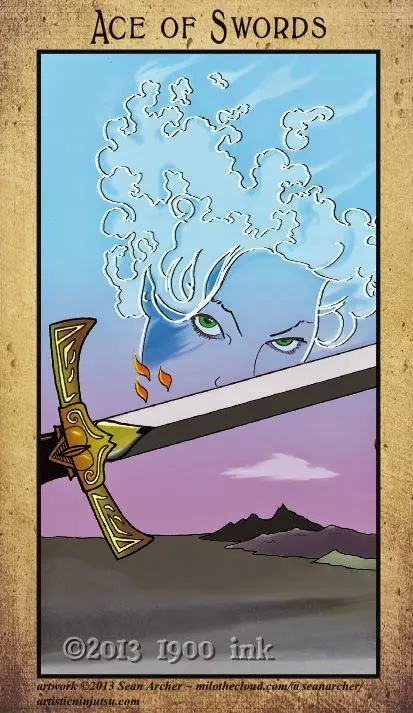
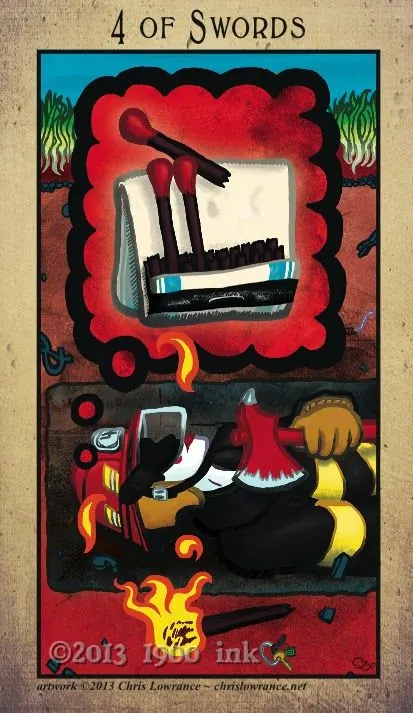
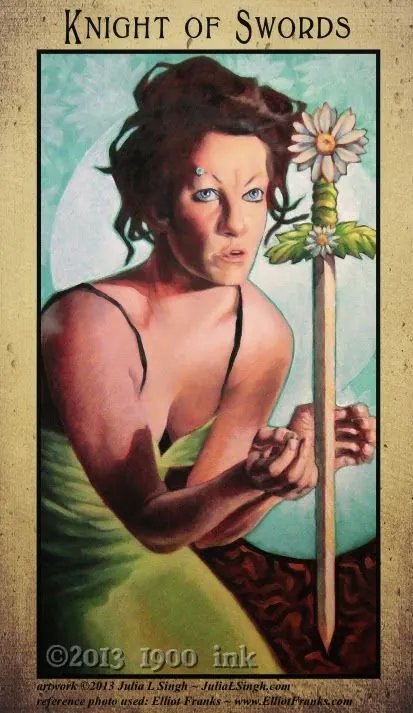
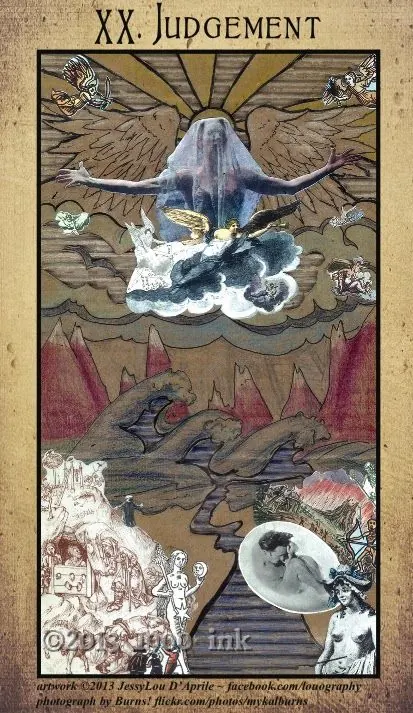
The Swords and Judgement cards make the deck especially good for honest conversations: what needs to be said, what needs rest, and what truth is asking to be heard without becoming cruel.
What I Like Most
I love that this deck feels emotionally unfiltered. Many tarot decks are beautiful, but controlled. The Amanda Palmer Tarot is beautiful in a more human way. It can be odd, dramatic, funny, bruised, glamorous, and uncomfortable within the same reading.
That makes it especially good for questions where the truth is not neat. Creative life is not neat. Love is not neat. Healing is not neat. Art made by many hands is not neat. The deck understands that.
Card moment: emotion, intimacy, and performance
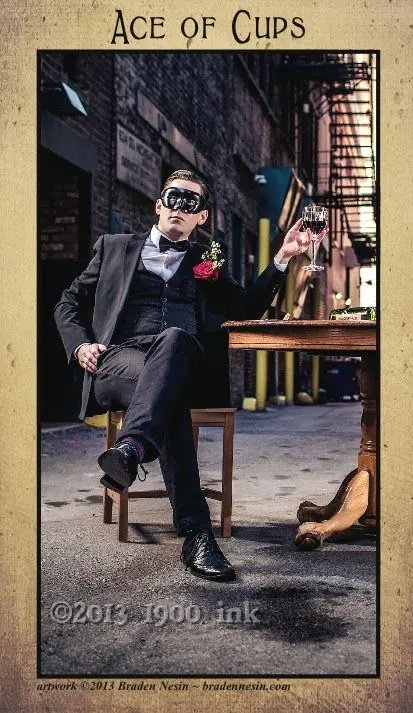
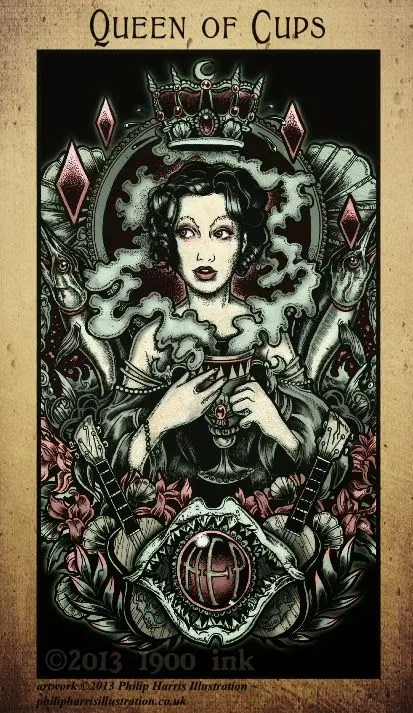
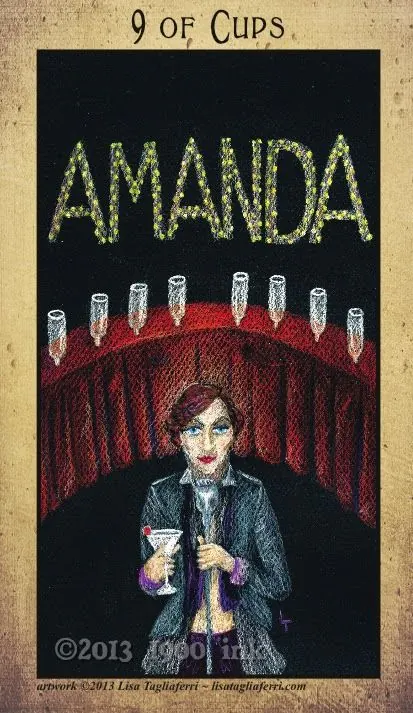
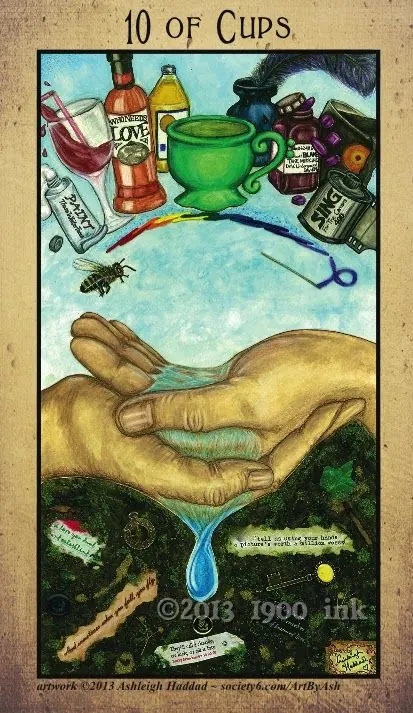
The Cups suit shows the deck’s emotional range: tenderness, theatre, longing, celebration, and the private feeling underneath public expression.
What to Know Before Buying or Collecting
This is a niche art deck, and availability can change. It originally lived around a Kickstarter-style project world rather than a mass-market bookstore shelf. Before buying, check the current source carefully and make sure you understand whether you are looking at an original edition, a resale copy, or only project information.
Also remember that the deck’s multi-artist style is the feature, not a flaw. If you want one smooth visual voice from card one to card 78, this may frustrate you. If you want a deck that feels like a collaborative altar to an artist and a community, it becomes much more compelling.
Judgement: the call that cannot stay quiet
Judgement is powerful in a deck about voice, art, and public truth. Here it can point to the moment when something inside you demands expression. Not because it is easy. Because silence has become heavier than sound.
Reader tip: ask, “What truth is asking to be witnessed now?” That keeps the card grounded and avoids turning it into a scary verdict.
Reading Tip for This Deck
Do not force the Amanda Palmer Tarot to behave like a tidy textbook deck. Let it be theatrical. Let it be strange. Read the traditional meaning, then read the emotional temperature of the image. The truth of the card is often in the friction between those two things.
Final Thoughts
The Amanda Palmer Tarot is not for everyone, and that is part of its charm. It is a deck for people who like tarot with fingerprints on it: personal, collaborative, imperfect, intense, and full of art-world electricity.
As a reading deck, it rewards patience and intuition. As a collector deck, it is a fascinating snapshot of fan creativity and tarot devotion. If Amanda Palmer’s work already means something to you, this deck will likely feel more like a magical artifact than a simple card set.
If you are choosing it purely as a learner deck, I would be careful. But if you want a deck that turns readings into an emotional stage, the Amanda Palmer Tarot has a voice all its own.
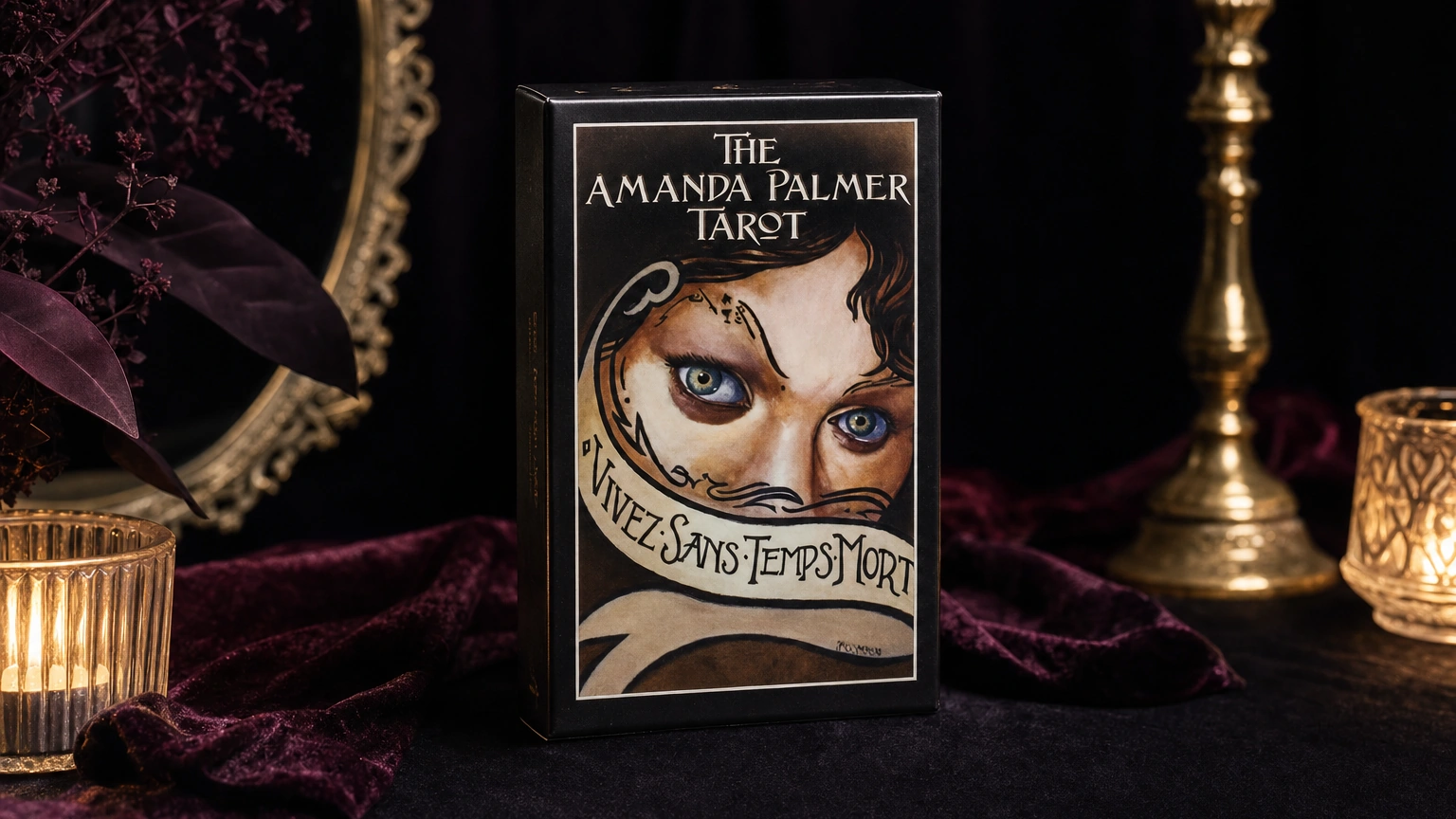
Amanda Palmer Tarot FAQ
Is the Amanda Palmer Tarot an official Amanda Palmer deck?
The deck was created as a fan-powered collaborative project inspired by Amanda Palmer, with the project connected to her approval in the original campaign language. Because availability and edition details can change, collectors should always check the current source before buying.
How many Amanda Palmer Tarot cards are in the full deck?
The intended tarot deck is a full 78-card tarot. The recovered gallery on this review is transparent: the surviving source exposes only a partial set of usable card fronts, so TarotFans shows those recovered images rather than padding the Gallery with unrelated replacements.
Is the Amanda Palmer Tarot good for beginners?
It can work for a beginner who is very drawn to the art, but it is not the easiest first deck. The many-artist style and symbolic references make it better for intuitive readers, collectors, or beginners who also study with a traditional Rider-Waite-Smith guide.
What kind of readings suit the Amanda Palmer Tarot best?
It shines in creativity readings, shadow work, journaling, identity questions, performance/public-self questions, and emotional readings where atmosphere matters. It is less ideal for very fast, keyword-only readings.
Why does the artwork change so much from card to card?
The variety comes from the collaborative structure. Many artists contributed individual cards, so the deck reads like a curated fan-art exhibition rather than a single-artist tarot. That makes the deck more eclectic, but also more emotionally layered.
Does the Amanda Palmer Tarot follow Rider-Waite-Smith meanings?
Broadly, yes, but it often interprets the meanings through Amanda Palmer-inspired imagery, music, theatre, and emotional symbolism. Readers who know Rider-Waite-Smith will have an easier time translating the cards.