Children of Litha Tarot Card Gallery
Explore this verified selection from the Black Edition. Tap any card to open the larger carousel, or use the filters to browse its traditional tarot groups.
Aurica’s Quick Take
The Children of Litha Tarot by Alexandria Huntington is a lush, animal-filled tarot deck for readers who want classic tarot structure wrapped in myth, instinct, forest symbolism, and midsummer magic. It feels protective and wild at the same time: gentle enough for daily reflection, but detailed enough for deep shadow work.
This is not a plain keyword deck. It asks you to look at posture, creature energy, seasons, color, and atmosphere. If you like tarot that feels like a walk through an enchanted woodland, this deck gives you plenty to explore.
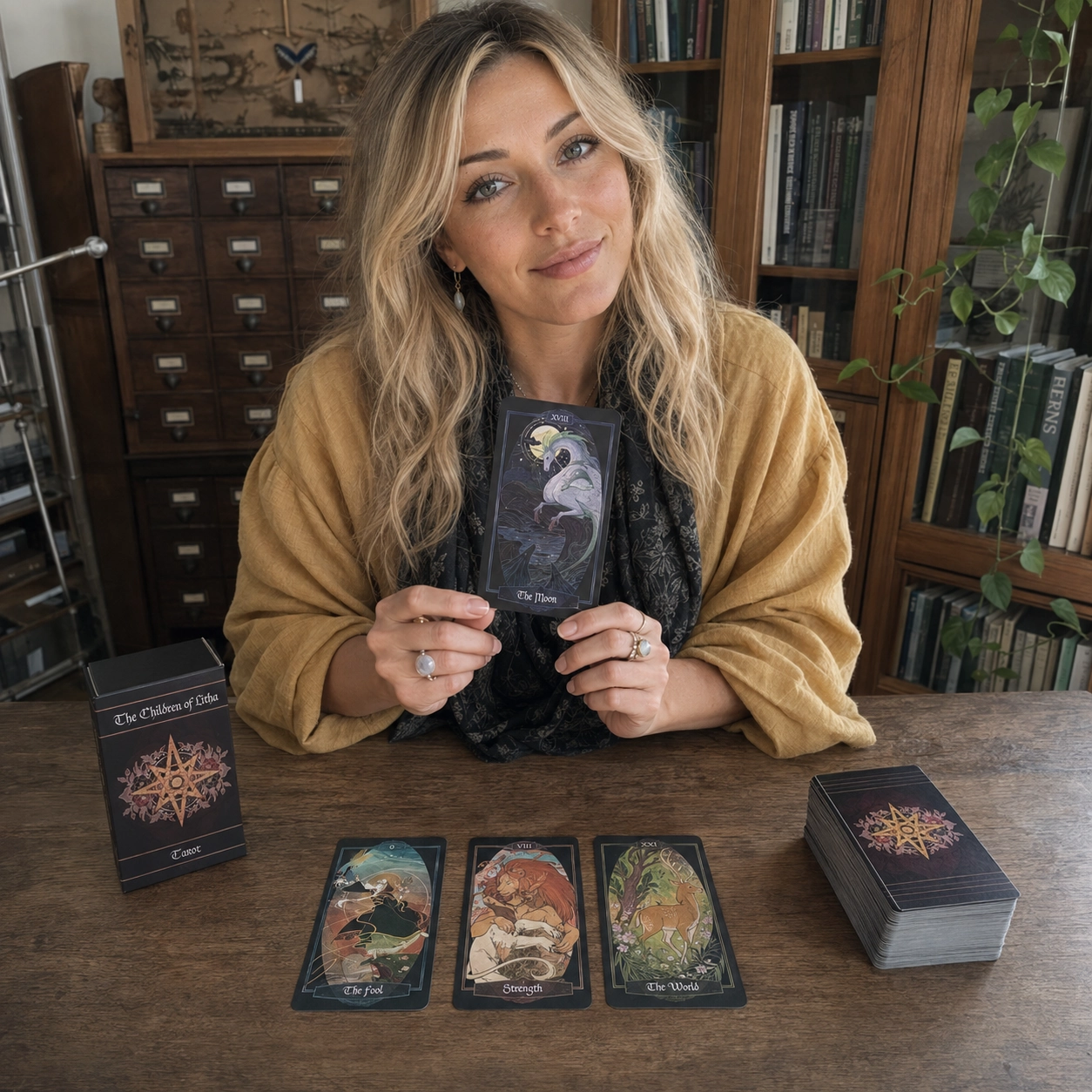
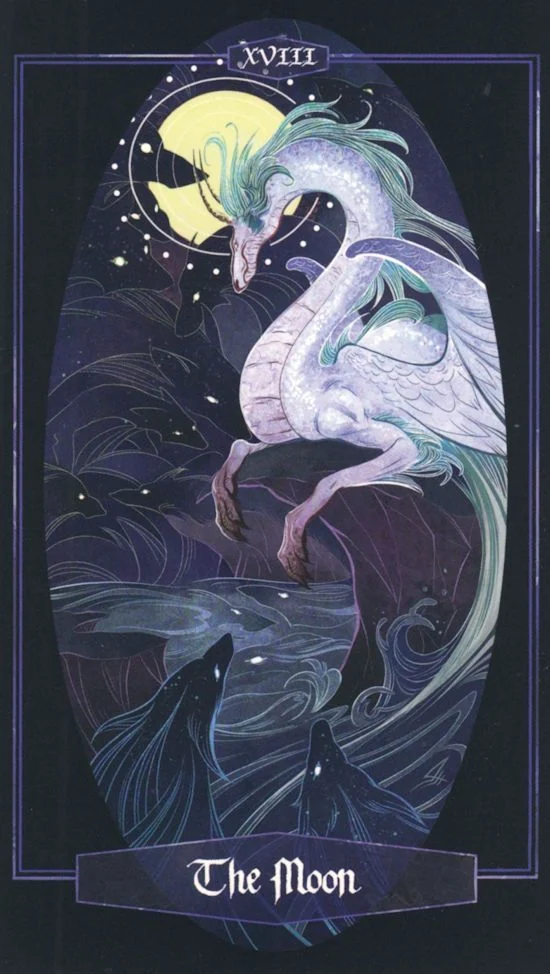
I am especially drawn to The Moon, where the pale bird seems to carry both grace and unease across dark water. In a reading, I let that contrast slow me down: beauty can be true while certainty is still out of reach. Beside The Fool or Strength, it asks whether I am meeting the unknown with curiosity, courage, or a story fear has quietly written for me.
I read this deck by noticing the animal first—its gaze, posture, movement, and the space around it—then returning to the card’s familiar tarot role. The surrounding cards tell me whether that creature is guarding, warning, inviting, or simply asking for patience. That small pause keeps the imagery alive without letting intuition float away from the question.
I reach for Children of Litha when a situation feels tangled beneath polite words, because its creatures make instinct visible. It can bring tenderness to love readings, honest momentum to creative choices, and a useful sense of season to change.
Its woodland voices remind me that even the darkest path keeps a thread of midsummer light, and I can always follow that glow toward one brave, hopeful next step.
What makes Children of Litha Tarot feel different?
The strongest feature of Children of Litha Tarot is its sense of living nature. Animals are not just decoration here. They become messengers, mirrors, guardians, and sometimes warnings. A creature may show courage, patience, grief, hunger, healing, or the need to protect your boundaries.
The name Litha points toward midsummer energy: warmth, growth, bright light, fertility, and the point in the year when nature feels loud and awake. The deck uses that feeling beautifully. Even the darker cards have a natural rhythm, as if they are saying that endings, fear, and uncertainty are part of the same forest as joy and abundance.
Deck-specific card study
Reading the animal first
With this deck, begin by asking what the animal or creature is doing before you jump to a memorized meaning. Is it watching, moving, guarding, resting, hunting, hiding, or transforming? That first visual clue often tells you whether the message is active, patient, emotional, or protective.
Then add the traditional tarot meaning. This keeps readings grounded while still letting the Children of Litha artwork speak in its own voice.
How this deck reads in practice
Children of Litha Tarot reads best when you slow down. The artwork is detailed, so a rushed reading can miss the most useful symbol. Try naming three things you notice in the card before looking up the meaning: one creature, one color, and one mood. That simple habit makes the deck much easier to understand.
For everyday questions, the deck can feel wise and practical. It is especially good for questions about emotional patterns, self-trust, boundaries, family stories, creative growth, and the difference between fear and intuition. It does not need dramatic questions to work well. A gentle question such as “What needs care today?” can bring out some of its best guidance.
Four-card moment
Four ways instinct enters the room
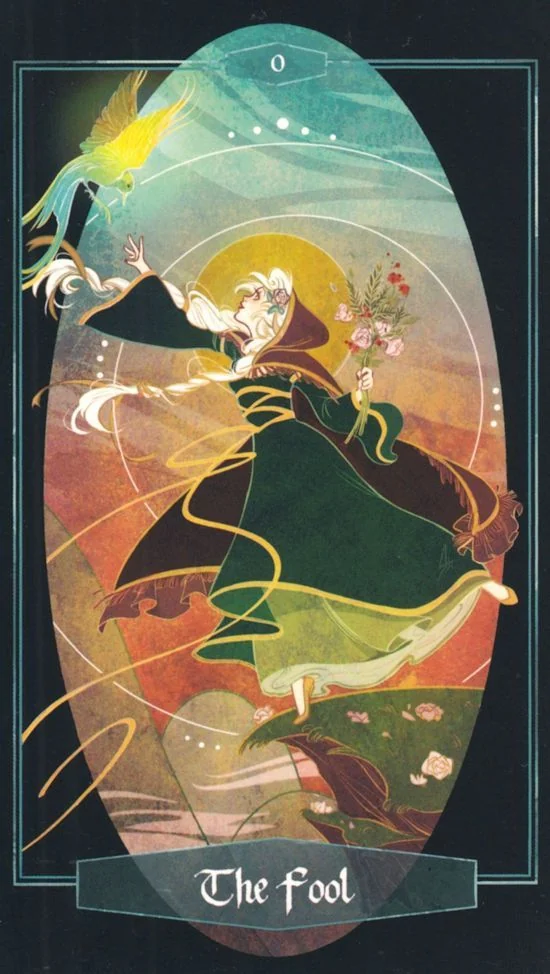
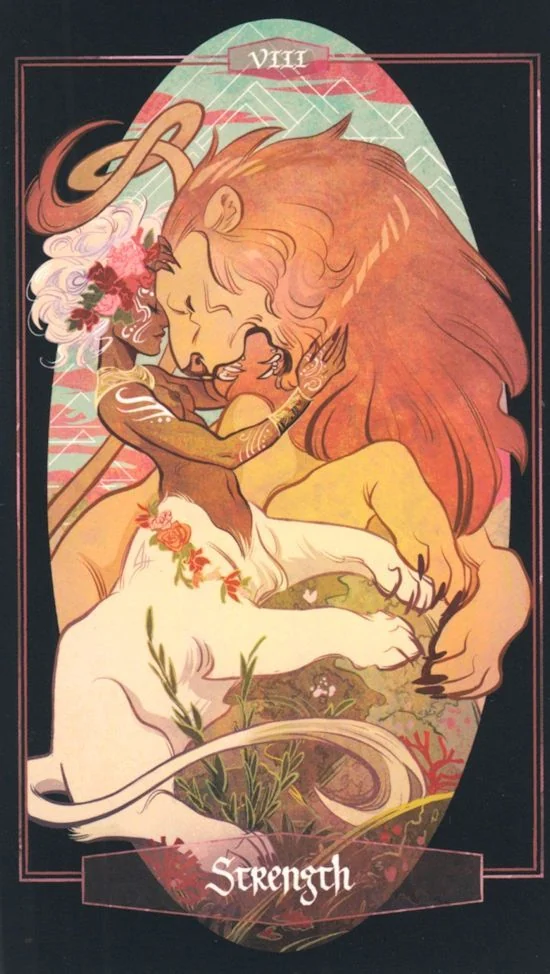
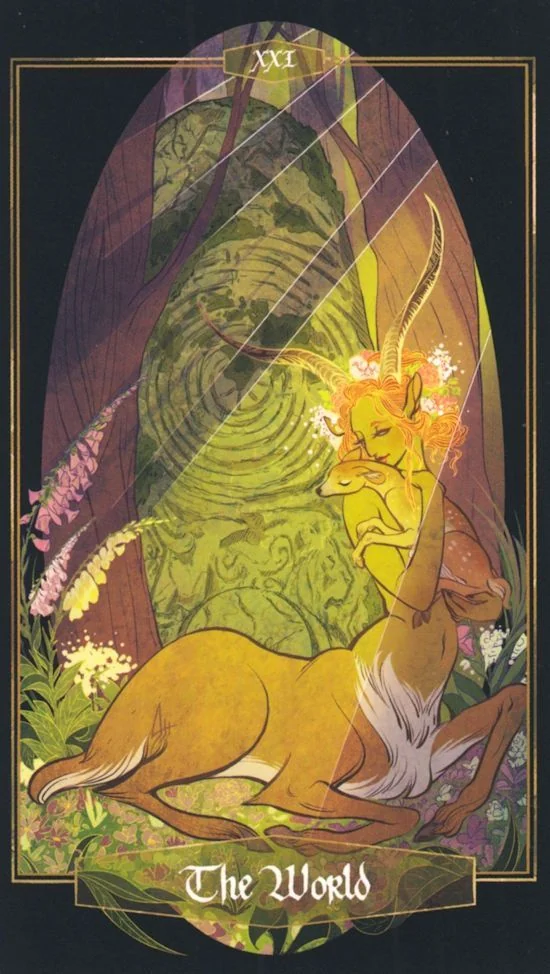
The Fool, Strength, The Moon, and The World move from curious beginnings through embodied courage and uncertainty toward belonging. Together they show how this deck lets animal presence turn an inner feeling into a readable path.

Beginner friendliness
Beginners can use Children of Litha Tarot, but it is friendlier for beginners who enjoy detailed art. If you want one keyword printed on every card, this may feel like a lot. If you learn by looking, journaling, and noticing symbols, it can be a beautiful first or second deck.
A good beginner method is the three-step Aurica method: name the card, name the creature or natural symbol, then write one sentence of advice. For example: “This card asks me to protect my energy before I offer help.” That keeps the reading clear and kind.

Reading tip
Use the scene as a doorway
Many cards in this deck feel like a small story rather than a single symbol. Notice the direction of movement, the light, and whether the card feels open or enclosed. Those details can show whether the situation is expanding, contracting, healing, or asking for patience.
This is why the deck works so well for journaling. You can return to the same card on a different day and notice a different part of the scene.
Love and relationship readings
For love readings, Children of Litha Tarot is best for honest emotional questions. Instead of asking “Will they come back?”, try “What pattern is repeating between us?” or “What does my heart need to feel safe?” The animal symbolism can make relationship dynamics easier to see without turning the reading into blame.
It is also useful for friendship and family questions because it shows instinct, protection, tenderness, and tension in a very visual way. The deck can help you notice where someone is acting from fear, loyalty, desire, or the need for space.
Career, money, and creative readings
This is not a corporate-looking deck, but it can still be helpful for work and money questions. Its strength is motivation, timing, stamina, and intuition. It can show when to conserve energy, when to act, when to collaborate, and when a project needs more time to grow.
Creative readers may love it most. The artwork can work like a story prompt. Pull one card and ask: What creature am I today? What landscape am I moving through? What gift is hidden in this challenge? Those questions can open writing, art, planning, and personal reflection.
Four-card moment
A conversation across the four suits
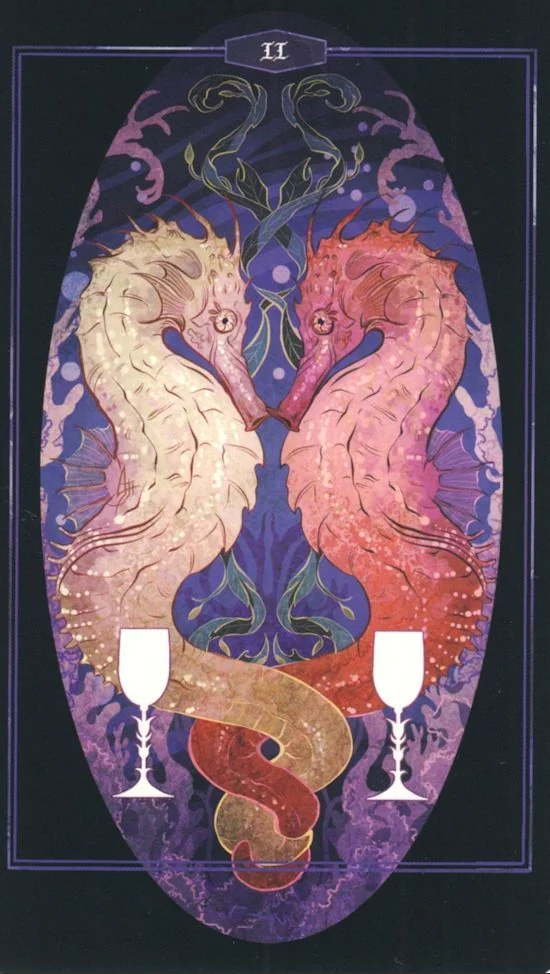
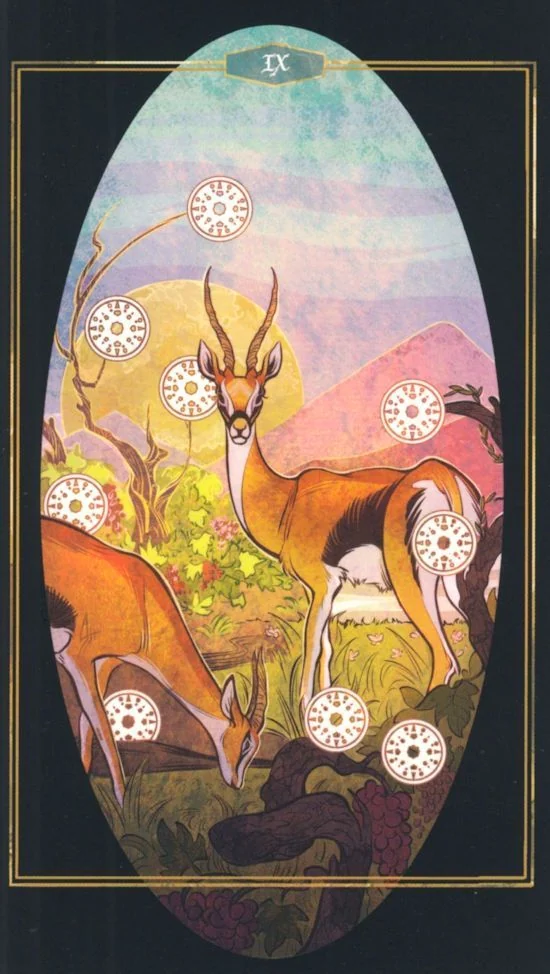
Ace of Wands sparks movement, Two of Cups asks for honest exchange, Three of Swords names the tender truth, and Nine of Pentacles restores grounded self-trust. Read together, they carry one question from desire through feeling and clarity into a life that can hold the answer.


Art style and deck personality
The personality of Children of Litha Tarot is ornate, mythic, and earthy. It has a fantasy-tarot feeling, but it is not empty fantasy. The best images feel symbolic and emotional, with animals carrying messages that are easy to remember after the reading ends.
The palette and detail make it feel more like a collector deck than a minimal study deck. That is part of its charm. It invites you to spend time with it. If your favorite decks are soft, plain, and ultra-modern, this one may feel busy. If you enjoy layered scenes, it can feel rich and rewarding.
Who will love this deck?
- Animal lovers who read tarot through instinct and body language.
- Nature witches, seasonal readers, and Litha or sabbat-focused practitioners.
- Fantasy-art collectors who want a full 78-card tarot deck with strong atmosphere.
- Journalers who like to explore one card slowly.
- Readers who want classic tarot meanings with a more mythic, creature-led voice.
What to know before buying
Buy this deck for the art and the mood, not because it is the simplest deck on the shelf. The details are part of the reading experience. That means it rewards practice, but it may take a few sessions before you feel fully at home with it.
Also remember that highly illustrated decks can feel different in person than they do online. Use the gallery above to check whether the symbols, colors, and creature style feel inviting to you. A deck should make you want to keep learning.
Aurica’s golden rule for reading with Children of Litha Tarot
Let the animal speak first, then let tarot structure organize the message. If you only read the creature, the answer can become too vague. If you only read the textbook meaning, you miss the deck’s magic. The sweet spot is the meeting of both.
Ask: “What instinct is awake here?” Then ask: “What is the tarot card teaching?” Together, those two questions make the reading clearer, warmer, and more useful.
Final thoughts
Children of Litha Tarot is a beautiful choice if you want a deck that feels alive with nature, myth, and emotional symbolism. It is especially strong for self-reflection, relationship patterns, creative work, seasonal readings, and questions where instinct matters as much as logic.
If you want a plain beginner deck, start somewhere simpler. But if you want a magical, animal-guided tarot that can grow with you, this one is worth a close look.
If you are comparing nature-rich tarot decks, keep exploring the TarotFans deck reviews for more Aurica-style guides.
Children of Litha Tarot FAQ
Is Children of Litha Tarot good for beginners?
Yes, if the reader likes detailed artwork and is willing to journal or look closely at the images. Absolute beginners who want very simple keywords may prefer an easier study deck first.
Who created Children of Litha Tarot?
The deck was created by Alexandria Huntington. Its style is known for mythic animals, nature symbolism, and fantasy-tarot atmosphere.
What kind of readings is this deck best for?
It works well for self-reflection, love patterns, emotional healing, seasonal readings, creativity, shadow work, and questions about instinct or personal growth.
Does it follow traditional tarot structure?
Yes. It is a 78-card tarot deck, so readers can still use familiar Major Arcana, Minor Arcana, and court-card meanings while reading the artwork intuitively.
Is the deck more light or dark?
It has both. The Litha theme brings warmth and life, but the animal and mythic imagery can also feel deep, wild, and shadow-aware.