Dark Night Of The Soul Tarot Cards
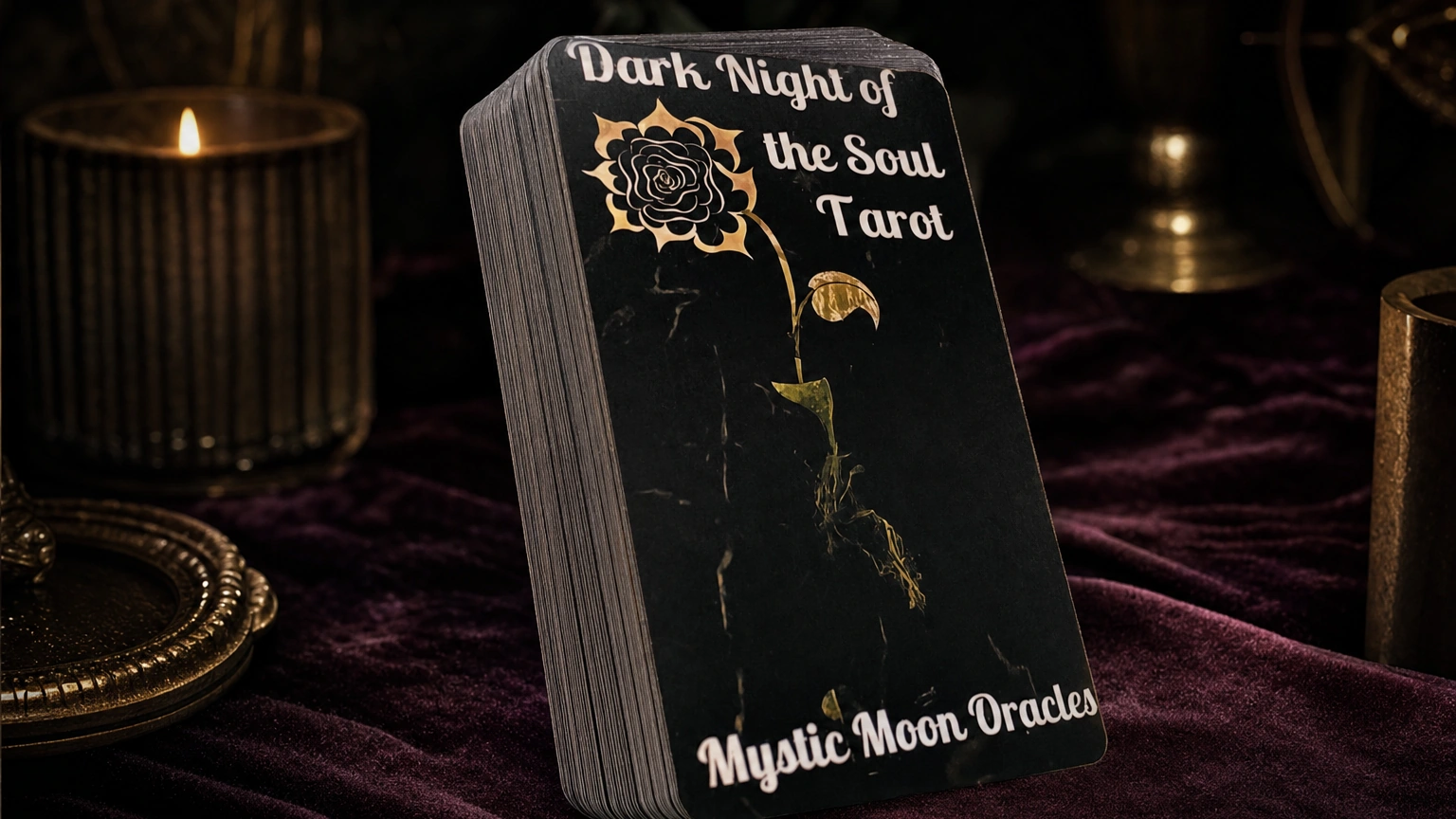
Browse this honest partial collection of recovered Dark Night Of The Soul Tarot card images. Use the deck-family filters below, then tap any card to open a larger carousel view.

A note from Aurica
I feel this deck before I try to explain it. The room seems to quiet around its charcoal cards, and each pale face or flare of fire arrives like something remembered in the middle of the night. Its renamed suits—Rage, Sorrow, Torment, and Decay—do not soften difficult feelings, but they do give those feelings shape. That honesty can be bracing, so I would open the deck slowly and let the first image that catches my breath set the pace.
Strength, renamed Caged Beast, is the card I keep returning to. The fence cuts across the central figure as though instinct itself has been locked away, while the faint face below suggests the quieter self that learned to survive by staying small. Beside Moon—Blackout—and Ace of Sorrow—Self-Loathing, I would not read that cage as a prediction. I would ask what part of the reader has been contained for so long that it now needs a safe, honest way to speak.
In a spread, I begin with the familiar tarot function, then listen to the deck’s sharper subtitle. Moon still speaks of uncertainty, but Blackout asks where awareness has gone missing. Ace of Sorrow still opens an emotional suit, yet Self-Loathing turns the first wound inward. I compare that message with the cards beside it, name what is visible without dramatizing it, and finish with one grounded question: what small act of care, truth, or boundary would bring a little light back into this scene?
I would choose Dark Night Of The Soul Tarot for private journaling, shadow work, grief, burnout, or a reading that needs compassionate honesty rather than quick reassurance. It asks for tenderness from the reader, because stark images can reveal a tender place without telling us how to hold it. Even here, among cages, eclipses, and sorrow, the cards leave a door open: when you can name the darkness with kindness, you have already begun to find your way through it.
Dark Night Of The Soul Tarot review: a shadow-work mirror
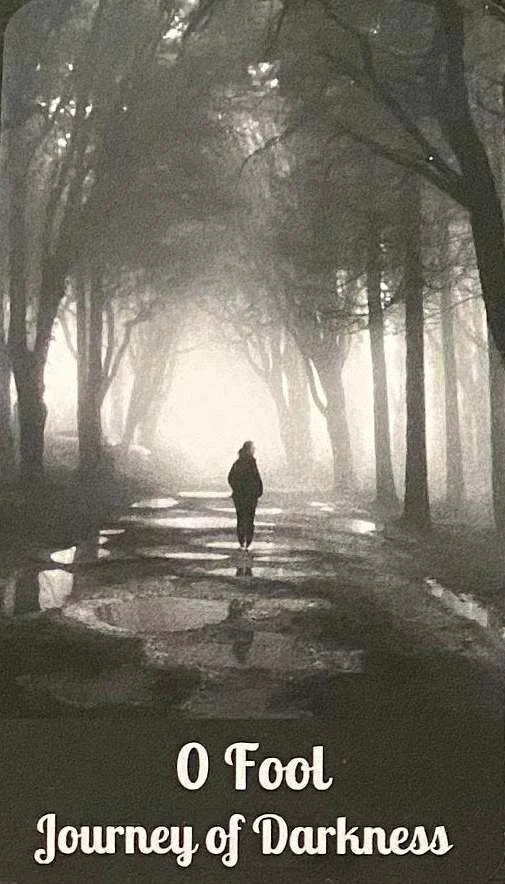
Dark Night Of The Soul Tarot is not trying to be a cheerful daily-pull deck. It reads like a candlelit mirror for the moments when a question has grief, anger, burnout, shame, fear, or spiritual exhaustion underneath it. The visible card titles are deliberately sharp: Journey of Darkness, Caged Beast, Blackout, Self-Loathing, Quicksand, Alienation, and Power Lust. I do not read those titles as punishment. I read them as invitations to name the hard thing with enough care that it can finally be worked with.
The current TarotFans gallery shows 70 recovered card images, so this review stays grounded in what is actually visible. The missing cards are not padded with guesswork, and there is no invented product link here. What the available gallery does show is clear: this is a deck for slow, private, emotionally honest tarot work.
What the deck feels like in a reading
The deck feels like sitting in a dark room after a storm, when the dramatic part is over but the body is still trying to understand what happened. It has crisis energy, but it also has truth-telling energy. A good reading with this deck should not leave someone frightened. It should translate the darkness into grounded questions: what hurts, what pattern keeps repeating, what boundary has been ignored, and what small step would make the next hour safer?
I would use it for journaling, therapy-adjacent reflection, creative shadow work, relationship aftermath, and burnout questions. I would avoid using it casually on someone who is already overwhelmed. The reader’s tone matters more than usual because the imagery is emotionally loaded.

Card study one
Strength becomes the part of us we locked away
8 Strength – Caged Beast changes the usual gentle courage of Strength into something more wounded and instinctive. The image asks what has been caged because it felt too messy, too angry, too needy, or too dangerous to admit.
In a reading, I would not encourage reckless release. I would ask what safer relationship can be built with the inner animal. The card is powerful because it admits that self-control can become self-imprisonment when fear is driving it.
That single-card tension opens naturally into a wider sequence: the next four images show how private darkness can move from descent into recognition, without asking the reader to rush toward an answer.
Four-card moment
The descent before the truth has words
This sequence moves from Journey of Darkness into isolation, uncertainty, and unfinished business. It is a good spread for asking what chapter is ending and what still needs to be witnessed before closure feels real.


Art style and renamed suits
The artwork is gothic, symbolic, and emotionally theatrical. Rage, Sorrow, Torment, and Decay replace the familiar suits, so every card feels filtered through an inner climate. Rage is not just anger; it can be heat, survival, boundary, protection, or pressure. Sorrow can be memory, isolation, grief, or the need to be seen. Torment often points to mental loops, confusion, and fear stories. Decay speaks to neglect, depletion, slow collapse, and the repair that comes after denial stops working.
That language is strong, so I would translate it gently in a live reading. “Self-Loathing” should never become a label thrown at someone. It should become a compassionate question: where has pain turned inward, and what would it look like to protect yourself instead?

Card study two
Ace of Sorrow: the first wound needs a kinder voice
Ace of Sorrow – Self-Loathing is one of the clearest examples of how this deck must be handled. The title is harsh, but the reading does not have to be. I see it as the beginning of a sorrow pattern, especially the moment when grief turns into self-attack.
The practical question is simple: what would change if you spoke to yourself like someone worth protecting? That keeps the card honest without letting it become cruel. The deck names the wound so the reading can make room for tenderness.
Once that inward wound has been named, the wider suit shows how pressure travels through a reading. The four cards below turn one feeling into a clear arc of heat, restraint, and boundary.
Four-card moment
Rage as heat, pressure, and boundaries
Inferno, Fire Escape, Muzzled, and Boiling Point read like a boundary story. Anger rises, seeks an exit, gets suppressed, and finally becomes too hot to ignore.


How I would read it safely
With this deck, I would keep spreads small. One card, three cards, or a focused four-card sequence will usually be better than a huge Celtic Cross. The goal is not to drown the querent in darkness. The goal is to find the exact shape of the problem, then give the body and mind one grounded next step.
Good prompts include: What am I avoiding? What grief needs kindness? Where has anger become a signal? What thought loop is stealing energy? What has been left too long without care? The best readings with this deck end with something practical: rest, write, call someone safe, drink water, postpone the dramatic decision, or choose one repair.

Card study three
9 of Torment: when the mind turns shadows into monsters
9 of Torment – Night Terrors is a card I would read with extra care. It can speak to anxiety at night, looping thoughts, old memories, or the way a problem grows larger when no one else is awake.
The card does not need to become a scary prediction. I would ask what thought repeats, what evidence supports it, and what comfort can bring the body back to the present. The message can be: you are not the fear; you are the one learning how to sit beside it.
Night Terrors benefits from company rather than isolation. In the following four-card sequence, sorrow becomes a shared story about witness, distance, and the first movement toward safer ground.
Four-card moment
Sorrow that wants witness, not shame
This strip moves from self-attack into social exile, doom and gloom, and evacuation. It is a reminder that some healing begins by leaving the inner room where the same painful story keeps replaying.


Best readings for Dark Night Of The Soul Tarot
This deck is strongest for shadow work, grief processing, anger work, spiritual exhaustion, creative writing, trauma-informed journaling, and questions about repeated patterns. It can also be useful for readers who want a deck that refuses spiritual bypassing. Some cards are uncomfortable because some life moments are uncomfortable, and the deck does not pretend otherwise.
The limitation is also clear: it is not the deck I would choose for a light party reading, a quick yes-or-no pull, or someone who needs a soft emotional landing. Dark Night Of The Soul Tarot rewards mature handling. If the reader can stay compassionate, the darkness becomes a doorway instead of a trap.
Four-card moment
Fog, quicksand, leaving, and power distortion
Smoke & Mirrors, Quicksand, Abandon Ship, and Power Lust make a blunt diagnostic line: what is unclear, where are you stuck, what must be left, and where has control become corrosive?


Pros and cons
| Pros | Cons |
|---|---|
| Powerful for shadow work, grief reflection, journaling, burnout, and emotionally honest readings. | The 70-card gallery is honest partial coverage, not a complete 78-card visual archive. |
| Renamed suits give the deck a distinct psychological language. | The titles can feel too intense if the reader or querent needs a gentle beginner deck. |
| Strong gothic mood with clear card titles and memorable symbolic scenes. | It is not ideal for casual party readings, light reassurance, or quick predictive pulls. |
Final Thoughts
Dark Night Of The Soul Tarot is a brave deck for readers who want tarot to tell the truth without becoming careless. It is intense, dramatic, wounded, symbolic, and often strangely hopeful because it understands that naming the shadow is not the same as surrendering to it.
If your practice includes journaling, self-inquiry, grief work, anger work, or spiritual rebuilding after a hard season, this deck has a strong voice. I would use it slowly, kindly, and privately. The cards are dark, but the best reading they can offer is still an act of care.
Dark Night Of The Soul Tarot FAQ
How many Dark Night Of The Soul Tarot cards are shown here?
The TarotFans native gallery currently shows 70 recovered card images. This review keeps the count honest and does not claim the full 78-card deck is visible.
Is Dark Night Of The Soul Tarot beginner friendly?
It can work for thoughtful beginners, but it is not a soft first deck. The titles are emotionally intense, so I would pair it with basic tarot meanings and gentle journaling prompts.
What readings does this deck suit best?
It is strongest for shadow work, grief reflection, burnout questions, anger work, spiritual exhaustion, and private journaling where honesty matters more than quick reassurance.
Does it follow familiar tarot structure?
The visible cards keep a tarot skeleton through the Majors and numbered suits, but the suits become Rage, Sorrow, Torment, and Decay. Rider-Waite-Smith readers can use classic meanings as the base, then translate the darker titles with care.
Who should skip this deck?
Skip it for party readings, anxious moments that need softness, or anyone who wants bright beginner keywords. This is a serious mood deck for readers who can hold difficult material compassionately.