
Lovely Omens Tarot Cards
Browse an evidence-backed selection of Lovely Omens Tarot card fronts in deck order. Tap any card to open the accessible larger carousel view.
Aurica’s Quick Take
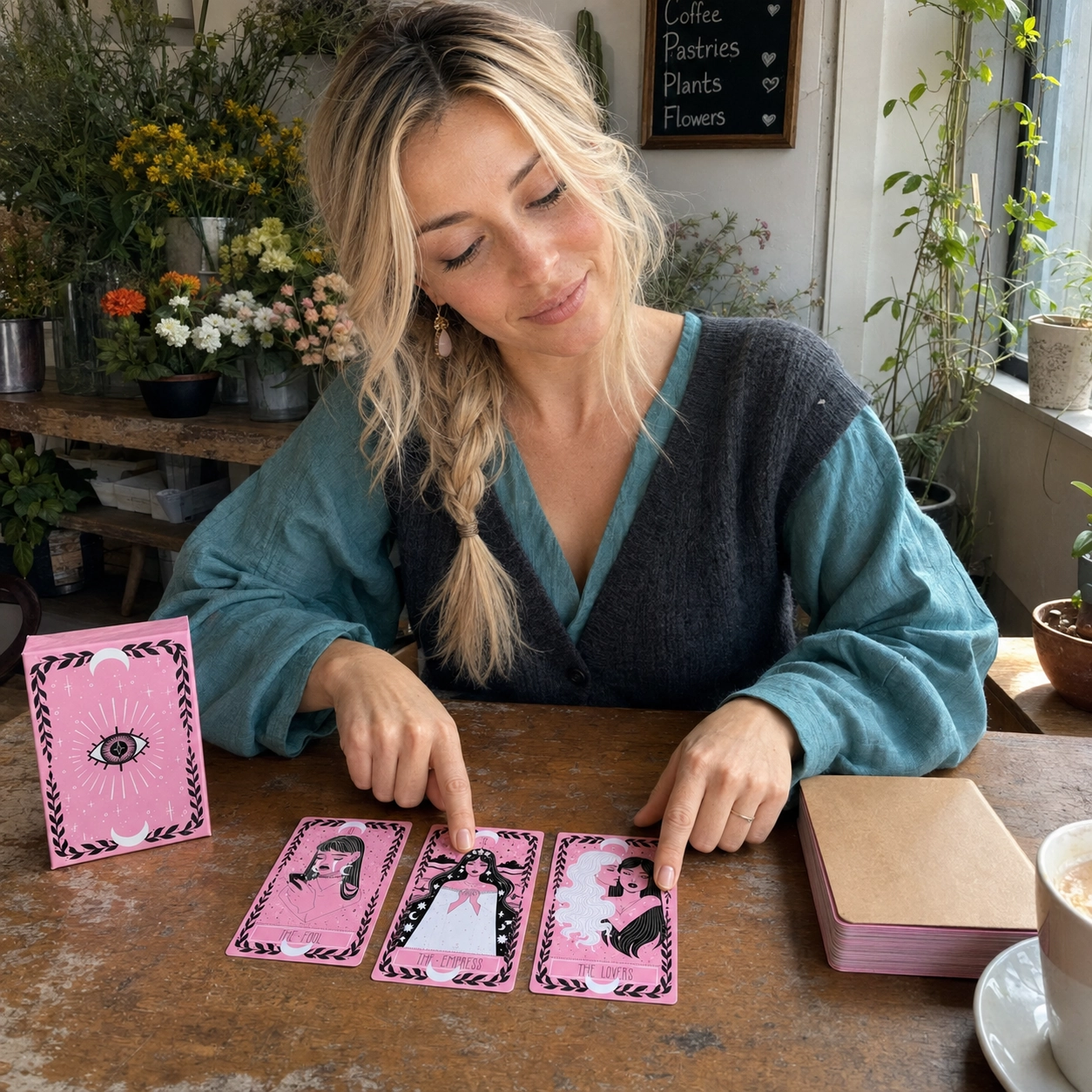
I meet Lovely Omens Tarot as a blush-pink room with the curtains drawn back: sweet at first glance, then funny, romantic, lonely, defiant, and wonderfully self-possessed. Keely Parks gives familiar tarot bones a modern pulse through black ink, moons, cats, cups, blades, fashionable figures, and feelings that arrive before I have named them.
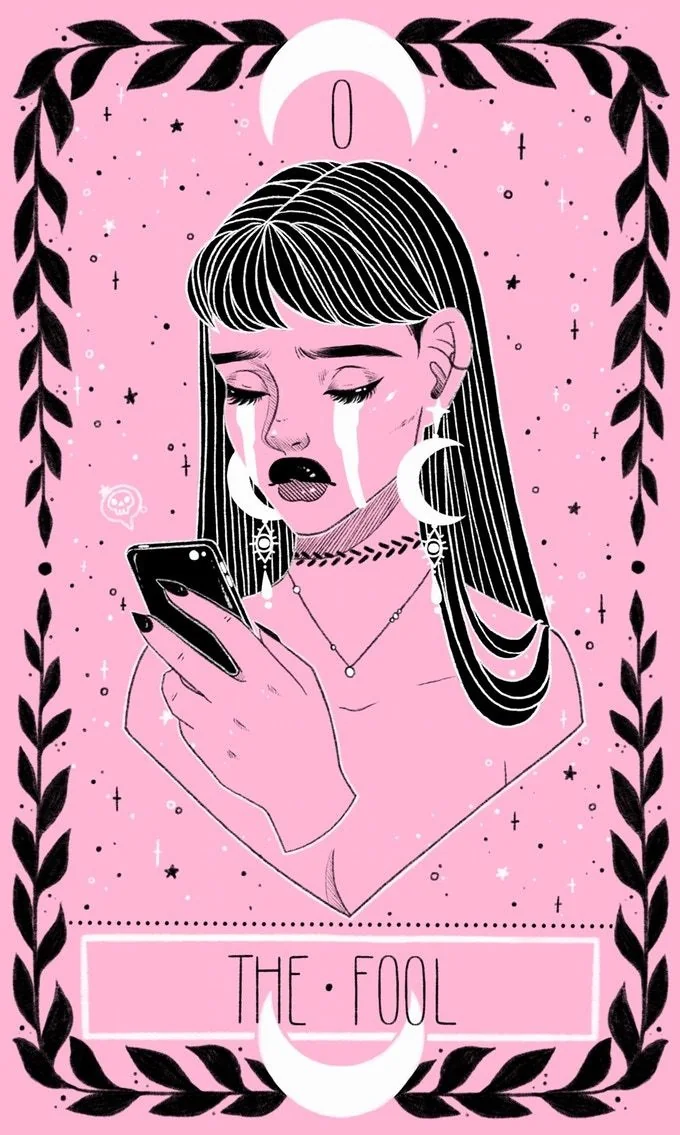
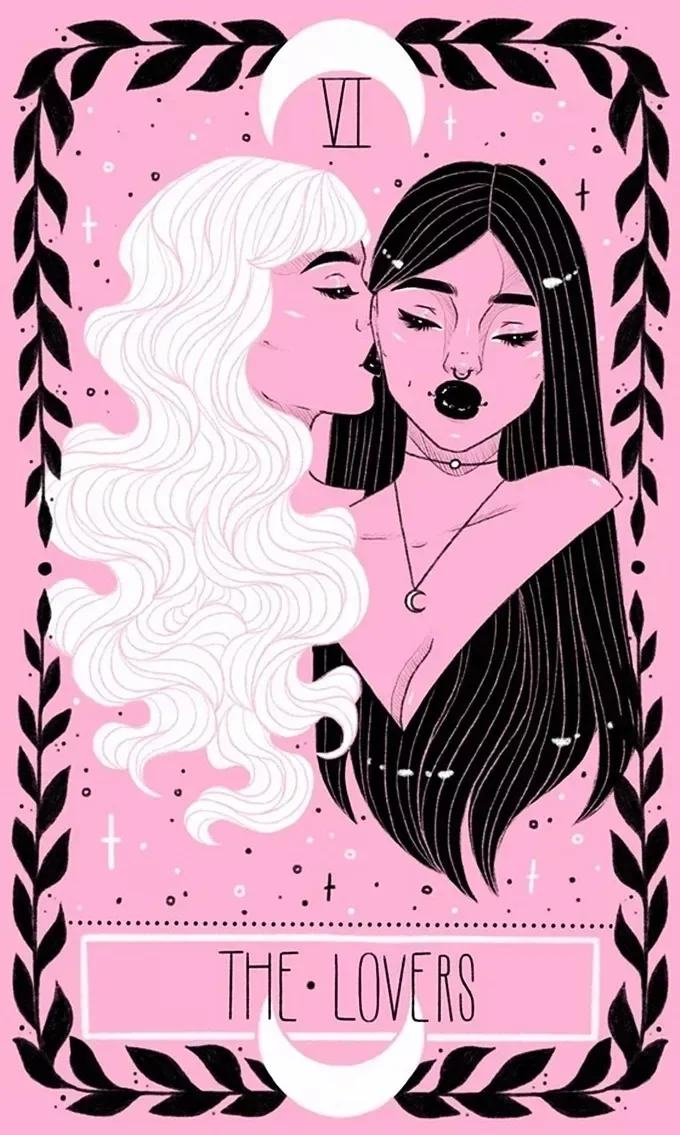
What I love most is how quickly posture becomes language. The Fool’s downcast gaze and glowing phone feel tender rather than careless; The Empress gathers her hands at her heart; The Lovers lean together in a moment that is intimate without becoming sugary. I notice where a face turns, what a hand protects, and which shape interrupts the pink, then test that first feeling against the card’s traditional role and its neighbours.
The limited palette makes small changes ring like bells. Pink does not always mean gentle, and black does not always mean danger. A crowded field can feel restless, a lone cat can become fiercely independent, and a raised sword can cut through a question before the title does. That visual clarity makes the deck especially vivid for relationships, identity, creative choices, and honest journaling.
In a spread, I resist forcing every pip into a scenic Rider–Waite–Smith story. I begin with the visible objects, direction, repetition, and emotional temperature, then ask what practical choice those clues reveal. When a card feels sharp, I place it beside one that offers agency; when it feels dreamy, I ask what can be done before the day ends.
I would choose Lovely Omens Tarot when contemporary feminine imagery helps intuition speak quickly, and I would simply allow extra time if antique symbolism or fully scenic minors are essential to the question. Let its moons, leaves, cats, and bright pink silences remind you that softness can still tell the truth—and that your own clear heart is a lovely omen worth trusting.
What makes Lovely Omens Tarot distinctive?
The deck commits to one visual language. A leafy black border frames each card; pale moons hold the Roman numerals; thin hand-lettered titles ground the bottom edge. Against that structure, Parks alternates between portraits and almost poster-like arrangements of objects. The Majors and courts often feel character-led, while many pip cards reduce the message to cups, swords, wands, cats, stars, and negative space.
That consistency is useful in a reading. Pink does not automatically mean gentle, and black does not automatically mean threatening. Instead, the limited palette makes posture, direction, repetition, and contrast do more interpretive work. A raised sword, a turned face, a crowded field, or one solitary cat becomes hard to ignore.
Deck-specific card study
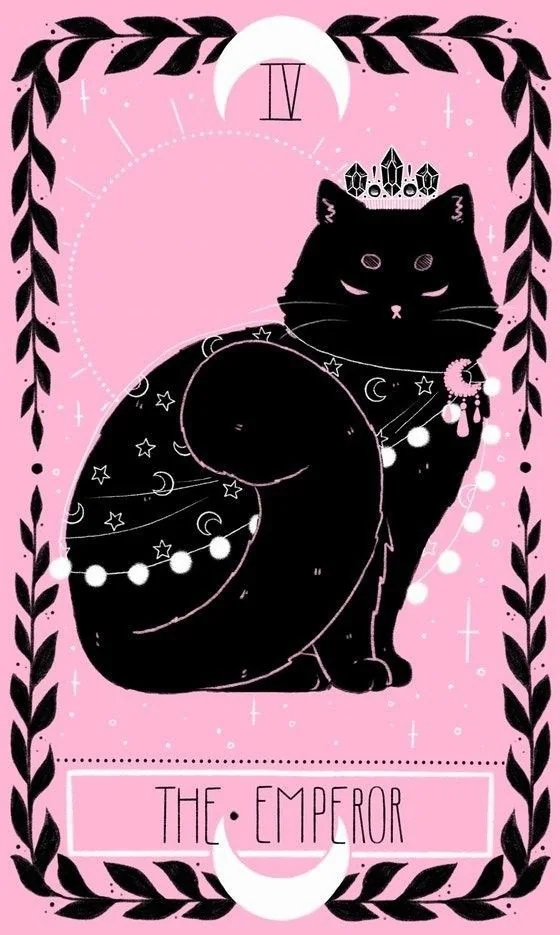
The Emperor: authority with whiskers
The deck replaces the expected throne and armored ruler with one enormous black cat. A crystal crown sits above its head; moon-and-star fabric wraps its body; a bright ornament hangs at the chest. The cat does not perform power. It simply occupies the frame as if ownership were already settled.
That visual joke is also a precise reading cue. The Emperor can describe boundaries, territory, self-command, and the right to decide what enters your space. In a relationship spread, ask where calm authority would work better than control. In career readings, notice whether leadership is grounded in presence or in constant proof.
How Lovely Omens Tarot reads in practice
Lovely Omens reads quickly when the question has emotional stakes. Faces, clothing, grooming, touch, distance, and decorative objects create an immediate social atmosphere. The deck is good at showing who feels composed, who is withholding, what is being romanticized, and where attraction may be masking a boundary problem.
The pip cards change the pace. Instead of narrating a whole scene, they often make you count and compare. Look at how objects cluster, cross, mirror, or leave empty space. This can make the minors less textbook-like for beginners, but it also prevents the reader from inventing a melodrama that is not actually present.
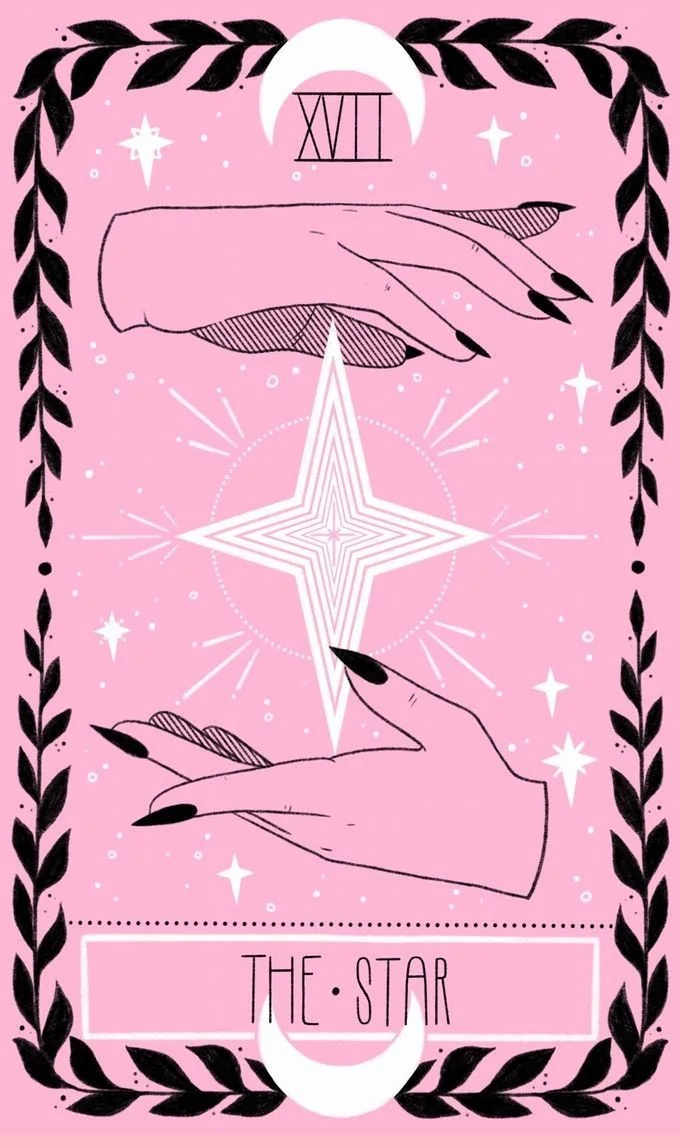
Four-card moment · modern archetypes
A life lived through screens, touch, glamour, and hope
These four Majors show the deck’s range: private vulnerability, deliberate self-creation, intimate choice, and a stripped-back image of renewal.

Beginner friendliness and three ways to read it
The printed titles and familiar 78-card structure make Lovely Omens approachable, but the deck is not a scene-for-scene Rider–Waite–Smith clone. A beginner can learn with it if they are willing to pair visual observation with a compact keyword reference. Readers who need every minor to tell a literal story may want a traditional study deck alongside it.
Easy: ask, “What feeling deserves honest attention today?” Name the first object, posture, or contrast you notice before looking up the meaning.
Medium: ask, “What am I idealizing, and what is actually available?” Pull two cards and compare closeness, direction, and visual weight.
Hard: ask, “Which boundary protects love, and which boundary prevents it?” Pull three cards for protection, avoidance, and one repairable next step.
Deck-specific card study
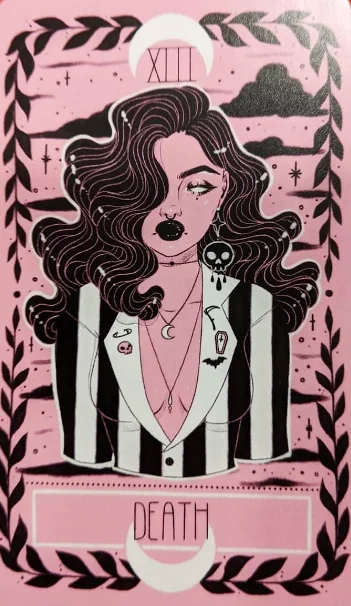
Death: transformation worn visibly
A centered figure meets the viewer directly. Her voluminous dark hair nearly fills the card, while a striped jacket, deep neckline, crescent necklace, skull detail, patches, and black lipstick turn the portrait into a deliberate presentation of self. There is no charging skeleton and no distant landscape to soften the encounter.
The result makes Death feel personal rather than catastrophic. Something in the identity, style, role, or story has reached its end and cannot be edited back into the old shape. In a reading, ask what you are already wearing as evidence of change—and what former version of yourself no longer needs to be maintained.
Love and relationship readings
This deck naturally invites relationship questions, but its best work is not fortune-telling about another person. Use it to examine attraction, projection, reciprocity, attachment, consent, and the stories people build around longing. The romantic palette can make a spread feel tender, while the sharp black shapes keep it from becoming vague.
Try questions such as: What am I assuming instead of asking? What exchange is genuinely mutual? Where has fantasy replaced evidence? What would affection look like with a clearer boundary? Lovely Omens is strongest when beauty opens the conversation and observation keeps it honest.
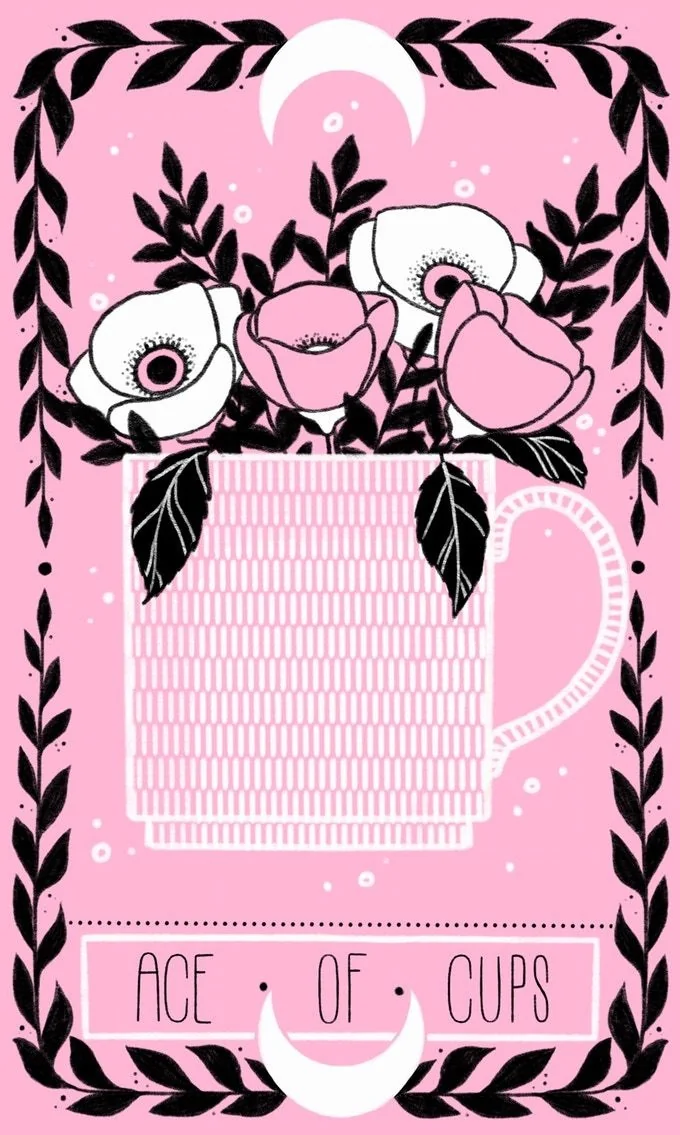
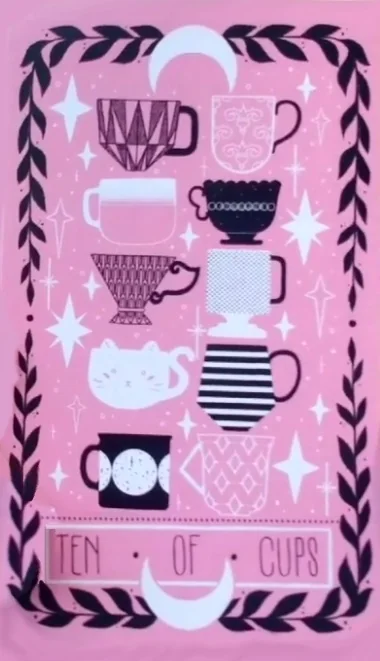
Four-card moment · the language of Cups
From one overflowing vessel to emotional saturation
The suit’s vessels do the storytelling: a bouquet-like beginning, a mirrored exchange, a crowded still life, and ten distinctly patterned cups.


Career, money, and creative readings
Lovely Omens is not limited to romance. Its visual confidence makes it useful for branding, creative identity, audience, collaboration, and the emotional cost of work. Wands can point to momentum and creative friction; Swords are especially clean for decisions and conflict; Pentacles turn material questions into patterns of care, repetition, and stewardship.
For practical readings, keep the prompt specific: What can be completed this week? Where is presentation helping or hiding the work? Which resource needs protection? What habit would make this project sustainable? Finish by translating the image into one visible action rather than a prediction.
Art style, symbols, and deck personality
The signature palette is unapologetically narrow: bubblegum and blush pink, black, white, and occasional gray. Repeated moons and leafy borders make the deck feel cohesive, while cats, pentacles, stars, cups, swords, fashion details, and modern grooming give it personality. Some cards are lush portraits; others are clean emblems with a lot of breathing room.
The deck’s court cards feel like people with style and attitude rather than distant social ranks. That can help readers ask what a Queen or Knight is doing, protecting, or projecting. The cat imagery also adds independence and domestic intimacy without turning the deck into a novelty animal tarot.

Deck-specific card study
Queen of Pentacles: care that can be held
A white-haired figure cradles a small black cat against her chest. Pentacles appear on the cat’s forehead and the figure’s bracelet, while long dark nails and heavy black clouds give the soft embrace a protective edge. The composition is intimate, but it is not fragile.
This Queen turns abundance into something tended with both hands. She can represent home, bodily care, money, animals, craft, or the quiet competence that makes another person feel safe. Her question is practical: what do you value enough to hold, feed, maintain, and defend?
Small rituals, steady roots
I find the Queen’s quiet embrace a lovely place to pause before the patterned Pentacles. Her care has a particular shape: hands around something vulnerable, attention given rather than merely promised. In a reading, I would start there. What needs tending today, and what small act would make that care visible?
Then I would lay the pip cards beside her and notice how one presence becomes a pattern. A resource may begin as an idea, a little time, or a skill you almost overlook. Repetition gives it roots. Let these cats invite you to name one gentle routine you can keep, rather than a grand promise that leaves you tired before you begin.
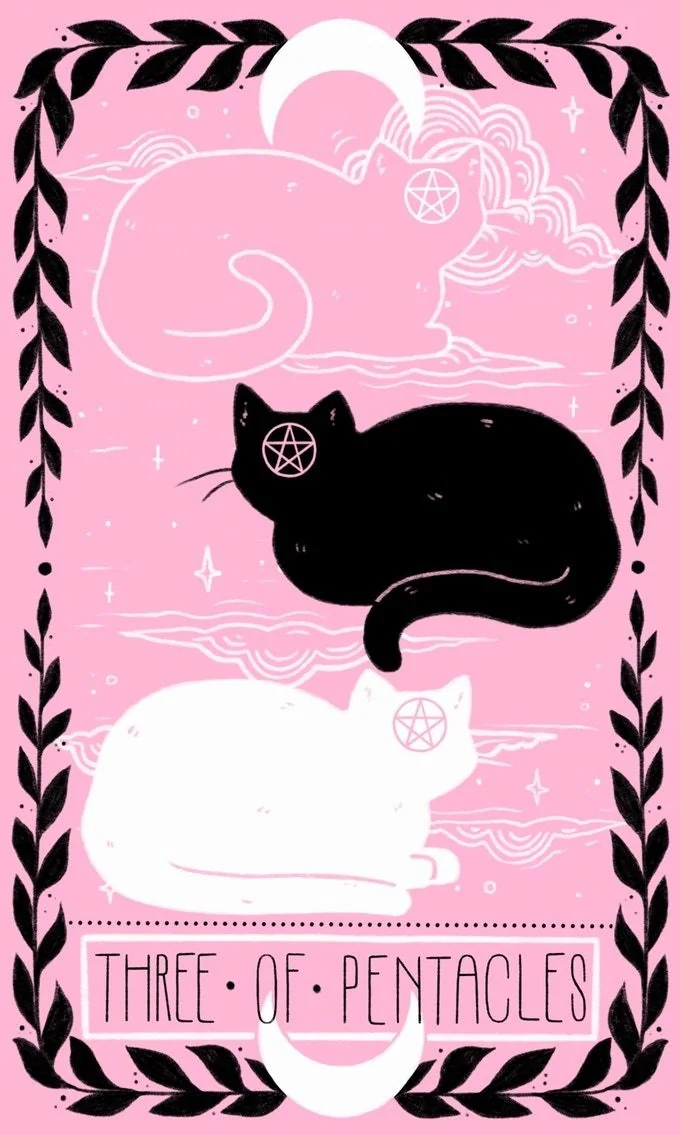
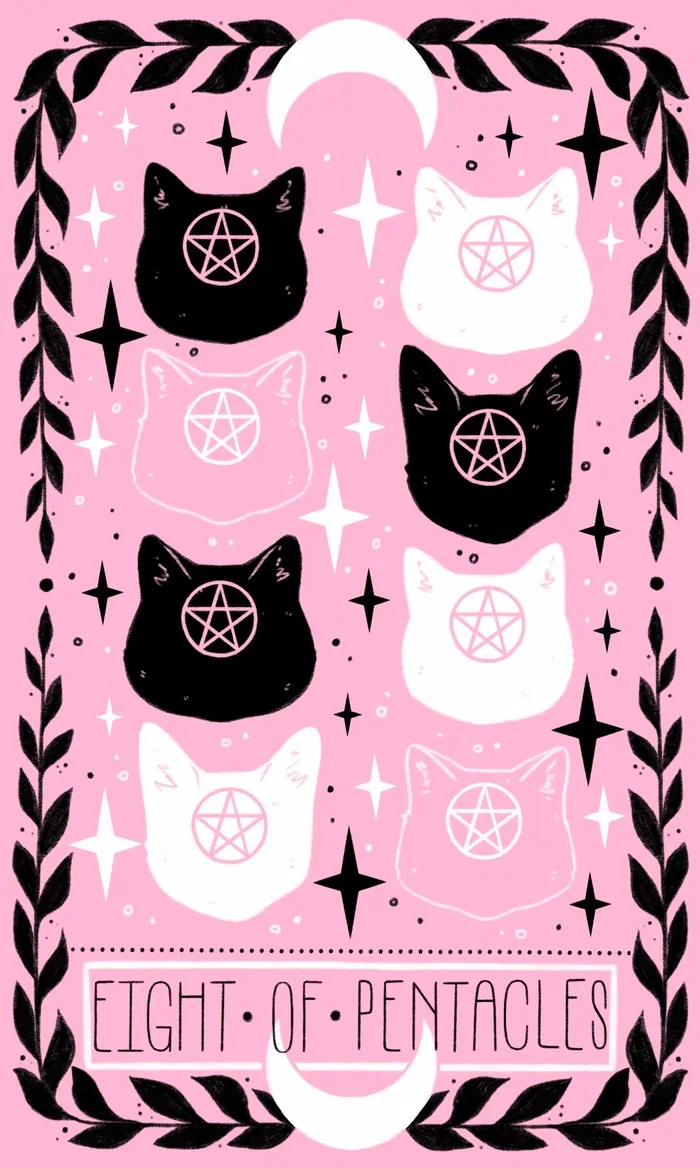
Four-card moment · cats of Pentacles
Material life becomes a feline pattern
The suit moves from one watchful cat to paired forms, repeated cat faces, and a full ten-card chorus—an elegant way to make resources feel alive rather than abstract.


Who will enjoy this deck—and who may not?
Best for: visual readers, cat lovers, journalers, relationship readers, contemporary witchcraft aesthetics, modern fashion illustration, concise pips, and anyone who wants a highly cohesive deck personality.
Consider another deck if: you dislike pink, rely on detailed scenic minors, need every classical symbol preserved, or want a mass-market deck that is consistently easy to replace. Independent editions can have changing availability, so verify the seller, edition, condition, and included materials before buying.
Pros and cons
Pros
- Immediately recognizable pink-and-black visual identity.
- Strong portraits and memorable reinterpretations of familiar archetypes.
- Useful for emotional, relational, creative, and identity-focused readings.
- Standard 78-card structure and printed titles preserve orientation.
- Graphic pip cards reward counting, comparison, and visual pattern reading.
Cons
- The narrow palette will be too intense for some readers.
- Several minors are emblematic rather than fully scenic.
- Readers studying historical symbolism need a companion reference.
- Availability may vary because this is an independent creator edition.
Gallery and buying guidance
The Gallery presents a broad, evidence-backed sample of Lovely Omens Tarot across the Major Arcana, all four suits, and the courts. It is designed to show the deck’s palette, borders, portrait style, and balance between character-led cards and graphic pips without padding gaps with duplicates or unrelated artwork.
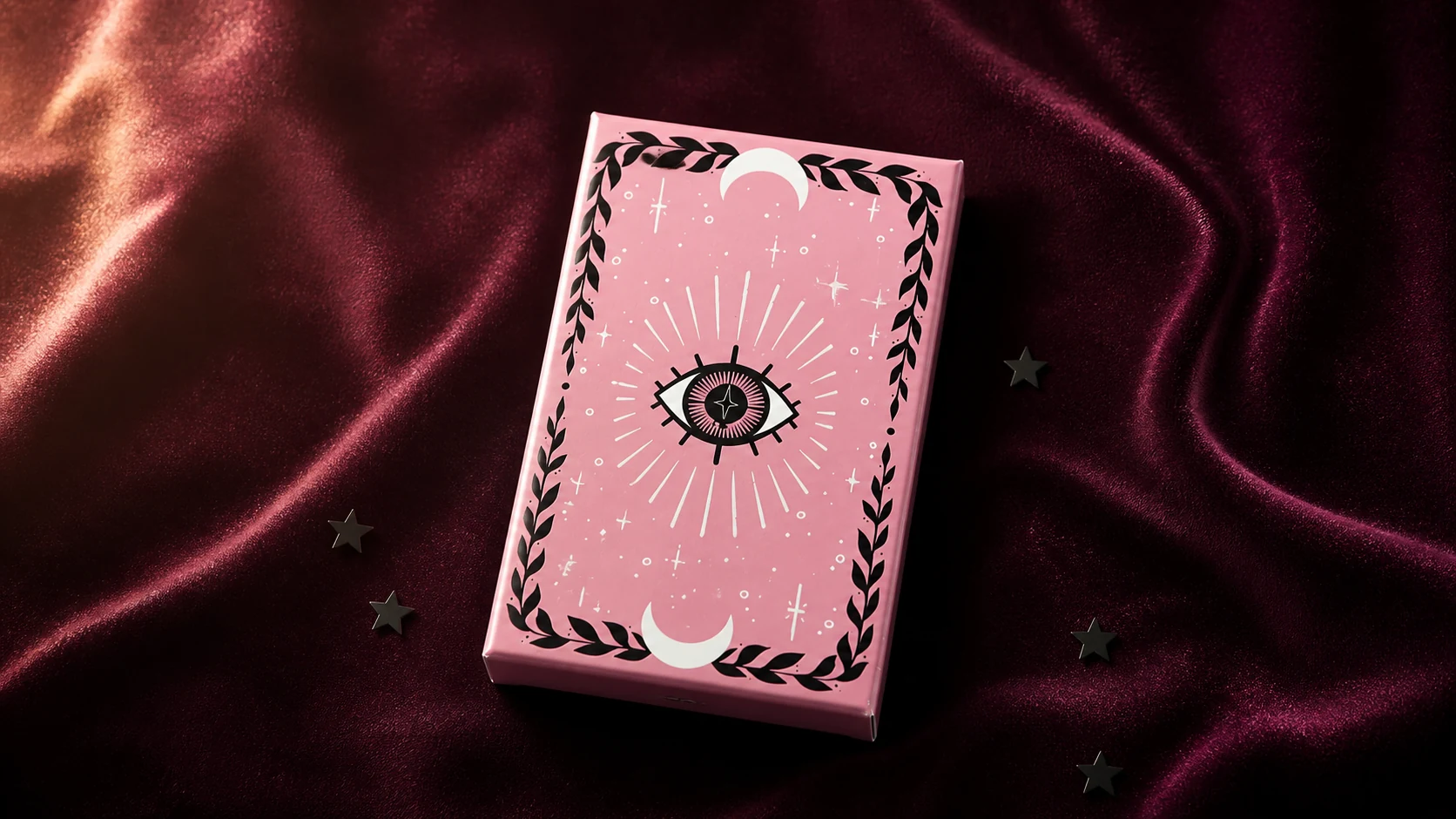
When comparing a listing, confirm that it names Keely Parks or Keely.Elle and describes the complete 78-card deck. Check current photos, edition, condition, included materials, seller details, and the return policy rather than assuming every similarly named “Omens” deck is the same product.
Aurica’s golden rule for Lovely Omens Tarot
Do not confuse a beautiful mood with a complete message. Let the pink atmosphere draw you in, then read the black line work: the direction of a face, the edge of a blade, the number of vessels, the distance between figures, and what has been left empty. The deck becomes clearest when style starts the reading and evidence finishes it.
Final thoughts
Lovely Omens Tarot succeeds because it does not apologize for its point of view. It takes a standard tarot structure and gives it a world: stylish, witchy, romantic, feline, graphic, and emotionally direct. The best cards feel less like illustrations of keywords and more like characters or symbols that already know who they are.
If that voice appeals to you, compare it with the Star Spinner Tarot, Modern Witch Tarot, and Light Seers Tarot. Each modernizes tarot differently, which makes the contrast useful before choosing a deck.
Lovely Omens Tarot FAQ
Who created Lovely Omens Tarot?
Lovely Omens Tarot was created and illustrated by Keely Parks, also known as Keely.Elle. The independent 78-card project was crowdfunded in 2018.
Is Lovely Omens Tarot a complete 78-card deck?
Yes. The creator edition follows the standard 78-card structure: 22 Major Arcana and 56 Minor Arcana across Wands, Cups, Swords, and Pentacles.
Is Lovely Omens Tarot good for beginners?
It can be. Card titles and the standard structure help, but many pip cards are graphic rather than fully scenic. Beginners may want a concise Rider–Waite–Smith reference alongside it.
What readings suit Lovely Omens Tarot best?
It is especially effective for relationships, identity, boundaries, journaling, creativity, emotional patterns, and daily pulls. It can also handle career and money questions when prompts stay practical.
Does the deck use traditional tarot meanings?
It keeps familiar card titles and the standard tarot sequence, but reinterprets many scenes through modern portraits, fashion, cats, objects, and a limited pink-and-black palette.
What should I check before buying?
Confirm the creator name Keely Parks or Keely.Elle, a complete 78-card count, the edition and condition, included materials, current seller photos, and the return policy. Availability for independent decks can change.


