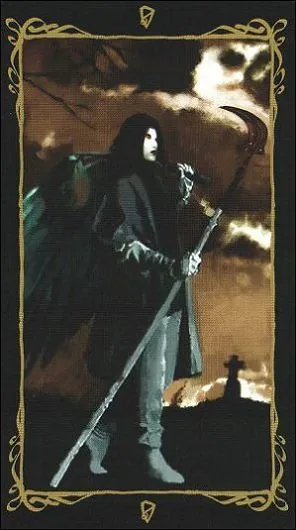
American Renaissance Tarot Gallery
Explore this verified partial archive, choose an official deck group, then open any card for a larger carousel view. Missing cards are never padded, renamed by guesswork, or invented.
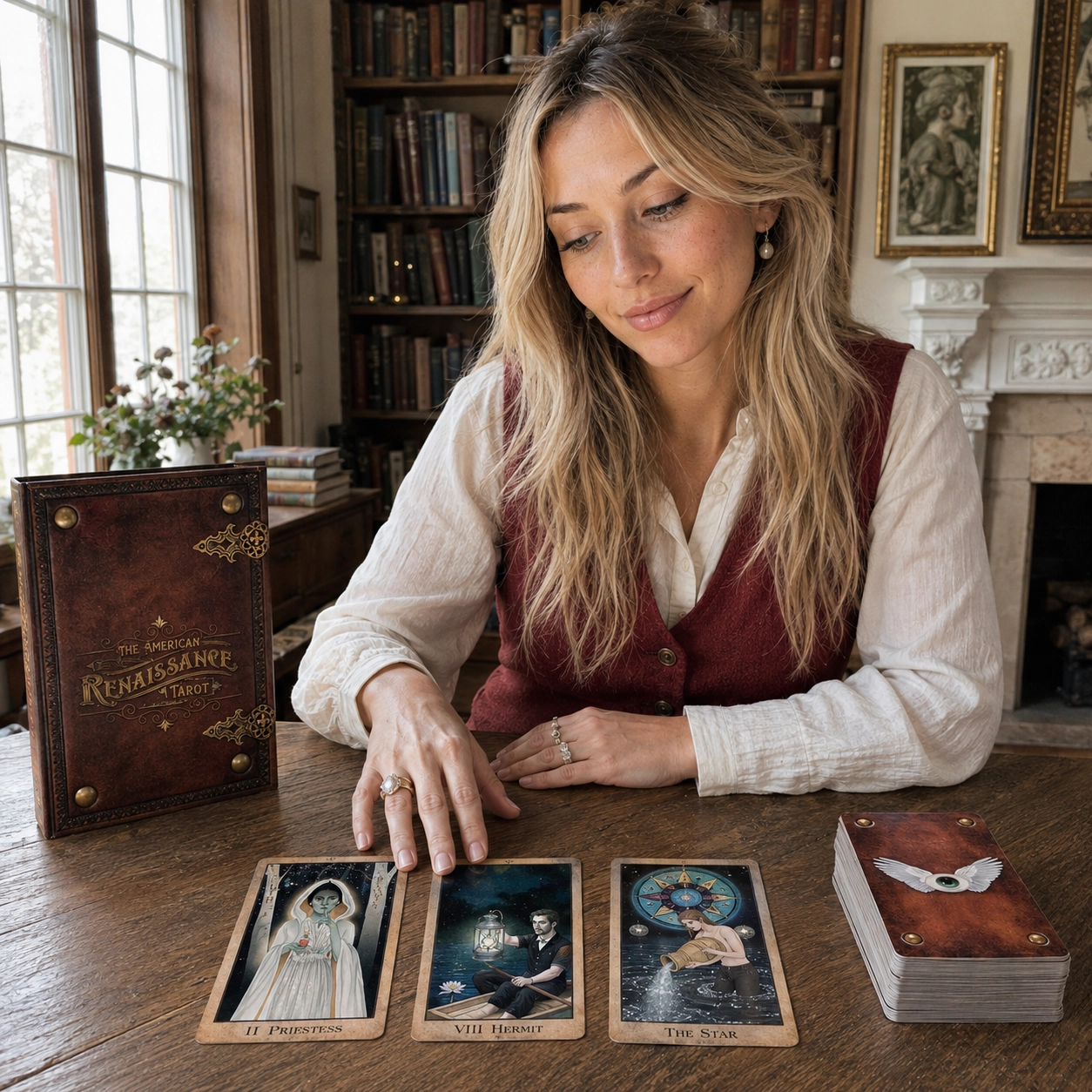
A note from Aurica
American Renaissance Tarot feels like opening an old library door and finding every portrait awake. Thea Wirsching and Celeste Pille bring writers, reformers, ships, parlours, and difficult national memories into the cards, so the first thing I notice is not only beauty but conscience. A face can feel like an invitation and a witness at the same time.
I read it slowly. The Priestess, framed by the words “Truth” and “Beauty,” makes me pause over what a question is hiding beneath its polished answer. The Hermit holds his lantern beside dark water, and I feel the hush of someone willing to sit with uncertainty instead of rushing toward an easier story. In a spread, I let that mood meet the familiar tarot meaning, then watch which neighbouring card confirms or challenges it.
The Star changes the air. Its luminous wheel and bright water suggest that ideals matter most when they are poured into real life, not admired from a distance. Beside The Hermit, it can show a private insight ready to become a guiding principle; beside a tense Swords card, it may ask whether hope is clear-eyed or merely comforting.
I especially like this deck for questions about identity, inherited stories, creative purpose, and the gap between what we value and what we practise. I begin with posture, gaze, colour, and setting before looking up the literary history, because that keeps the reading alive rather than turning it into an exam. The references deepen the message, but they do not have to silence your own response.
This is not a deck I would hurry. Give one or three cards room on the table, notice which figure seems to look back, and write down the question that appears beneath your first question. American Renaissance Tarot can help you meet history with honesty while still choosing a braver, more compassionate page for what comes next.
American Renaissance Tarot review: literature, history, and conscience
American Renaissance Tarot is a thoughtful art-and-literature deck that treats tarot like a conversation with books, portraits, ships, ideals, and national memory. It is not a breezy comfort deck. It has the mood of a seminar table, a museum wall, and a private journal sharing the same candlelit room.
The deck is especially interesting if you enjoy the American Renaissance period in literature, Transcendentalist questions, abolition-era tension, mythic portraiture, and cards that ask you to think before you answer. It can still read as tarot, but it reads best when you give it space to be layered.
The native TarotFans gallery is honest about the recovered source: this page currently shows 64 available card-front images, not a false full-deck claim. The gallery is grouped for easier browsing—Majors first, then Wands, Cups, Swords, and Coins—with each available suit arranged by tarot rank and every visible label renamed to the appropriate card name.

Card study
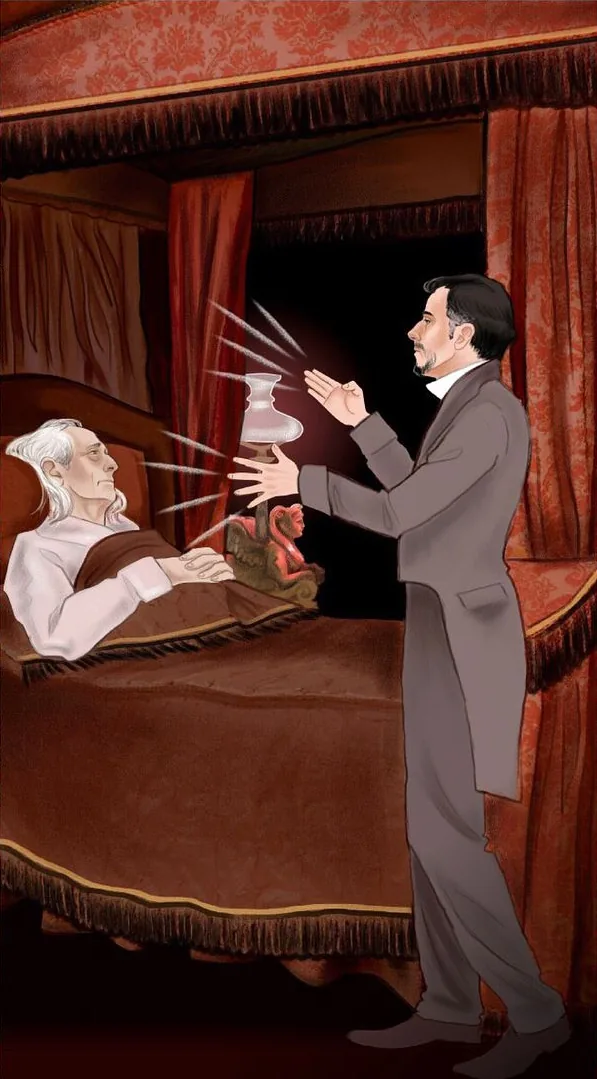
Seven of Swords: ancestry, reputation, and witness
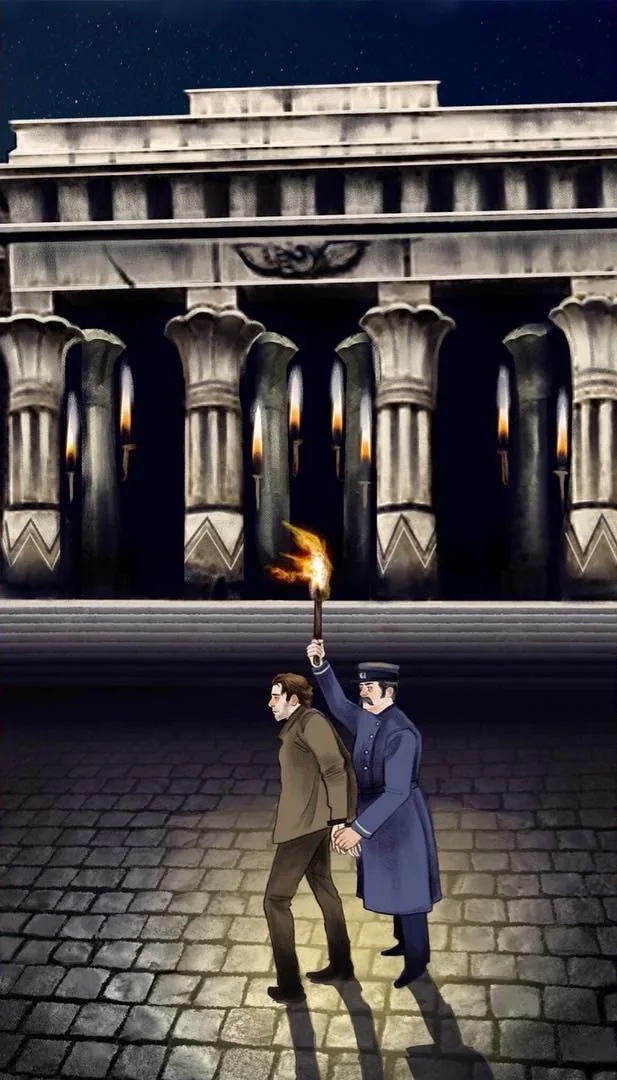
The portrait card shows how this deck turns a historical face into a living question. A figure from the past does not feel like decoration; it feels like someone looking back at the reader.
In a spread, I would use this image for questions about reputation, inherited stories, public identity, and the difference between who we are and how history remembers us.
First impression and symbolic voice
My first feeling with American Renaissance Tarot is that it wants a slower reader. Some decks greet you with instant emotion. This one greets you with a question: what stories shaped the self you are trying to become?
The artwork has a collage-like historical texture: portraits, bookish images, sailing scenes, formal figures, civic memory, religious echoes, and old-world composition. I like how it refuses to make American history look simple. Beauty and tension sit side by side, which is what gives the deck its bite.
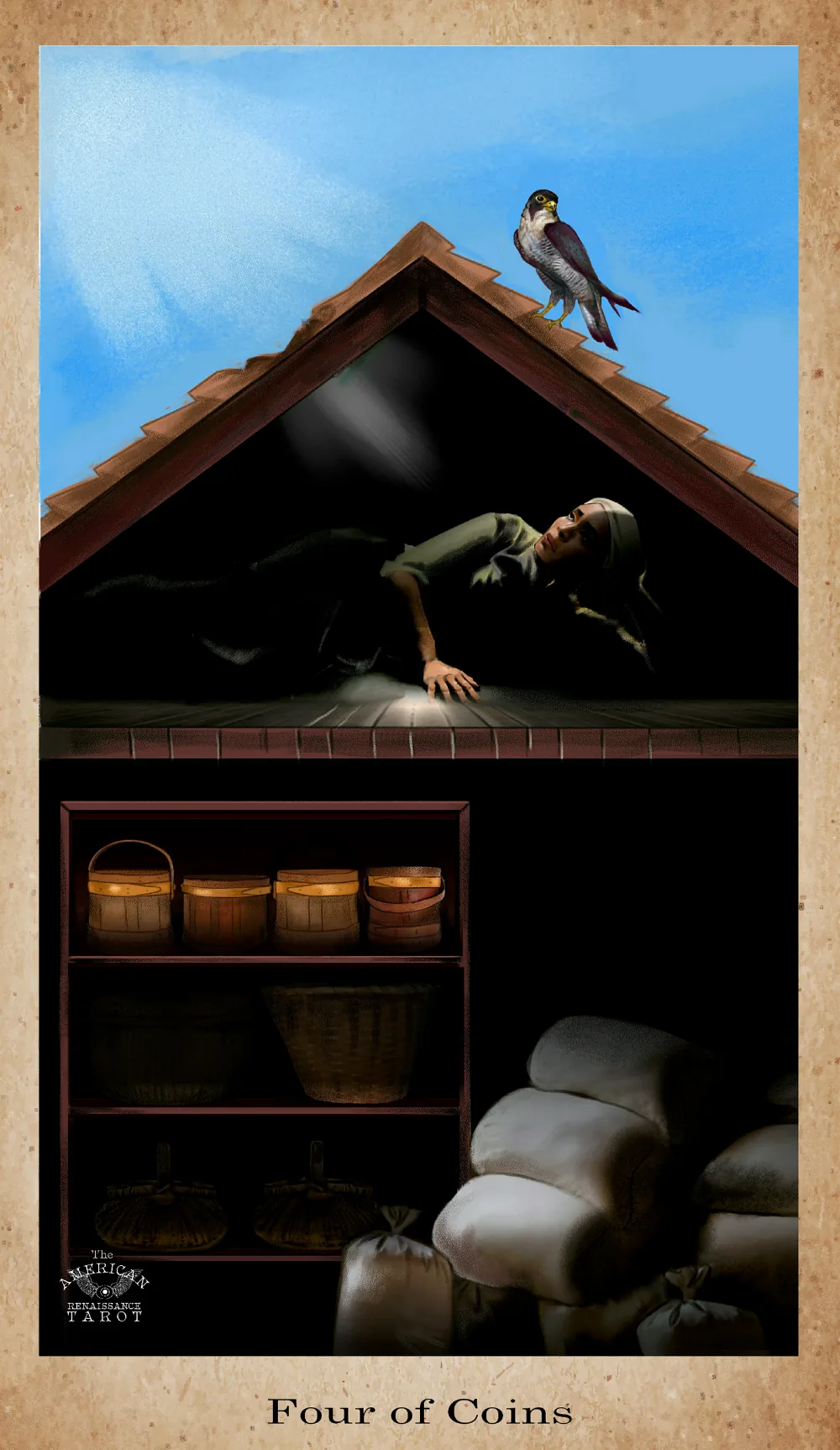
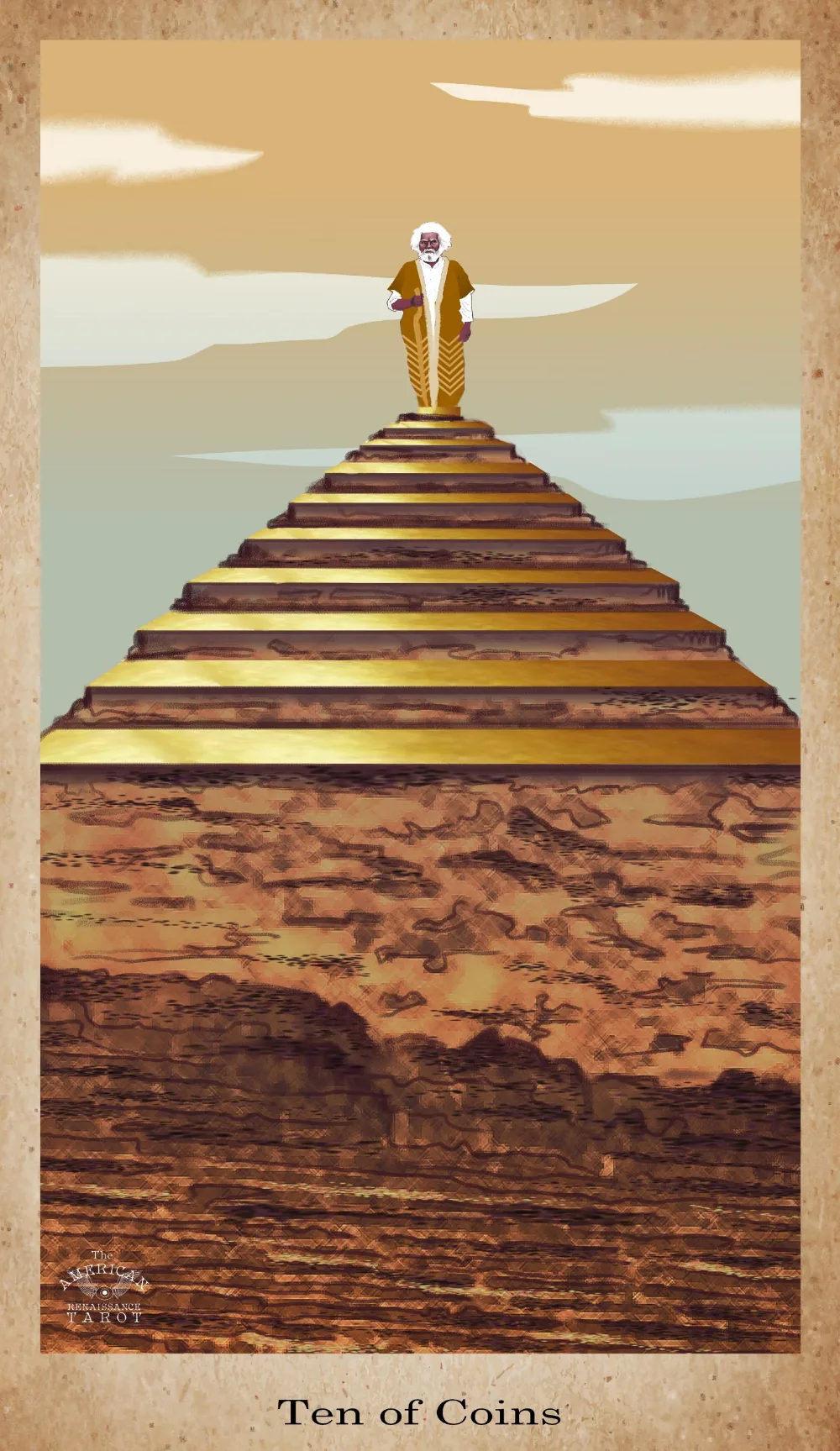
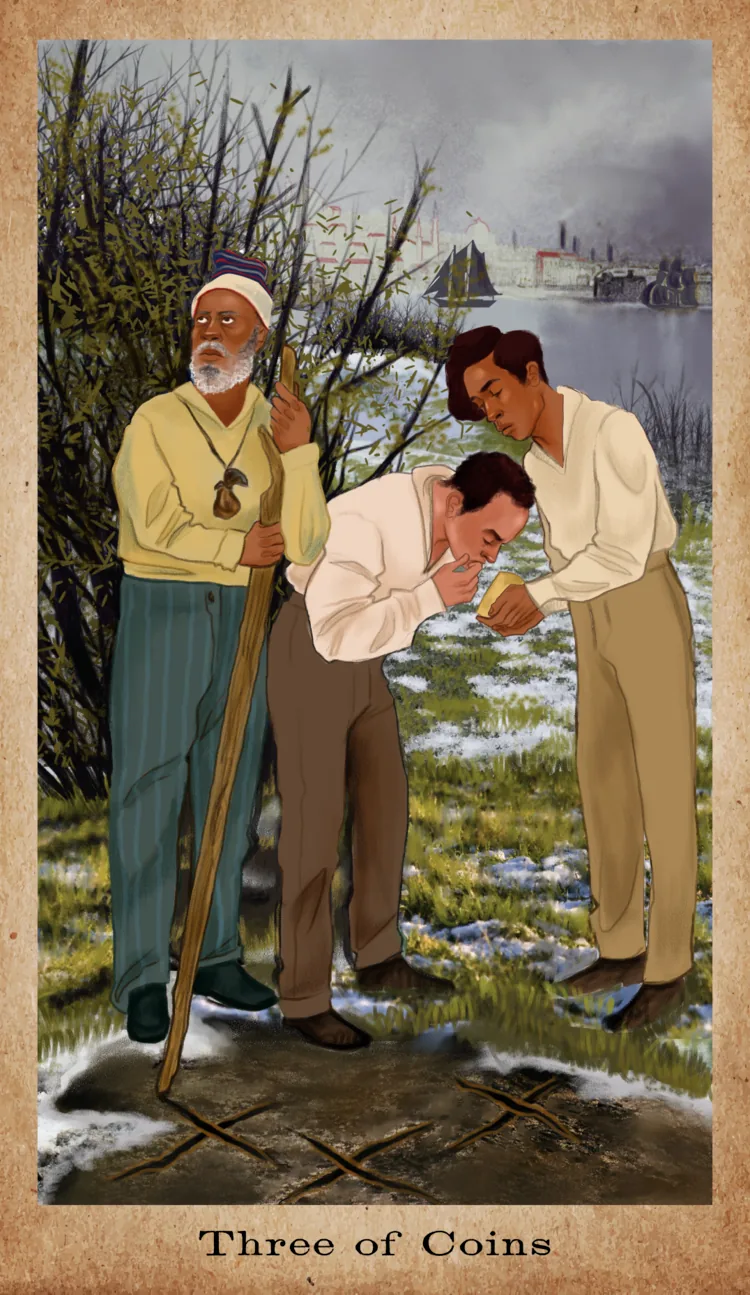
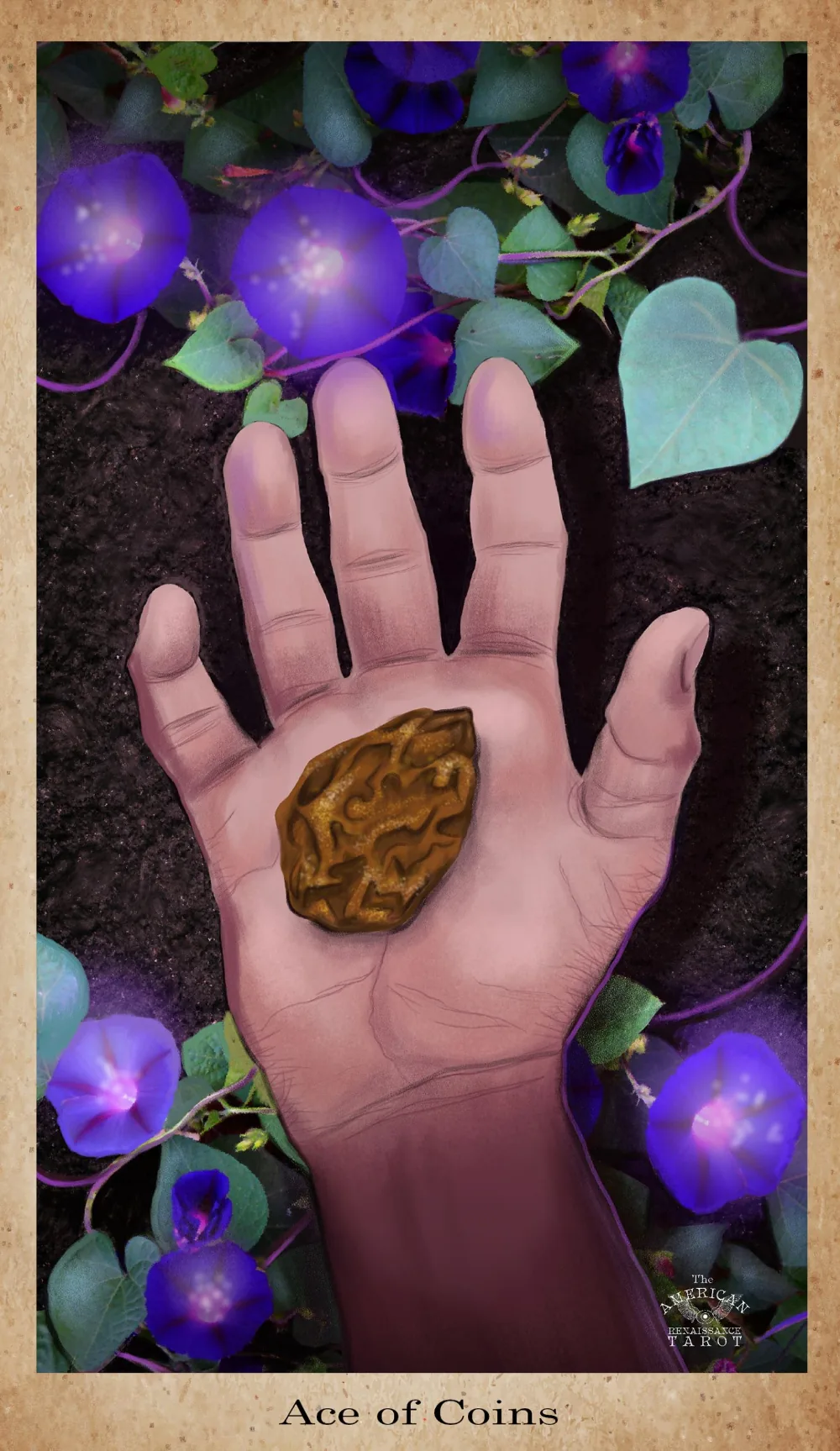
Coins: keeping, lineage, craft, beginning
This four-card moment groups the Coins cards by their real titles: security, inheritance, craft, and a new material seed.
How it reads in practice
In practical readings, I find this deck strongest for identity questions: Who am I becoming? Which old belief is still steering me? What ideal do I claim, and where do my actions disagree? It is also excellent for creative blocks because it treats art, memory, and moral imagination as connected.
It may feel heavy for party readings or very quick daily pulls. That does not mean it is unfriendly. It simply has a library-like pace. I would rather pull one or three cards and write with them than rush through a large spread and miss the details.
Card study
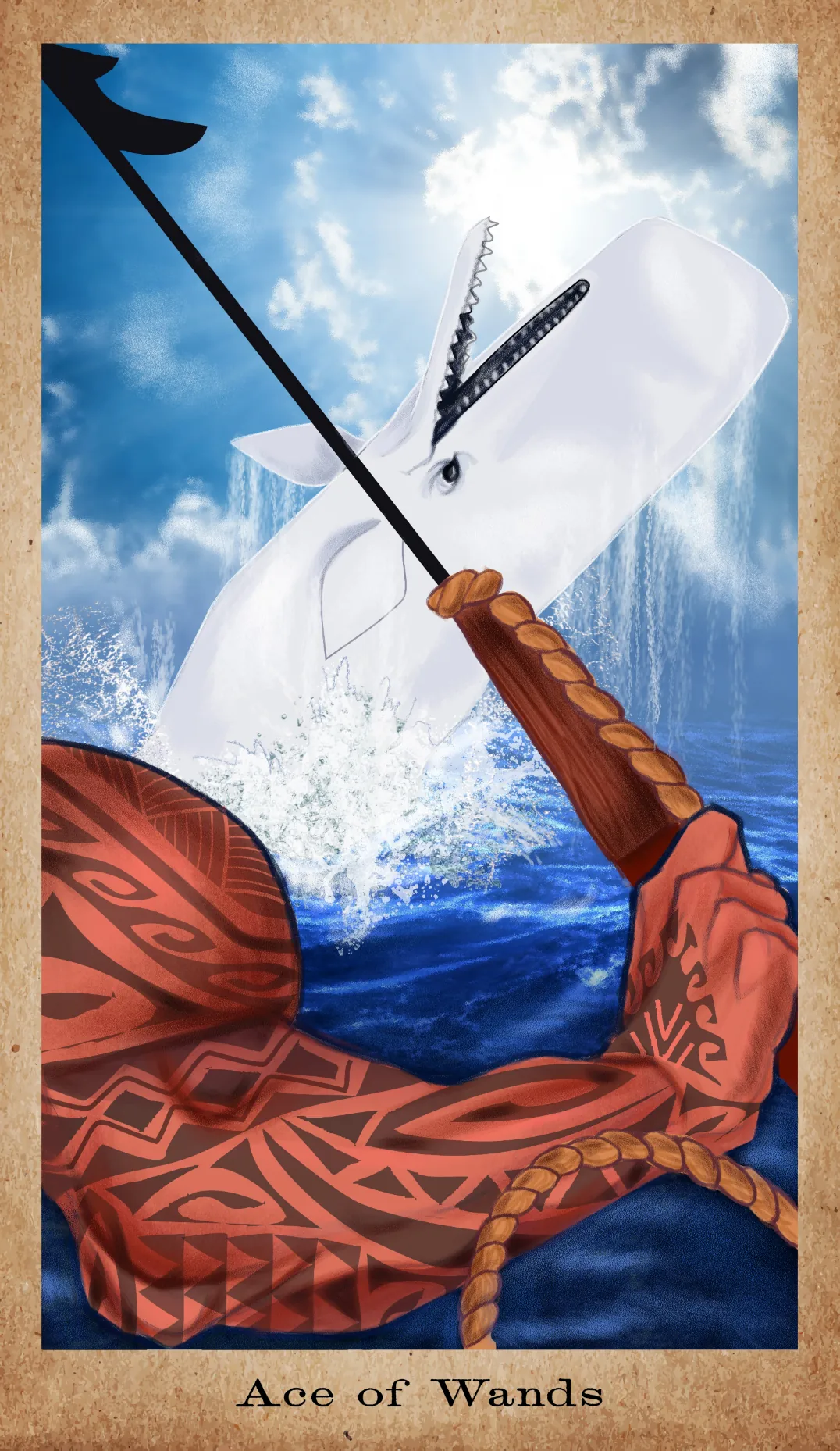
Ace of Wands: passage, risk, and direction
The sailboat image gives the deck a sense of passage. It can point to migration, commerce, exploration, escape, ambition, or the emotional risk of leaving a known shore.
In a career or life-path reading, I would ask: what wind is actually moving this choice? Is the journey brave, avoidant, necessary, or inherited?
What the mind carries across the water
The Swords sequence changes temperature as soon as I stop treating it as a catalogue of problems. Between the Ace of Wands study and these four images, I look for the thought that is steering the boat: one belief may be protecting the traveller, while another has become unnecessary weight. That pause keeps strategy connected to feeling.
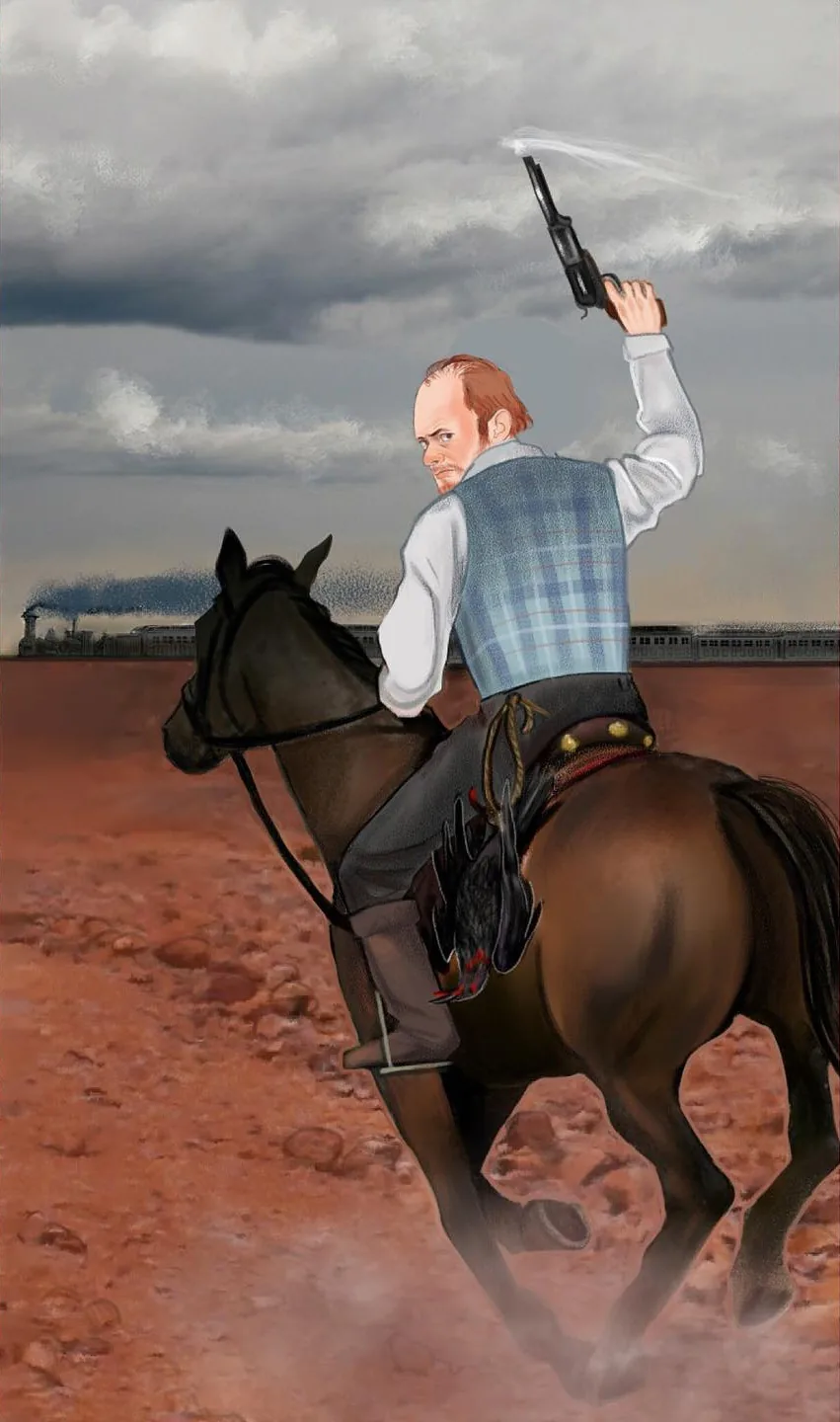
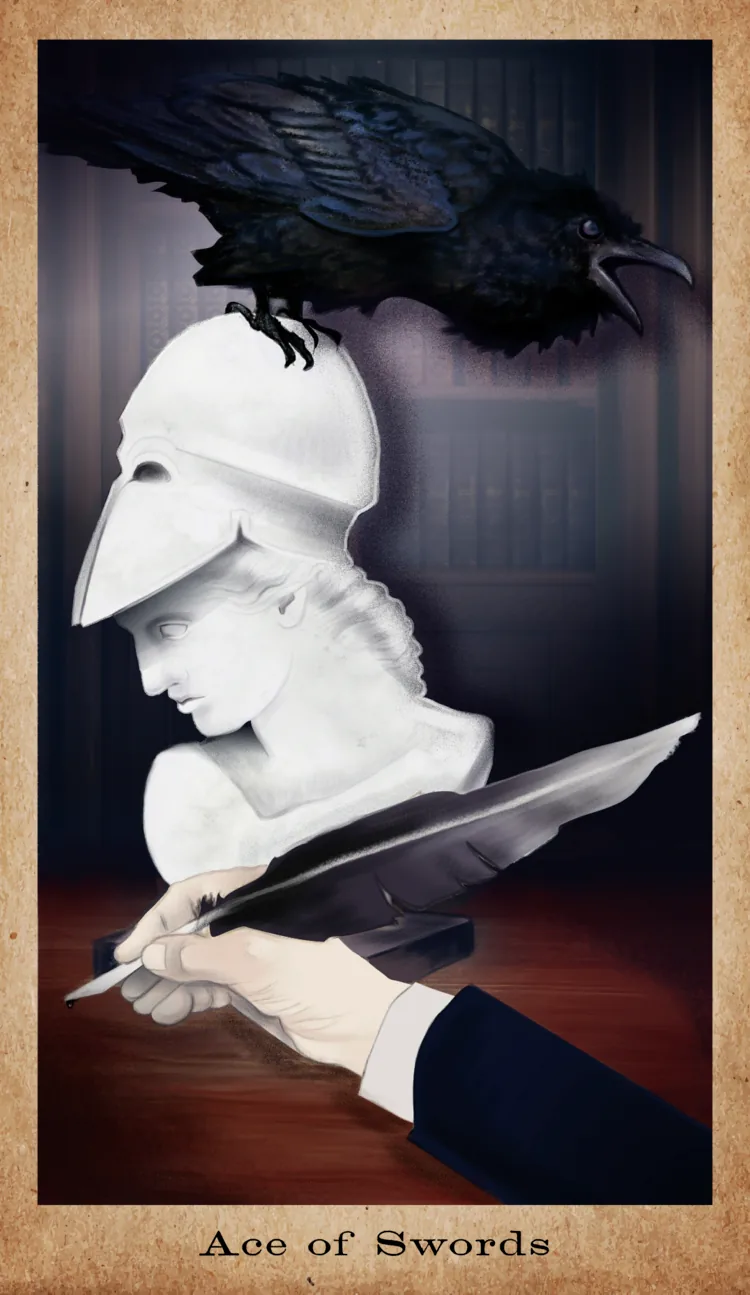
Swords: strategy, crossing, pressure, clarity
This four-card Swords group names the mental weather directly: strategy, passage, constraint, and a clear first blade.
Beginner friendliness
If you are brand new to tarot, American Renaissance Tarot may not be the easiest first deck. The images are readable, but they lean intellectual and historical. You may need a guidebook, a basic Rider-Waite-Smith reference, or your own research notes to get the most from it.
That said, a beginner who loves literature, history, museums, old books, and reflective journaling could connect with it beautifully. The trick is not to panic if you do not recognize every reference. Start with what you can see: posture, color, setting, gaze, distance, object, weather, and mood.
Card study
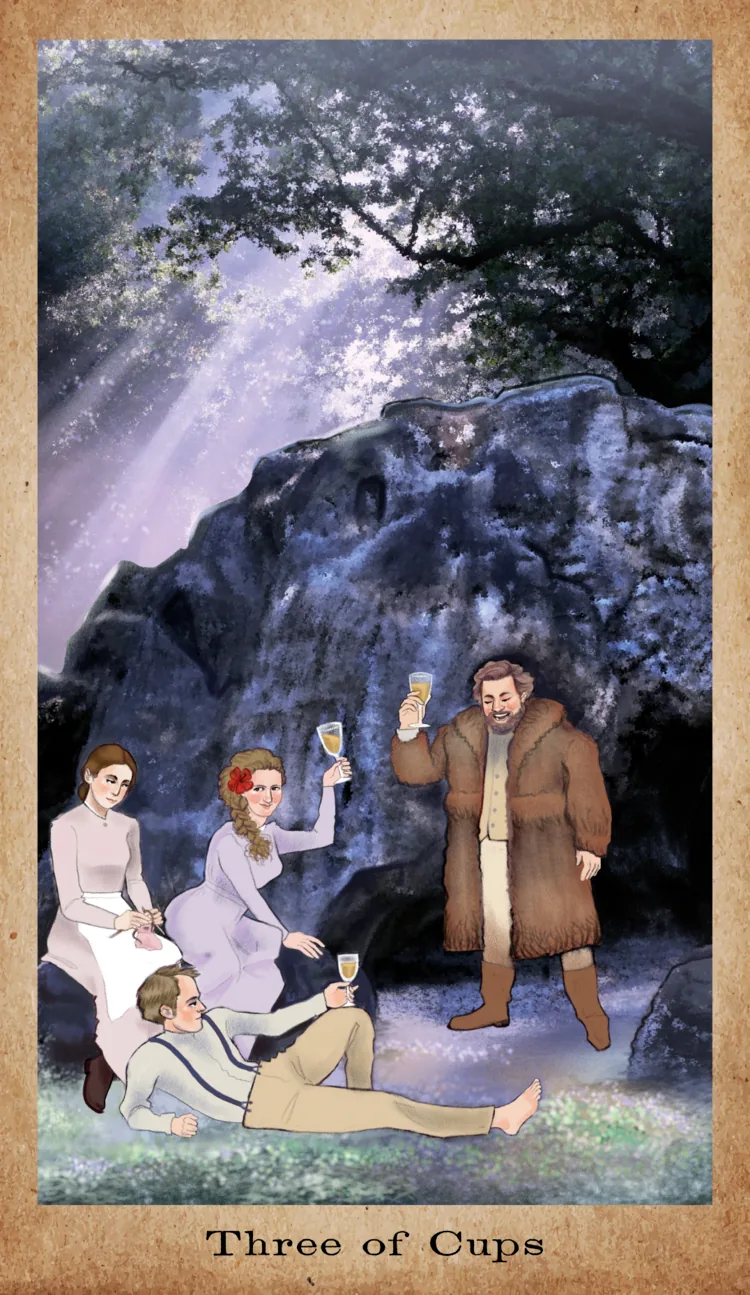
Three of Cups: devotion, idealism, and shared feeling
Three of Cups has a Renaissance-like sacred mood here. I read it as a shared emotional ideal: the beautiful bond, devotion, or creative circle we protect, celebrate, or project onto one another.
In a love, art, or spiritual reading, Three of Cups asks whether devotion is giving life or stealing clarity.
Letting feeling become a choice
After the Three of Cups study, I give the emotional story room to breathe before meeting the Cups as a group. Departure, grief, possibility, and fulfillment do not arrive in a neat line. I ask which cup still holds living water, then let that answer guide the practical next step in the reading.
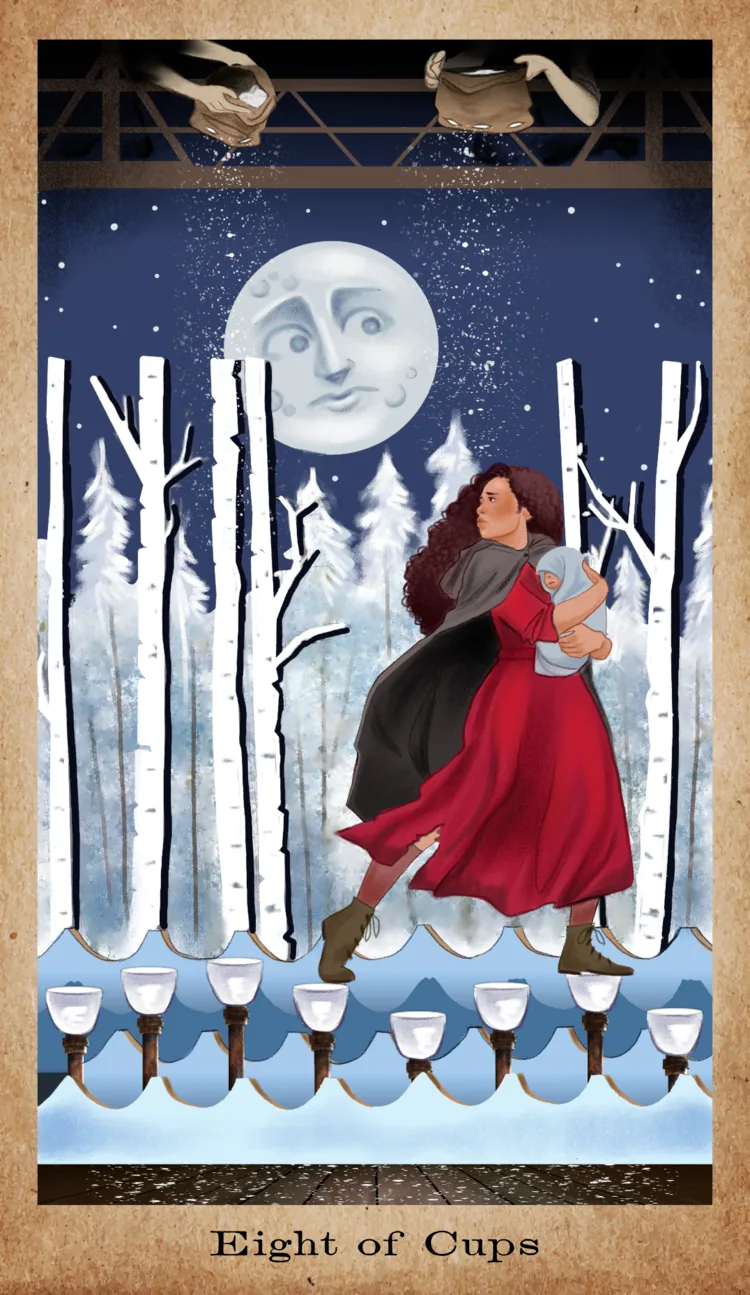
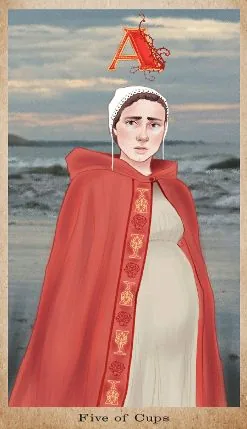
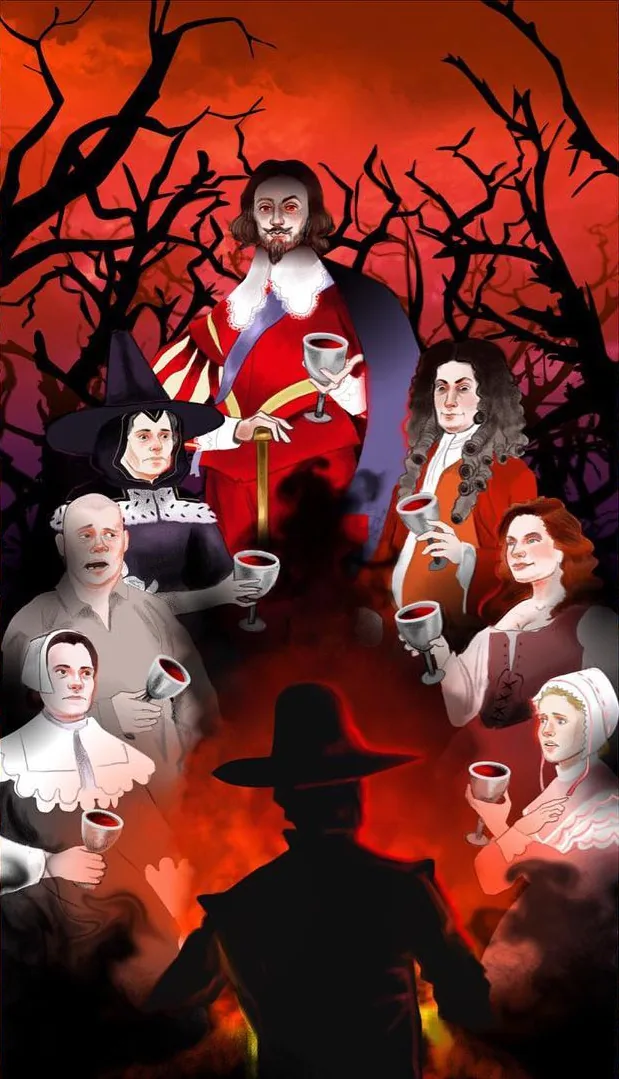
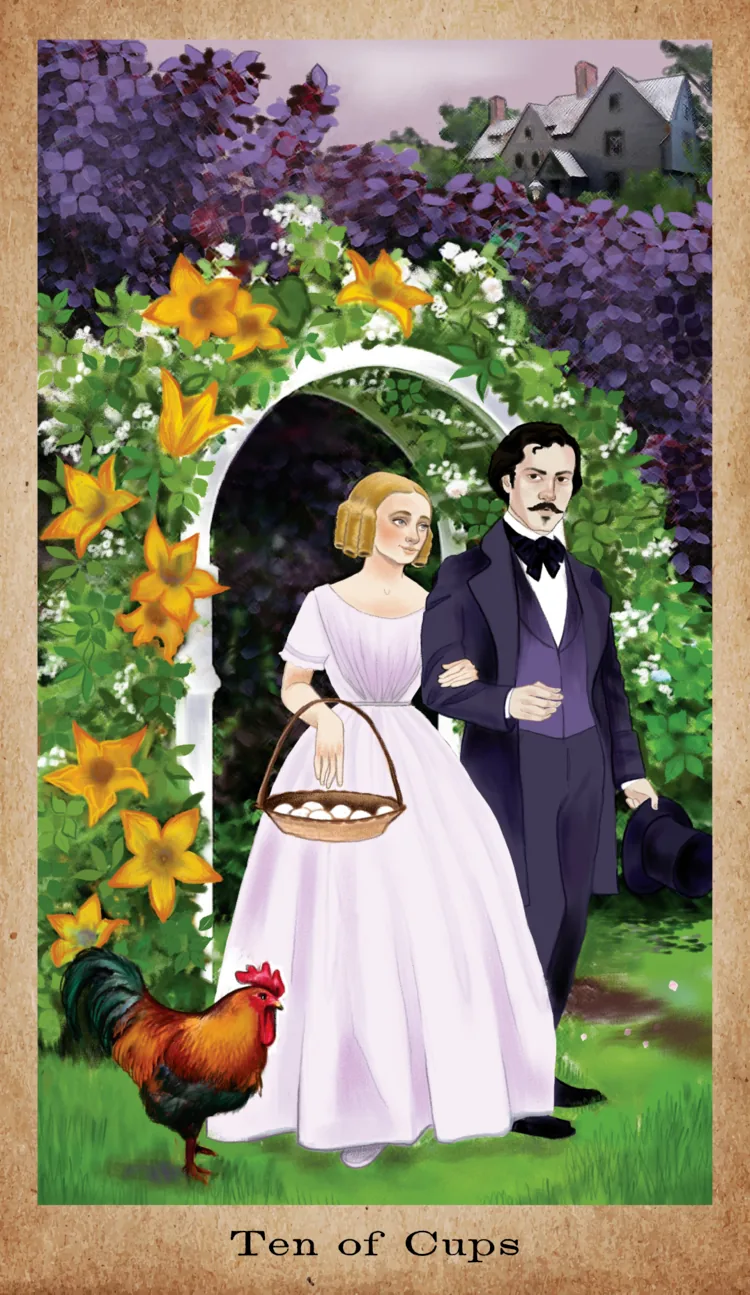
Cups: departure, grief, choices, fulfillment
This four-card Cups group keeps the emotional arc named: leaving, loss, imagination, and a fuller heart.
Best questions to ask this deck
- What story am I unconsciously living out?
- Where do my ideals and actions need to meet more honestly?
- What part of my history is asking to be studied, not avoided?
- How can I turn a creative block into a deeper conversation?
- What does freedom mean in this situation, practically and ethically?
These questions fit the deck better than yes-or-no prompts. American Renaissance Tarot wants context. It likes a question with room for memory, contradiction, and choice.
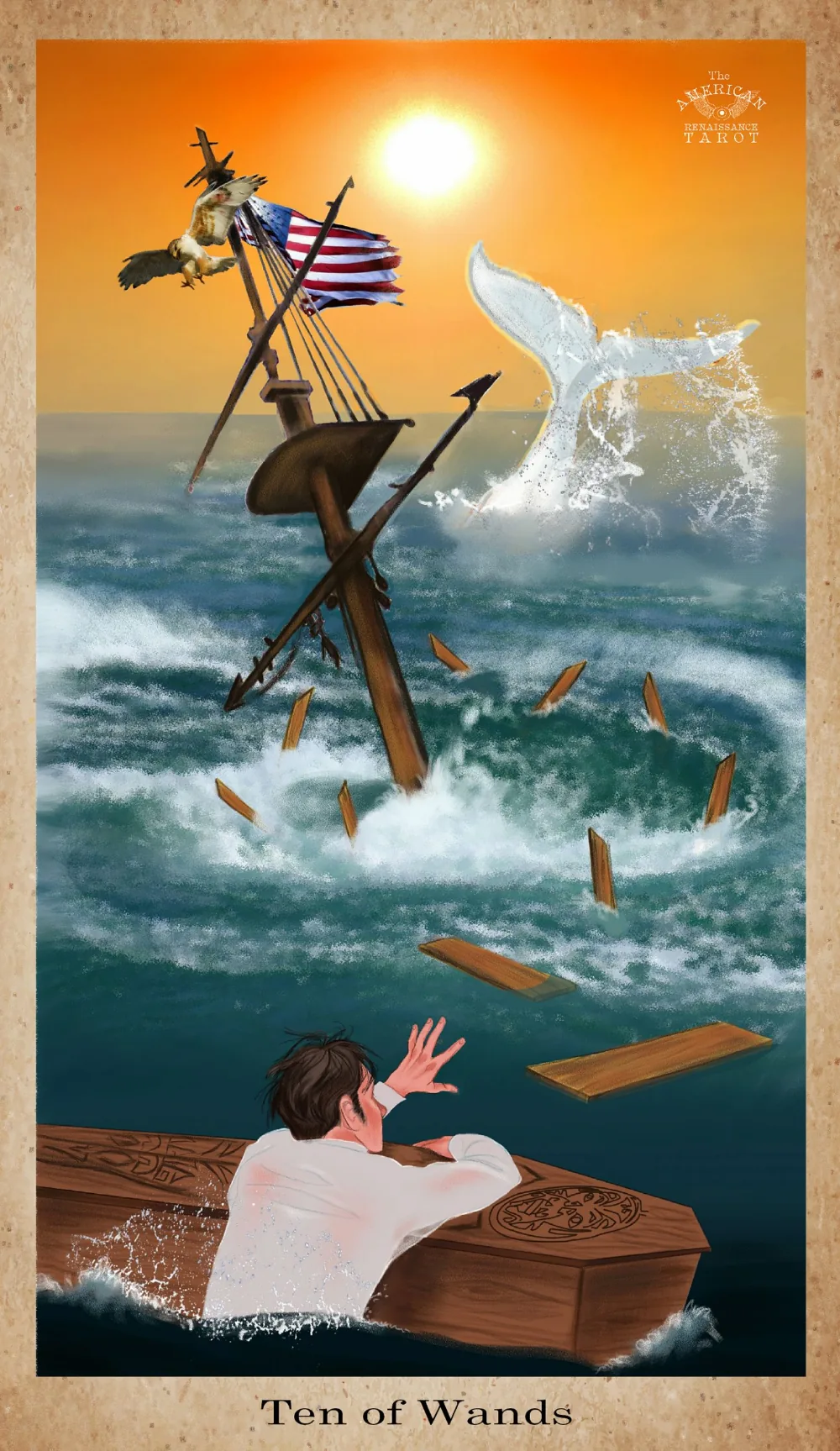
Wands: burden, velocity, home, pioneer
This four-card Wands group names the fire sequence clearly: weight, movement, celebration, and the first brave messenger.


Final thoughts
American Renaissance Tarot is best for readers who enjoy layered decks. It is literary, historical, reflective, and sometimes challenging in a quiet way. I would choose it for deep journaling, identity spreads, creative work, ancestral questions, and readings about values.
If you want a simple comfort deck, this may feel too dense. But if you like tarot that can hold books, portraits, ships, ideals, contradictions, and a real conversation with history, this deck has a memorable voice.
American Renaissance Tarot FAQ
What kind of deck is American Renaissance Tarot?
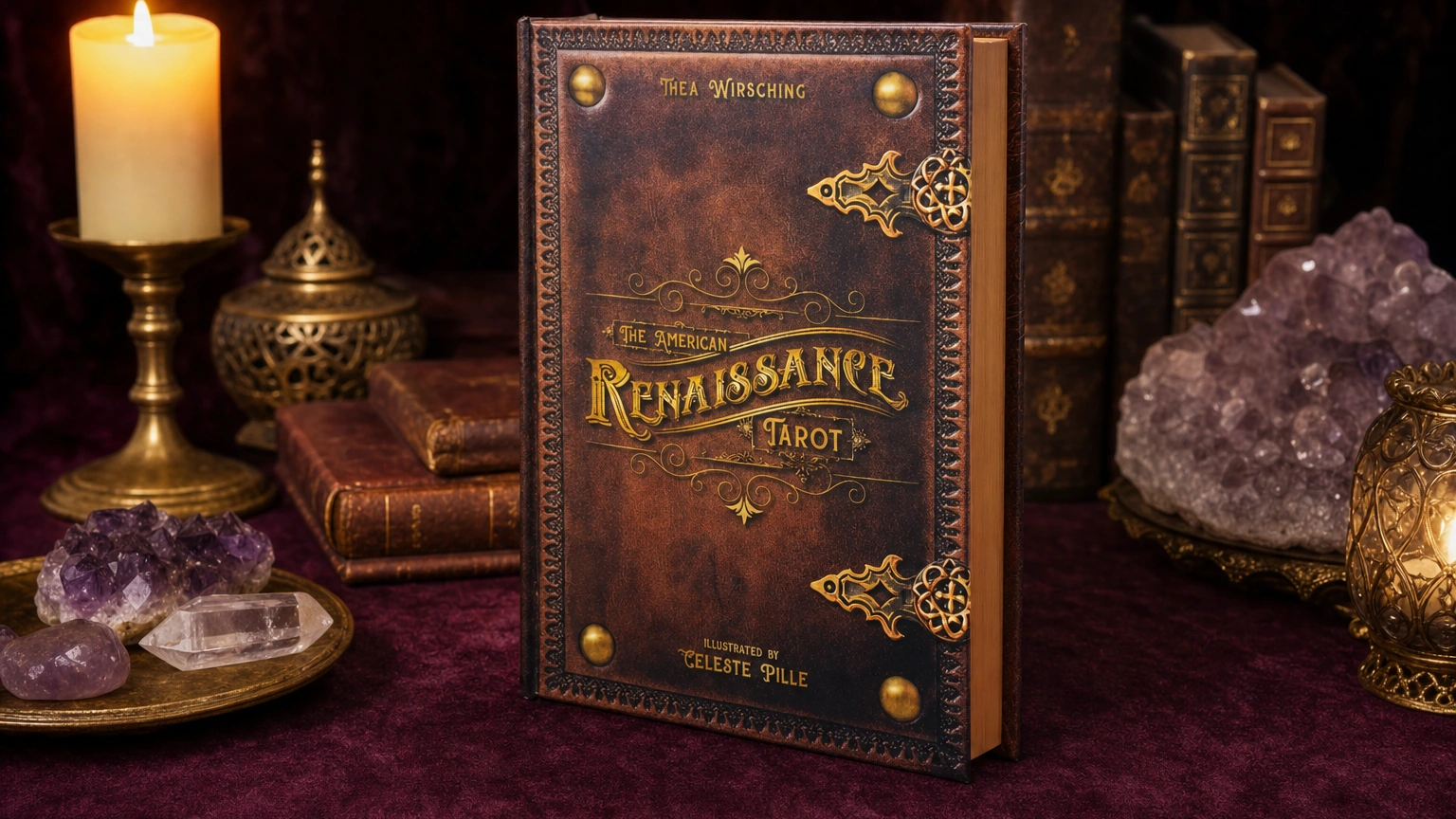
American Renaissance Tarot is a literary and historical deck created by Thea Wirsching and illustrated by Celeste Pille. Its portraits, landscapes, ships, books, and public memories bring American Renaissance themes into familiar tarot structure.
Is American Renaissance Tarot beginner-friendly?
It can suit a beginner who loves literature, history, and reflective journaling, though it is not the simplest first deck. I would keep a basic Rider-Waite-Smith reference nearby, then let each figure, setting, color, and gesture deepen the traditional meaning.
Does American Renaissance Tarot follow traditional tarot meanings?
Yes, its cards can be read through familiar tarot functions, while the historical and literary imagery adds another layer. Begin with the card title and the mood you can actually see, then explore the guidebook context when it helps the question.
What readings suit this deck best?
I especially like it for identity, inherited stories, creative purpose, values, ancestry, ethical choices, and the tension between private conviction and public life. It rewards questions that leave room for nuance rather than demanding a hurried yes or no.
How should I begin a reading with this deck?
Choose one or three cards, notice which figure seems to meet your gaze, and write down the feeling that arrives before the historical reference. Then connect that first response to the card’s traditional role and the neighbouring cards.
Who created American Renaissance Tarot?
The deck was created by author and concept creator Thea Wirsching with artwork by illustrator Celeste Pille. Their partnership gives the deck its blend of literary history, portraiture, symbolism, and tarot practice.