Pictorial Key Tarot Cards
Explore this verified partial gallery. Choose a traditional tarot group below, then select any card to open its larger Lightbox view.
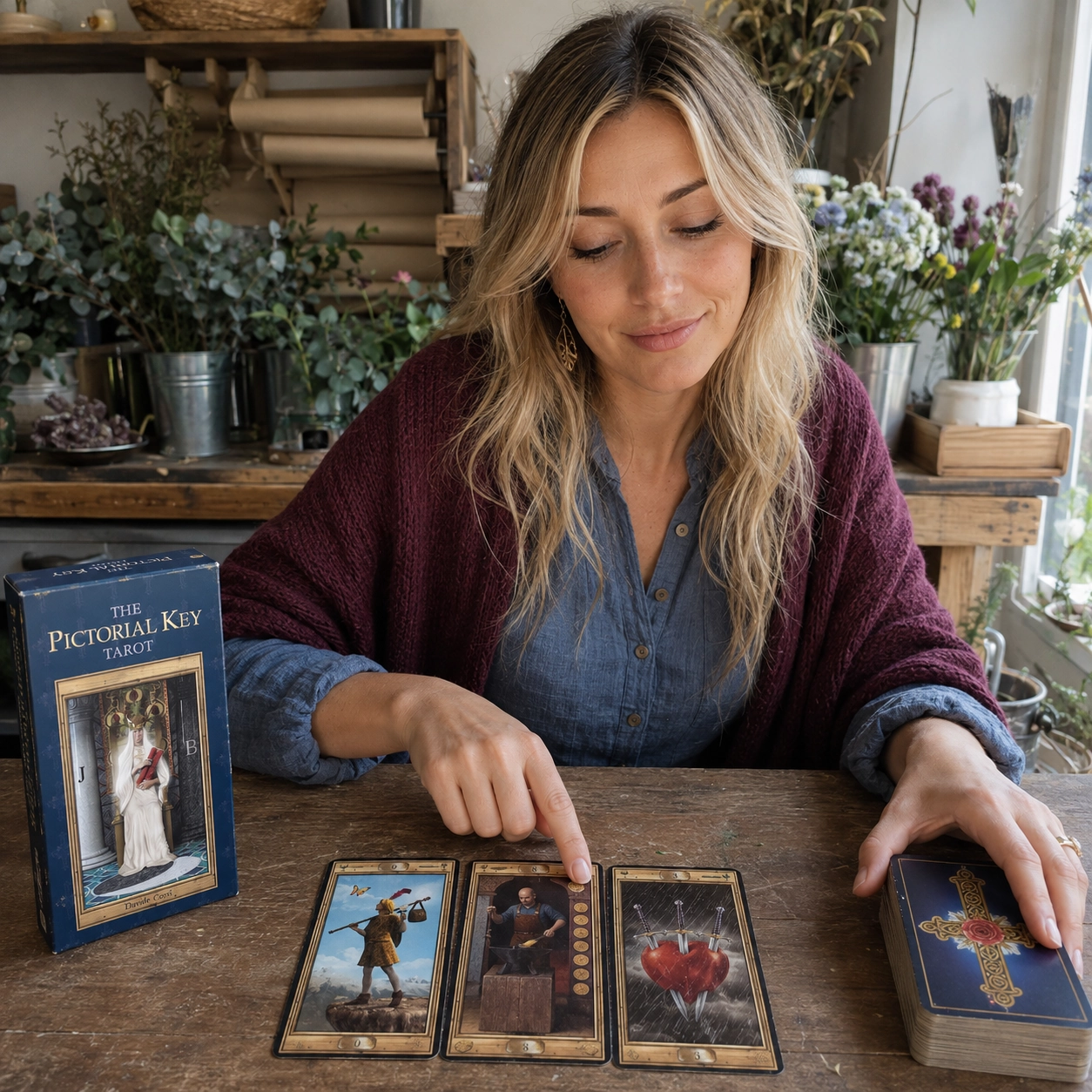
A note from Aurica
Pictorial Key Tarot feels like stepping into a familiar story after the scenery has been rebuilt overnight. I still recognise the Rider–Waite–Smith bones, yet Davide Corsi’s figures have weight, weather, and expressions that make each moment feel newly inhabited. The cards do not whisper from a distance; they meet my eyes like people caught in the middle of a choice.
I love the path between The Fool and the Eight of Pentacles. One figure walks toward open sky with almost nothing settled, while the other bends over the patient rhythm of making. Together they remind me that courage is not only the first bright leap. It is also returning to the bench, learning the tool, and giving a hopeful beginning a pair of working hands.
The Three of Swords changes the air. Its rain and pierced heart are unmistakable, but I do not read it as a sentence carved in stone. I ask what truth has become too sharp to avoid, then look back to the neighbouring cards for movement: does The Fool invite a clean departure, or does the Eight of Pentacles ask for repair through steady effort?
When I use this deck, I notice gesture first—a turned shoulder, a guarded stance, the direction a face is looking—and then return to the card’s traditional role. That keeps the cinematic detail from carrying me away. The picture opens the feeling; the tarot structure helps me name what the feeling is asking me to do.
I reach for Pictorial Key Tarot when a reading needs clarity without losing tenderness. It suits practical questions, emotional crossroads, and moments when familiar advice has gone flat.
Its storybook scenes remind me that even a difficult card still contains a doorway, and we can meet the next step with steadier hands and a hopeful heart.
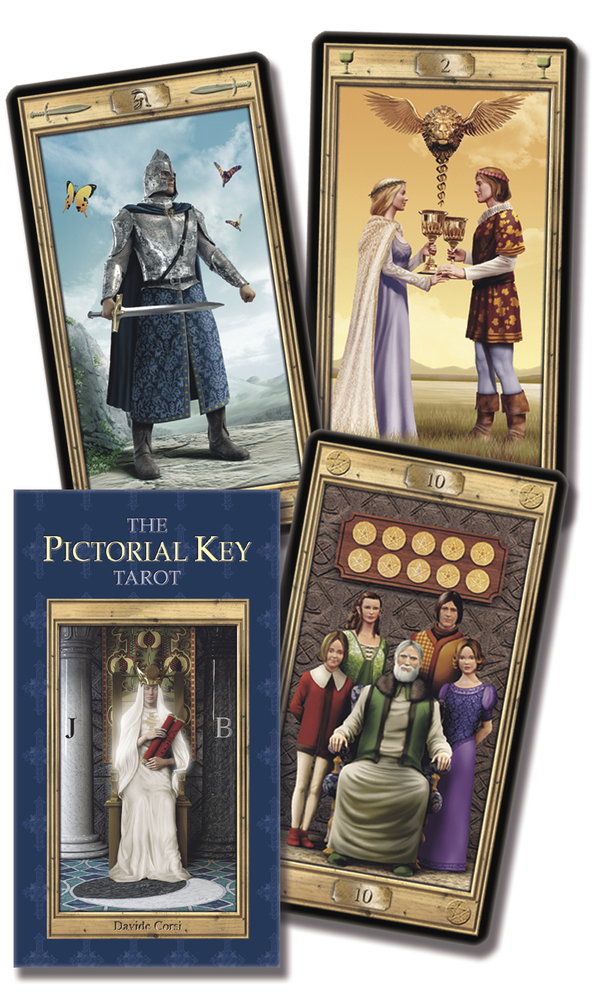
Pictorial Key Tarot is a Rider-Waite-Smith-style deck that turns familiar tarot scenes into polished 3D storybook images. The meanings are traditional, but the look is more cinematic: robed figures stand in bright fantasy settings, cups and swords feel like physical props, and many cards look like a still frame from a medieval stage play.
This review keeps the Gallery coverage honest. The verified partial selection is substantial enough to understand the deck’s voice clearly, while missing cards remain absent rather than being padded with uncertain images. If you already know the classic Rider-Waite-Smith system, this deck can feel like walking through the same symbolic rooms with stronger lighting, deeper space, and more literal body language.
Pictorial Key Tarot at a glance
Best for: readers who want classic tarot meanings in a more dimensional digital art style. I would reach for it when a querent needs a scene they can describe easily: daily pulls, beginner practice, career check-ins, relationship questions, and readings where the next practical step matters more than mystery.
Style: computer-rendered fantasy scenes, gold card borders, medieval costumes, clear poses, bright skies, and traditional symbols translated into a three-dimensional world. The deck is not soft watercolor or loose collage. Its personality is staged, bright, and theatrical, which is exactly why it can be useful for visual learners.
Gallery note: this is a verified partial selection. Missing cards are not padded with uncertain images, so the review describes the available artwork honestly. What matters here is whether the shown cards reveal the deck’s reading style clearly, and they do.

Deck-specific card study
The Fool: a first step you can actually feel
The Fool shows why this deck works for visual reading. In a flat classic deck, The Fool can feel like an idea: innocence, trust, risk, the beginning of the path. In Pictorial Key Tarot, the body and landscape make that idea more physical. The card feels like someone is actually about to move, with all the excitement and nervousness that comes before a new chapter.
In a reading, I would not rush this card into “take the leap” advice. I would ask: what is calling you forward, what do you need to notice before you step, and are you beginning from true readiness or from distraction? That is the practical strength of this deck. The picture gives the reader a simple doorway into the meaning before the guidebook language gets complicated.
Artwork and first impression
The first thing to know is that the art style is not subtle. Pictorial Key Tarot has a glossy, digitally rendered look. Some readers will love the clarity, while others may prefer softer hand-drawn artwork. The deck’s strength is that it makes each scene easy to recognize. Figures are posed clearly, objects stand out, and the gold-framed cards feel orderly on the table.
I do not read this deck as a replacement for the Pamela Colman Smith classic. I read it as a companion. It keeps the same symbolic skeleton, then adds a more theatrical skin. That can be useful when a querent is new to tarot, because you can point to the scene and ask what they see. The cards invite plain-language conversation before you even open a guidebook.
The 3D style also changes the emotional temperature of familiar cards. A sword can look heavier, a doorway can feel more like a real threshold, and a court card can look less like a flat emblem and more like a character with posture, mood, and intention. That helps when you want a reading to become concrete: not just “change is coming,” but “what does change look like in this situation, and where is the person standing in relation to it?”
Card moment: major arcana turning points
Four cards that make big archetypes feel like story scenes
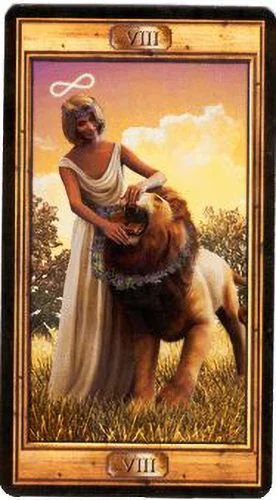

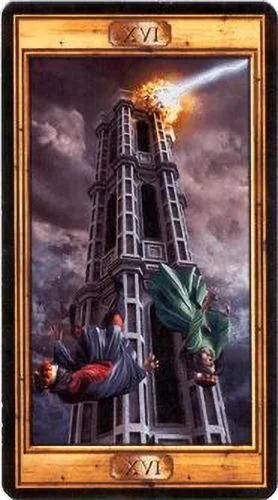

Read this strip as courage, change, disruption, and release. These cards show the deck’s best use of theatrical staging: large life themes become scenes you can talk through one detail at a time.
How Pictorial Key Tarot reads
This deck reads very close to the Rider-Waite-Smith tradition. Wands still speak through energy, desire, tension, and creative movement. Cups still open emotional weather, relationships, mood, and memory. Swords still show thought, conflict, decisions, and pressure. Pentacles still point toward work, body, money, skill, and ordinary life.
The difference is mood. Because the images are dimensional and staged, the cards can feel more literal. That is helpful when you want a quick practical read. It also makes the court cards easier for some readers, because the people look more like characters with roles, attitudes, and emotional expressions. A Knight can feel active. A Queen can feel present. A Page can feel like a person learning something right now.
My favorite way to use Pictorial Key Tarot is to read in three layers. First, name the traditional meaning. Second, describe what the figure is doing in plain words. Third, turn that description into one grounded question. For example, a card about patience becomes “where are you waiting wisely, and where are you only postponing?” That method keeps the reading useful, especially for someone who wants guidance they can act on after the session.

Deck-specific card study
8 of Pentacles: useful practice, not instant magic
The Eight of Pentacles is one of the deck’s best practical cards. The message is not glamorous: learn the craft, repeat the work, and let skill grow through attention. The 3D style gives the card a grounded feeling, almost like you can hear the tools and see the effort happening in real time.
When this card appears, I would read it as steady progress rather than instant success. It is good advice for school, work, art, spiritual practice, and any situation where the next step is not a dramatic leap but a better habit. If the querent asks “will this work out?” this card asks a better question: “are you willing to practice long enough for it to become real?”
Who will enjoy this deck?
You may love Pictorial Key Tarot if you want traditional meanings but struggle to connect with old flat line art. The scenes are direct and easy to talk about, which makes the deck useful for beginners, visual learners, and readers who like to enter a card as if it were a small world. It can also appeal to collectors who enjoy Waite-inspired decks with a very specific visual twist.
You may want a different deck if you dislike digital art, want a very modern diverse cast, or prefer loose watercolor and handmade texture. Pictorial Key Tarot is not trying to be soft or abstract. Its personality is staged, bright, and a little game-like. For the right reader, that is exactly the magic.
For client readings, I would use this deck when the person across from me needs reassurance through clarity. Some decks are wonderful because they are mysterious; this one is helpful because it is direct. You can point to a hand, a road, a tower, a tool, or a cup and build the message from something visible. That can make tarot feel less intimidating for people who are curious but nervous.
Card moment: pentacles and real-world progress
From opportunity to long-term results

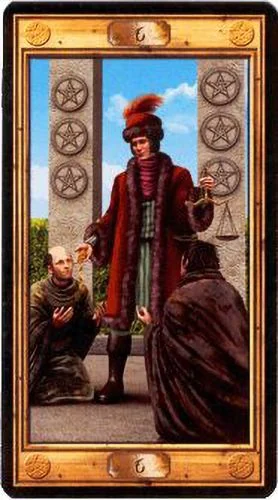

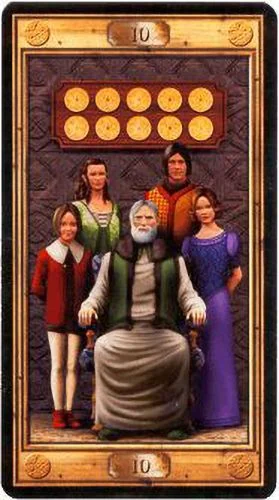
This sequence is a useful mini-reading on practical growth: the seed, the exchange of help, the waiting period, and the result that supports more than one person. It is a good example of why the deck works for work, money, body, and home questions.
Best readings to try
I like Pictorial Key Tarot for readings where the question needs clarity more than mystery. It works well for daily pulls, “what should I focus on?” spreads, relationship check-ins, study sessions, and career questions. The images are direct enough that a nervous beginner can describe them without feeling wrong, while an experienced reader can still layer in standard tarot meaning.
For a simple three-card spread, try: what is happening, what needs attention, what can move next. With this deck, notice posture first. Who is reaching, waiting, turning away, giving, guarding, or walking forward? Then add the suit and number. That approach keeps the reading grounded and easy to understand.
For love readings, I would avoid asking only “yes or no.” This deck is better when you ask what is visible in the dynamic: where connection is offered, where someone is guarded, what truth needs to be named, and what action would make the relationship healthier. For career readings, ask where effort is useful, where pressure is building, and what practical step would create momentum within the next week.
Deck-specific card study
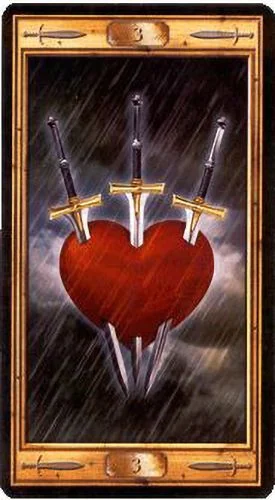
3 of Swords: clear truth without making the reading cruel
The Three of Swords is direct in this deck. The image does not pretend heartbreak is gentle, but the clean composition keeps the message readable rather than chaotic. It is a good example of how Pictorial Key Tarot handles hard cards: clear, traditional, and emotionally obvious.
In practice, I would use it for honest naming. What hurts? What truth has finally landed? What conversation, decision, or grief needs space? The card is not there to scare the reader. It is there to stop the reading from becoming too vague. A helpful reader can hold the card gently while still letting it say what it needs to say.
Beginner tips for reading Pictorial Key Tarot
If you are learning with this deck, do not try to memorize everything at once. Pull one card and write three short notes: the first detail you noticed, the traditional meaning, and one useful action. That little routine teaches you how the deck speaks without turning tarot into homework.
Another helpful exercise is to compare a Pictorial Key card with a classic Rider-Waite-Smith version. Ask what stayed the same and what changed. Did the pose become more dramatic? Did the background feel brighter? Did the card become easier or harder to read? These comparisons build your eye, and they also help you decide whether the 3D style supports your intuition.
Because the deck is visually literal, it is tempting to read every card exactly as the picture looks. Keep one foot in the system. The picture starts the conversation, but the suit, number, and traditional card meaning keep it balanced. That is especially important with strong images like the Tower, Death, or Three of Swords, where the scene can feel intense before you translate it into helpful guidance.
Card moment: cups and swords together
Feeling begins, truth arrives, and a decision waits
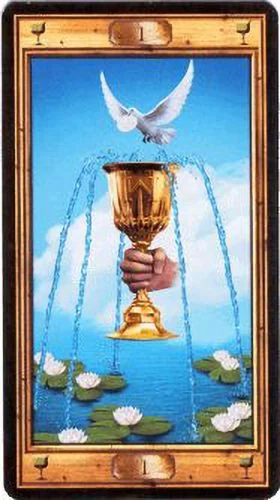
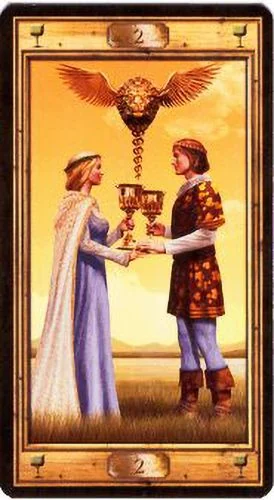

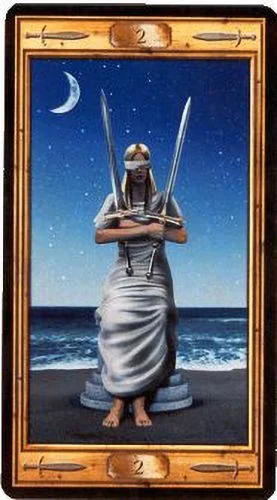
This four-card path is excellent for relationship or self-trust readings. It asks how a feeling begins, how connection forms, what truth is clear, and where a decision still needs courage.
Pros and cons
| Pros | Cons |
|---|---|
| Very close to Rider-Waite-Smith meanings, so it is easy to study with standard tarot resources. | The digital 3D style can feel too glossy or artificial for readers who prefer hand-drawn decks. |
| Clear body language and scenes make readings beginner-friendly and conversational. | The current TarotFans gallery is partial, with 71 recovered card images rather than all 78. |
| Good for practical readings, daily pulls, pathworking, and visual learners. | It is more of a classic-system reinterpretation than a totally new tarot world. |
Final Thoughts
Pictorial Key Tarot is a clear, traditional deck with a very specific visual flavor. It keeps the Rider-Waite-Smith meanings close, but the computer-rendered scenes make those meanings feel more physical and story-like. If you want a deck that helps you talk through the pictures in everyday language, it does that well.
I would recommend it most to readers who enjoy classic symbolism but want a more dimensional, theatrical look. It may not be the softest or most modern deck on the shelf, but it has a strong teaching quality. Browse the verified partial Gallery, notice how the art feels to your eye, and decide whether this 3D storybook style makes tarot easier for you to enter. If it does, this can be a surprisingly useful deck for practical readings, especially when you want the message to feel clear enough to explain out loud.

Frequently Asked Questions
Is Pictorial Key Tarot good for beginners?
Yes. It follows Rider-Waite-Smith meanings closely, so beginners can use standard tarot books while learning from clear, visual scenes.
Can I preview the card artwork in this review?
Yes. The verified partial gallery lets you study the deck’s dimensional scenes and open every shown card in a larger Lightbox before deciding whether its visual language suits you.
What is the art style of Pictorial Key Tarot?
The art has a polished, computer-rendered 3D style with medieval fantasy scenes, gold borders, clear poses, and traditional tarot symbols.
Does Pictorial Key Tarot follow traditional tarot meanings?
Mostly, yes. It is strongly connected to the Rider-Waite-Smith system, with familiar suits, court cards, and major arcana themes.
What readings is this deck best for?
It works well for daily pulls, beginner practice, career questions, relationship check-ins, and practical readings where clear visual storytelling helps.
Who might not enjoy this deck?
Readers who dislike digital art, prefer soft handmade textures, or want a radically different tarot system may prefer another deck.