Vice Versa Tarot Cards
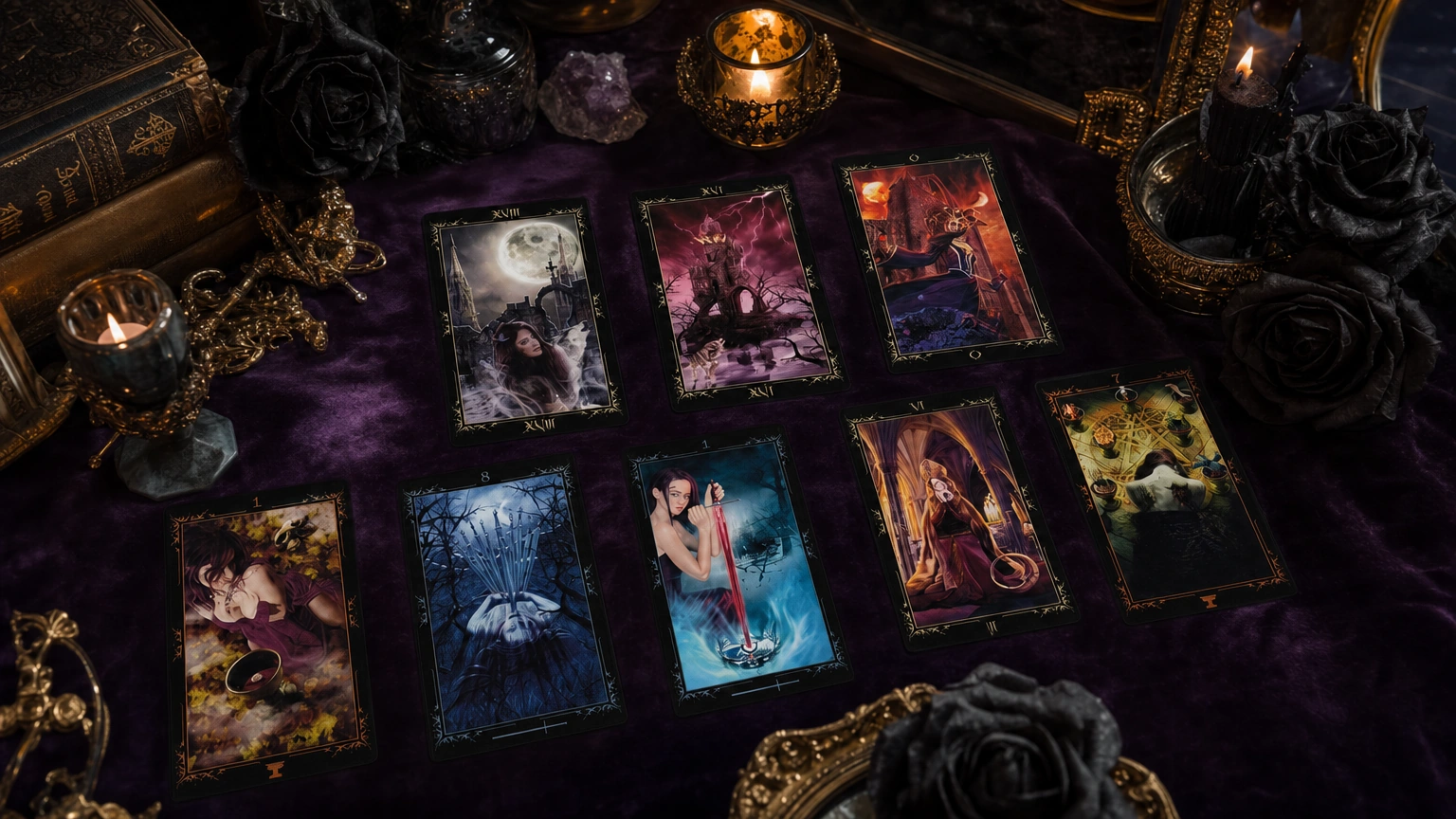
Explore the complete Vice Versa Tarot artwork in official deck order. Choose a group below, then select any card to open its larger Lightbox view.
Quick Take: Is Vice Versa Tarot Worth It?
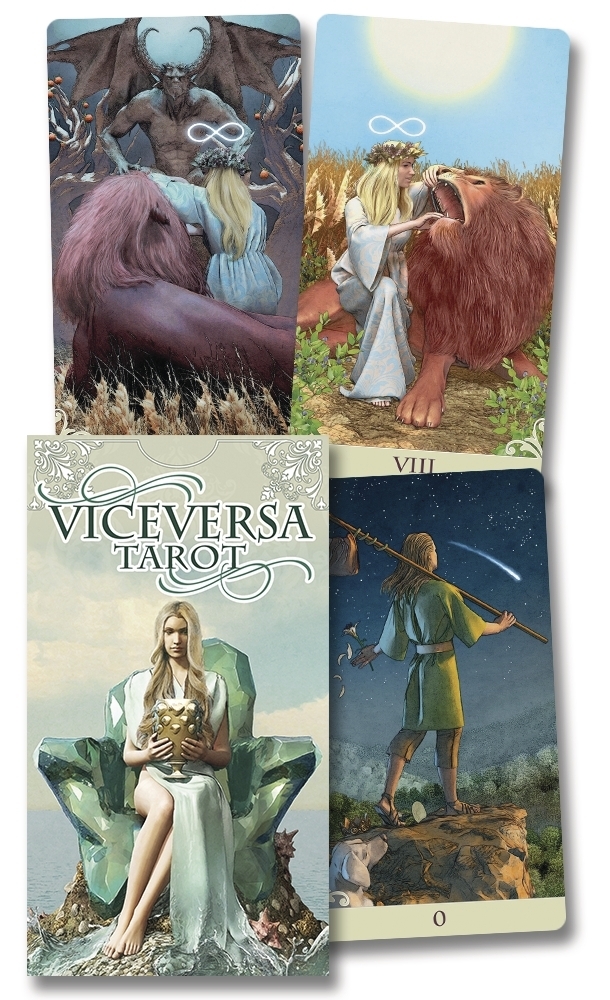
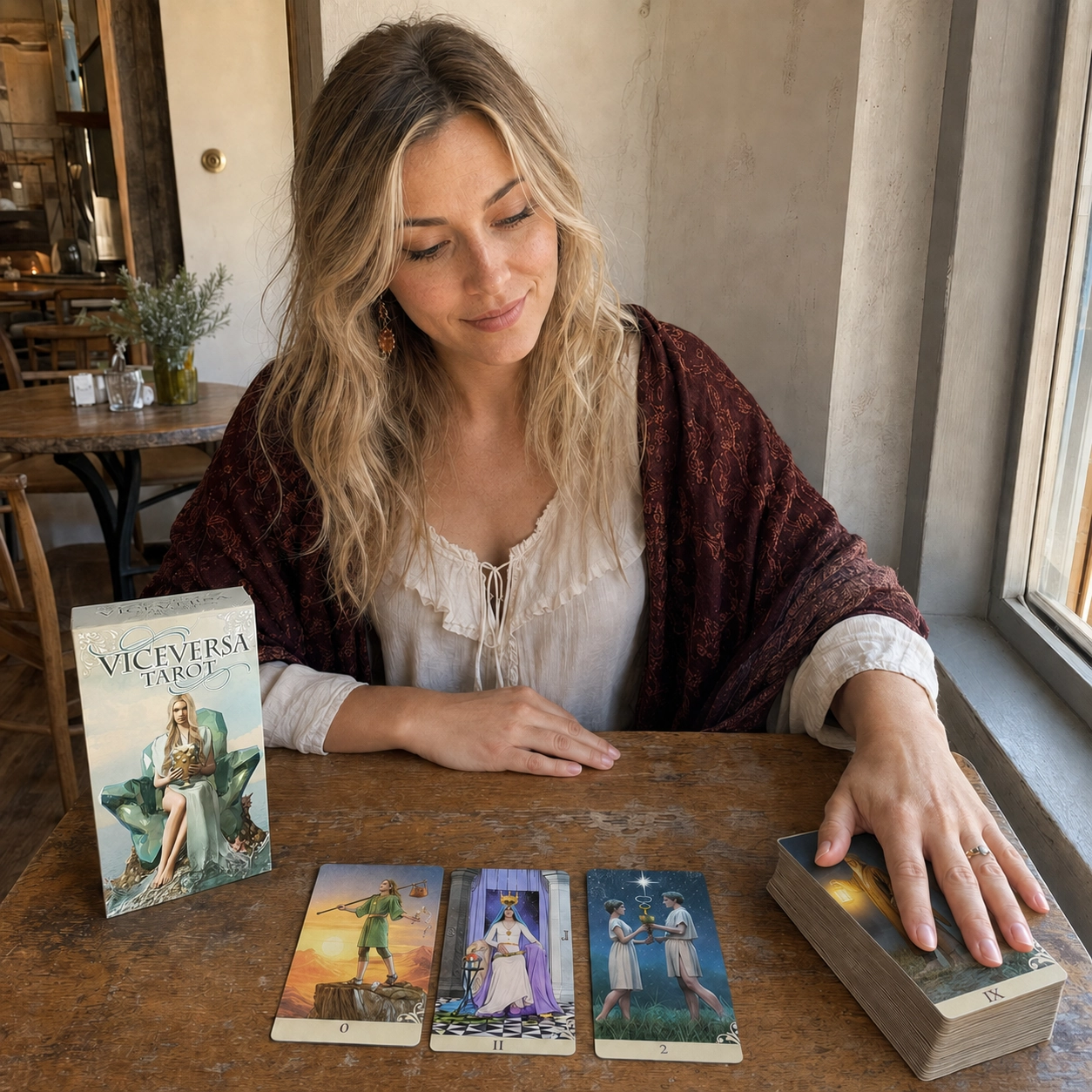
Vice Versa Tarot is for readers who want to see both sides of a story. Instead of using a normal card back, each card has a second illustrated side. That means the deck does not simply ask, “Is this upright or reversed?” It asks, “What are we seeing from this angle, and what becomes visible when we walk around to the other side?”
This makes the deck feel cinematic, layered, and very good for situations where the truth is not flat. Relationship readings, shadow work, repeated patterns, hidden motives, and “what am I missing?” questions all suit it beautifully. It is not the simplest first tarot deck, but for a reader who already knows the Rider-Waite-Smith system, Vice Versa Tarot can feel like opening a secret door behind a familiar room.
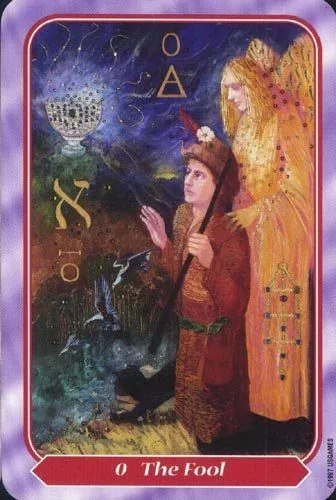
I love the small hush that arrives when I turn one of these cards and the familiar scene suddenly has a horizon behind it. The Fool is no longer only stepping toward the bright unknown; his other side asks what the cliff, the road, and the watching world might remember after he has passed. That second view can soften a quick judgement or reveal the feeling someone has kept just outside the frame.
When I read with Vice Versa, I begin with the side that landed, notice the first gesture or colour that tugs at me, then test that feeling against the card’s traditional role and the neighbouring cards. If the spread feels tangled, I turn just one card rather than flipping everything. That single change of viewpoint often shows whether I am looking at a hidden motive, an unseen consequence, or simply a truth that needs more patience.
I reach for this deck when a question has become too certain of its own answer. It invites curiosity without pretending that every mystery can be solved at once. Each second view feels like a small open window, reminding me that a gentler angle can reveal the brave, hopeful next step that was there all along.
Vice Versa Tarot Art Style
Vice Versa Tarot has the dramatic, polished fantasy style many readers associate with Lo Scarabeo. The images are detailed, atmospheric, and often theatrical, with medieval clothing, symbolic landscapes, night-and-day contrasts, and mystical details tucked into the scenery. Davide Corsi’s art gives the deck a rich storybook feeling: figures look as though they belong to a larger world beyond the card border.
The most important artistic choice is the double-sided design. One side often shows the familiar archetype or scene. The other side may show what is behind the figure, what happened just before or after, or the emotional underside of the same moment. It is not always a neat “light side versus dark side” split. Sometimes the second side softens the card. Sometimes it sharpens it. Sometimes it simply changes where the reader is standing.
First look


The first steps of the Major Arcana feel familiar, but Vice Versa Tarot asks what appears when we turn the scene around: instinct, will, intuition, and embodiment from a second angle.
How Vice Versa Tarot Reads
Vice Versa Tarot reads like a conversation with perspective. A card can show the face of an event, the back of an event, the public story, the private truth, the choice in front of you, or the consequence waiting behind it.
For practical readings, I would treat the visible side as the main message and then ask one extra question: “What does this angle reveal that the usual card would hide?” That keeps the deck useful rather than overwhelming. The images still lean on classic Rider-Waite-Smith meanings, so you are not starting from nothing. But the double-sided art adds nuance, timing, and motive.
This deck is especially strong when a person says, “I understand what is happening, but I do not understand why it feels this way.” Vice Versa Tarot often points to the part of the story that was standing behind the obvious answer.
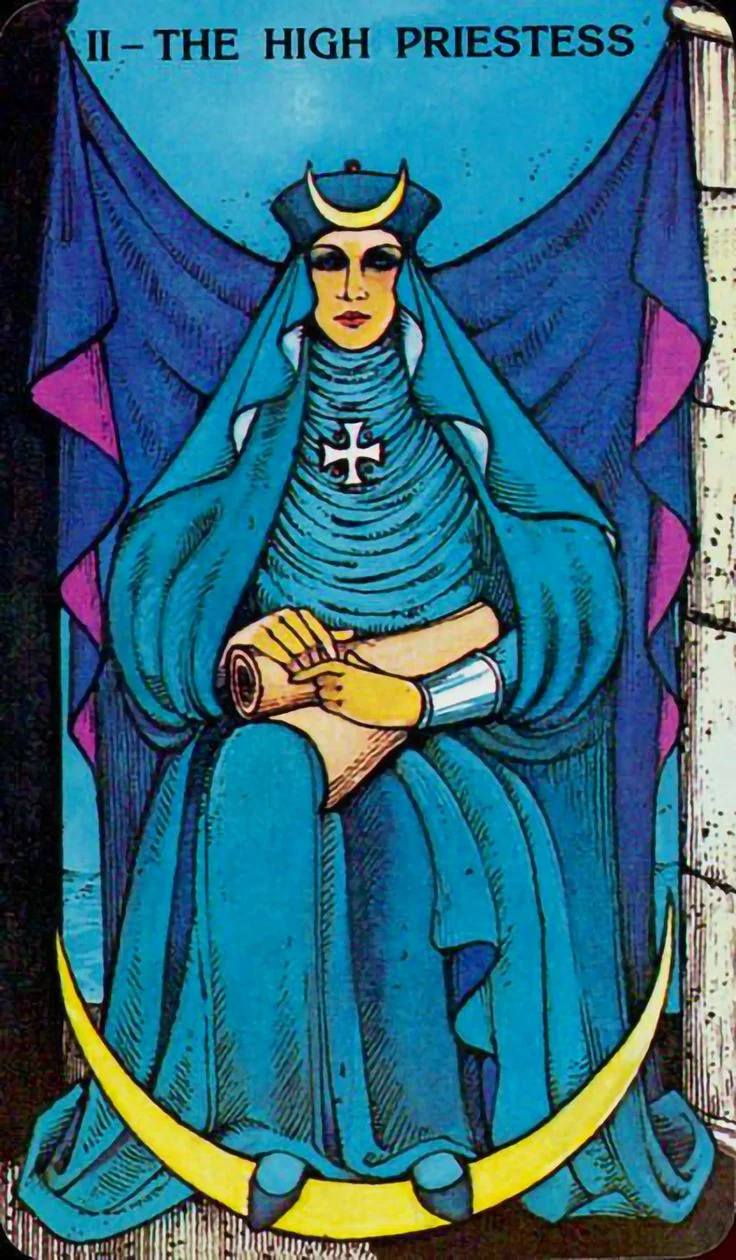
The High Priestess: where are you standing in relation to the mystery?
The High Priestess is a perfect case study for this deck because she already lives between visible and hidden knowledge. In a normal reading, she says, “Listen beneath the noise.” In Vice Versa Tarot, that message becomes more physical: where are you standing in relation to the mystery?
Use this card to explain how Vice Versa Tarot rewards quiet looking. The meaning is not only “intuition.” It is the discipline of not forcing a secret to become simple before it is ready.
Perspective and timing


These cards show the deck’s mature side: courage is not always loud, solitude is not always lonely, fate is not always random, and fairness depends on the angle from which we judge.
Is Vice Versa Tarot Good for Beginners?
Vice Versa Tarot is beginner-friendly only with a caveat. If you are brand new to tarot, a standard Rider-Waite-Smith teaching deck may be easier because it gives one familiar image per card. Vice Versa Tarot gives you two illustrated sides for every card, which can be exciting but also a lot to hold in your head.
For a beginner who loves symbolism and is willing to go slowly, it can still work. Keep the guidebook close. Read one card at a time. Do not try to memorize 156 meanings at once. Start with the normal tarot meaning, then add the question: “What changes when I see this from the other side?” For an intermediate reader, this deck is much easier to love because it gives fresh language to cards you already know.
Easy, Medium, and Hard Reading Examples
Easy example: what energy should I bring into this week?
If The Sun appears, keep the reading simple first: clarity, warmth, confidence, and life returning to the body. With Vice Versa Tarot, the extra layer is perspective. Ask whether you are standing in the sunlight or only looking toward it. Are you ready to be seen? Are you letting joy be a real guide, not just a reward after struggle?
Medium example: what am I not seeing in this relationship?
If 2 of Cups appears, the familiar message is connection, exchange, attraction, or emotional agreement. In Vice Versa Tarot, the second-side concept matters. You would look at whether the card feels face-to-face, hidden, reflective, or watched from behind. The deck may be asking whether both people are meeting honestly, or whether one person is only seeing the pretty front of the bond.
Hard example: why does this ending still feel unfinished?
If 10 of Swords appears, the standard meaning is a painful ending, exhaustion, or mental collapse. Vice Versa Tarot can make this card more nuanced because the alternate view may show what survives after the dramatic moment. The hard lesson becomes: the story may be over, but your nervous system may still be living beside the armor, the blades, and the memory of impact.

10 of Swords: the other side of an ending
10 of Swords shows why the double-sided concept matters in difficult cards. The familiar card can look final, even brutal. Vice Versa Tarot invites the reader to ask what remains after the worst moment has happened.
This is a strong card for teaching the deck’s emotional maturity. It does not erase hard truths. It gives the reader another angle from which to understand the aftermath.
What the Cups reveal


In the Cups, Vice Versa Tarot is excellent for emotional perspective: attraction, grief, fantasy, and compassion all change when we see what is hidden behind the feeling.
Best Uses for Vice Versa Tarot
- Shadow work that needs compassion, not fear.
- Relationship readings where both people may see the same event differently.
- “What am I missing?” spreads.
- Decision readings where the visible choice and hidden consequence both matter.
- Journaling with one card from two angles.
- Creative writing, character work, and story-based tarot practice.
- Deep monthly or seasonal readings for readers who enjoy symbolism.
What To Know Before Buying Vice Versa Tarot
Vice Versa Tarot is not a normal one-sided tarot deck. Every card has art on both sides, so it changes the way you shuffle, lay cards down, and interpret reversals. Many readers treat the side that lands face-up as the message, rather than using traditional reversed-card meanings in the same way.
That is the main reason to buy it and the main reason to pause. If you want a clean, simple study deck, this may feel busy. If you want a deck that expands familiar tarot scenes into hidden views, it is a memorable choice.
It is also useful to know that the deck is still close enough to the Rider-Waite-Smith structure to feel familiar: the Fool is unnumbered in the traditional way, Strength sits at 8, and the suits/courts remain recognizable. The twist is not the system itself. The twist is the viewpoint.

5 of Pentacles: outer lack and inner belonging
5 of Pentacles is one of the best cards for showing how Vice Versa Tarot reads both outer and inner poverty. The usual meaning is hardship, exclusion, worry, or lack. In this deck, the other side of the scene can raise a sharper question: who looks safe but feels empty, and who looks poor but may be closer to real spiritual help?
This case study is useful for money, belonging, burnout, and self-worth readings. The card reminds readers that a situation can look materially secure while still feeling lonely, and it can look materially thin while still containing a doorway to support.
Action and consequence
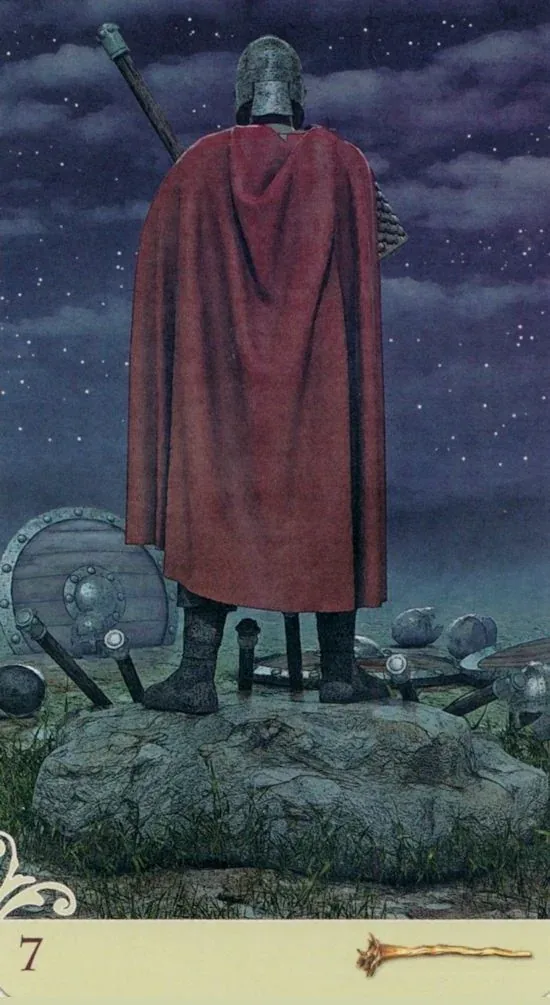

This closing strip moves from defense to exhaustion, from lack to integration. It shows why this deck is strongest when a reader needs the whole story, not just the front-facing answer.
Golden Rule for Vice Versa Tarot
When reading Vice Versa Tarot, do not flatten the second side into a simple reversal. Ask, “What changes because I am seeing this from here?” The deck’s magic is not just opposite meaning. It is perspective, context, and the hidden half of the scene.
Final Thoughts
Vice Versa Tarot is best for readers who enjoy depth, image-reading, and symbolic nuance. It is not the fastest deck on the table, and that is part of its charm. It asks you to slow down, look behind the surface, and let each card become a small scene with more than one truth.
If the artwork excites you and the two-sided idea feels inspiring rather than stressful, this is a rich deck to study over time.

Vice Versa Tarot FAQ
Is Vice Versa Tarot good for beginners?
It can work for a thoughtful beginner, but it is easier if you already know the Rider-Waite-Smith system. Each card has two illustrated sides, so the deck gives more information than a simple teaching deck. Beginners should go slowly, use the guidebook, and read one card at a time.
How does the two-sided design of Vice Versa Tarot work?
Instead of a plain card back, each card has a second image. The side that lands face-up becomes part of the reading. It may show another angle, a hidden consequence, a private emotional layer, or the scene behind the familiar tarot moment.
Do you still read reversals with Vice Versa Tarot?
Many readers do not use traditional reversals in the usual way with this deck, because the two sides already create contrast and nuance. A simple method is to read the face-up side first, then ask what that angle reveals that the standard card might hide.
Who created Vice Versa Tarot?
The concept is credited to Massimiliano Filadoro, with artwork by Davide Corsi and guidebook text by Lunaea Weatherstone. The deck was published by Lo Scarabeo and is known for turning each tarot card into a two-view scene.
Is Vice Versa Tarot based on Rider-Waite-Smith?
Yes, it stays close enough to Rider-Waite-Smith to feel familiar. The suits and courts are recognizable, Strength is placed at 8, and the Fool follows the classic unnumbered style. The difference is that every card also has an alternate illustrated perspective.
What kinds of readings suit Vice Versa Tarot best?
It shines in relationship readings, shadow work, decision spreads, journaling, and questions where both sides of a situation matter. It is especially helpful when you know the obvious answer but need to understand the hidden motive, consequence, or emotional underside.