
Magical Realism Tarot Cards
Explore Cheryl Fair’s black-and-gold photographic tarot artwork in canonical order. Tap any card for a larger carousel view.
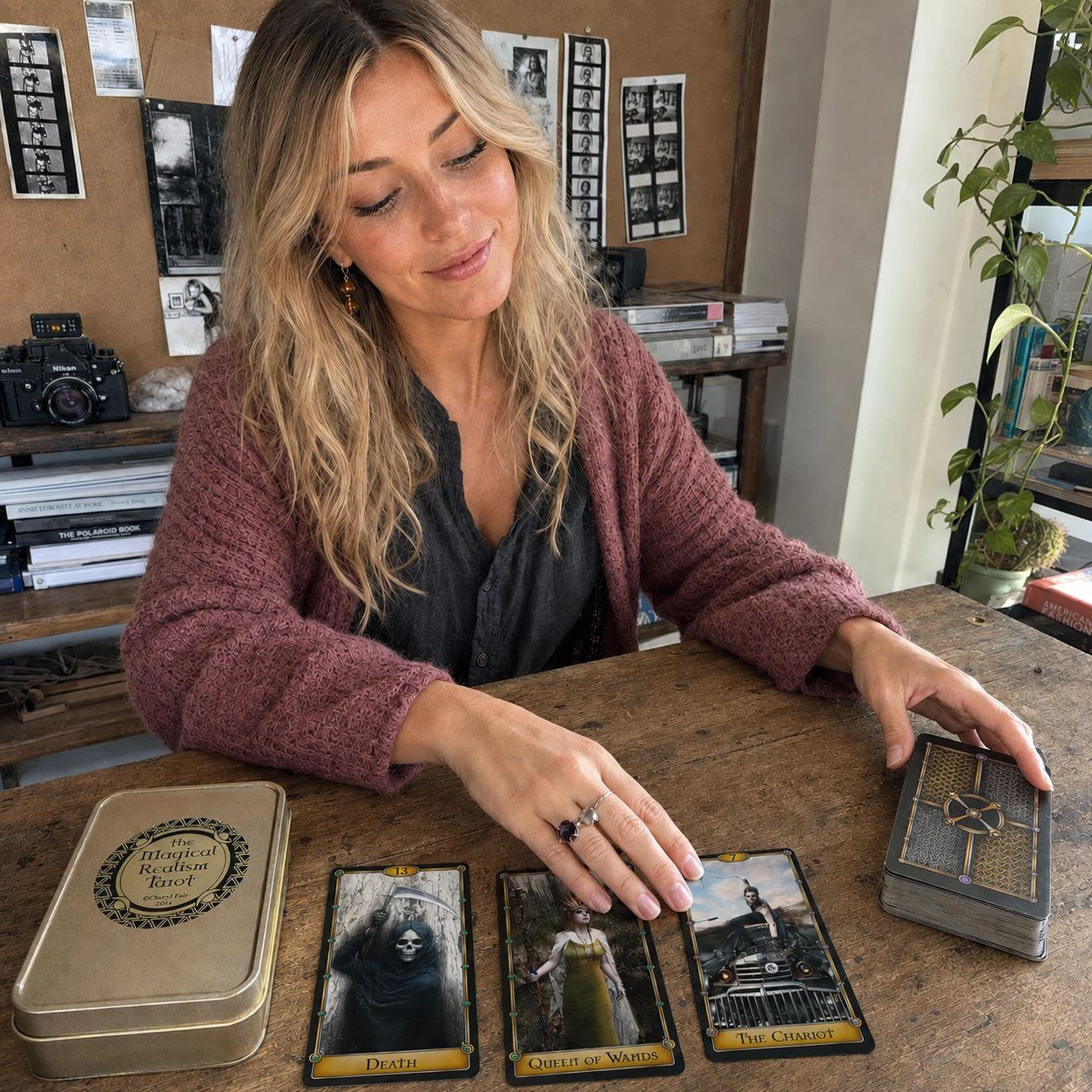
A note from Aurica
I love how Magical Realism Tarot makes an archetype feel as though it has stepped out of a dream and into an ordinary room. Cheryl Fair’s photographs are theatrical, yet the people inside them still carry human nerves, pride, longing and uncertainty. The gold frames hold each vision like a little stage, while the black ground lets every gesture arrive with real weight.
When I meet The Chariot here, I notice the figure crouched on the bonnet of an old car, close enough to touch the machine but not yet travelling anywhere. That tension changes my reading. I ask where determination has become performance, where momentum needs a destination, and whether the surrounding cards offer a road or merely more noise.
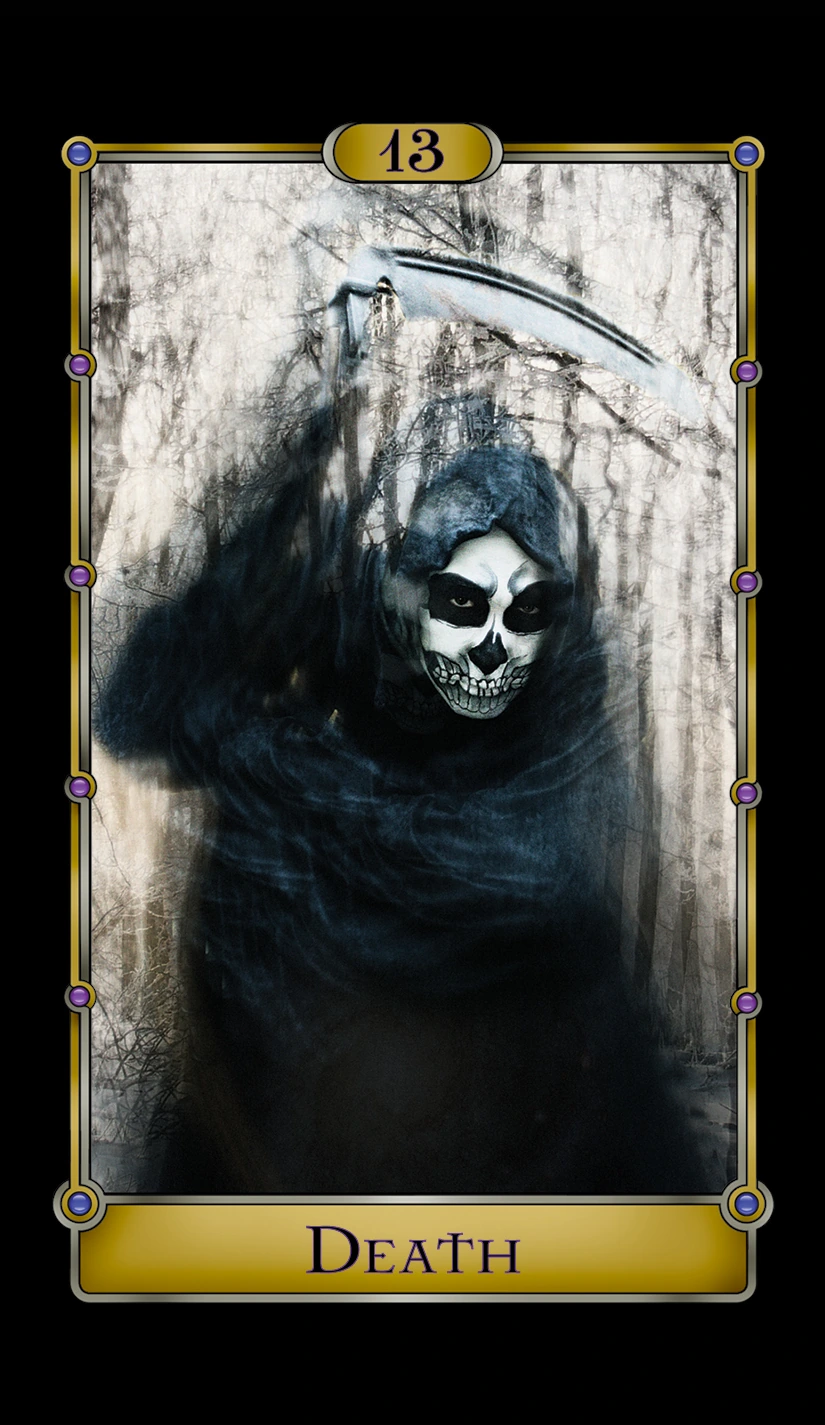
Death feels colder and quieter: a dark hood, a pale skull and a scythe emerging from a washed-out forest. Beside the green, thorn-crowned Queen of Wands, it can describe a brave creative life shedding what has gone numb. I begin with that first emotional jolt, then test it against the card’s traditional role, the question, and the direction of the whole spread.
The scenic trumps and courts speak through faces, costume and atmosphere, while the pip cards ask for a steadier feel for number and suit. I find the shift rewarding when I slow down instead of forcing every card to tell its story in the same way. Let these strange photographs open the door: your own clear-eyed curiosity can carry the reading somewhere vivid, honest and unexpectedly hopeful.
Magical Realism Tarot review — photographic archetypes with psychological charge
Cheryl Fair’s self-published Magical Realism Tarot turns the traditional 78-card structure into a cast of contemporary people, handmade props, costumes, photographed landscapes, and emblematic pips. The effect is theatrical without becoming remote: each Major Arcana card feels like a person temporarily inhabiting an archetype rather than an untouchable figure from legend.
My quick verdict: this is a distinctive deck for readers who enjoy photographic tarot, modern psychological interpretation, and Marseille-style numbered minors. Its strongest images are bold and memorable, but the shift from fully staged trumps and courts to symbol-only pips asks the reader to change gears.
What makes Cheryl Fair’s photographic world distinctive?
The deck was created and photographed by Cheryl Fair, with border, card-back, and graphic design by Paula Millet. Fair’s official deck site describes a modern, self-empowering approach to familiar tarot meanings. Models, costumes, body paint, sculpture, crafted headpieces, landscape photography, and digital compositing all contribute to the finished world.
A black ground and slim metallic border keep the visual system consistent. Within it, the photographs range from urban and industrial to woodland, celestial, gothic, and mythic. The Major Arcana and court cards are scenic portraits; the numbered minors use repeated suit emblems more like Tarot de Marseille pips.
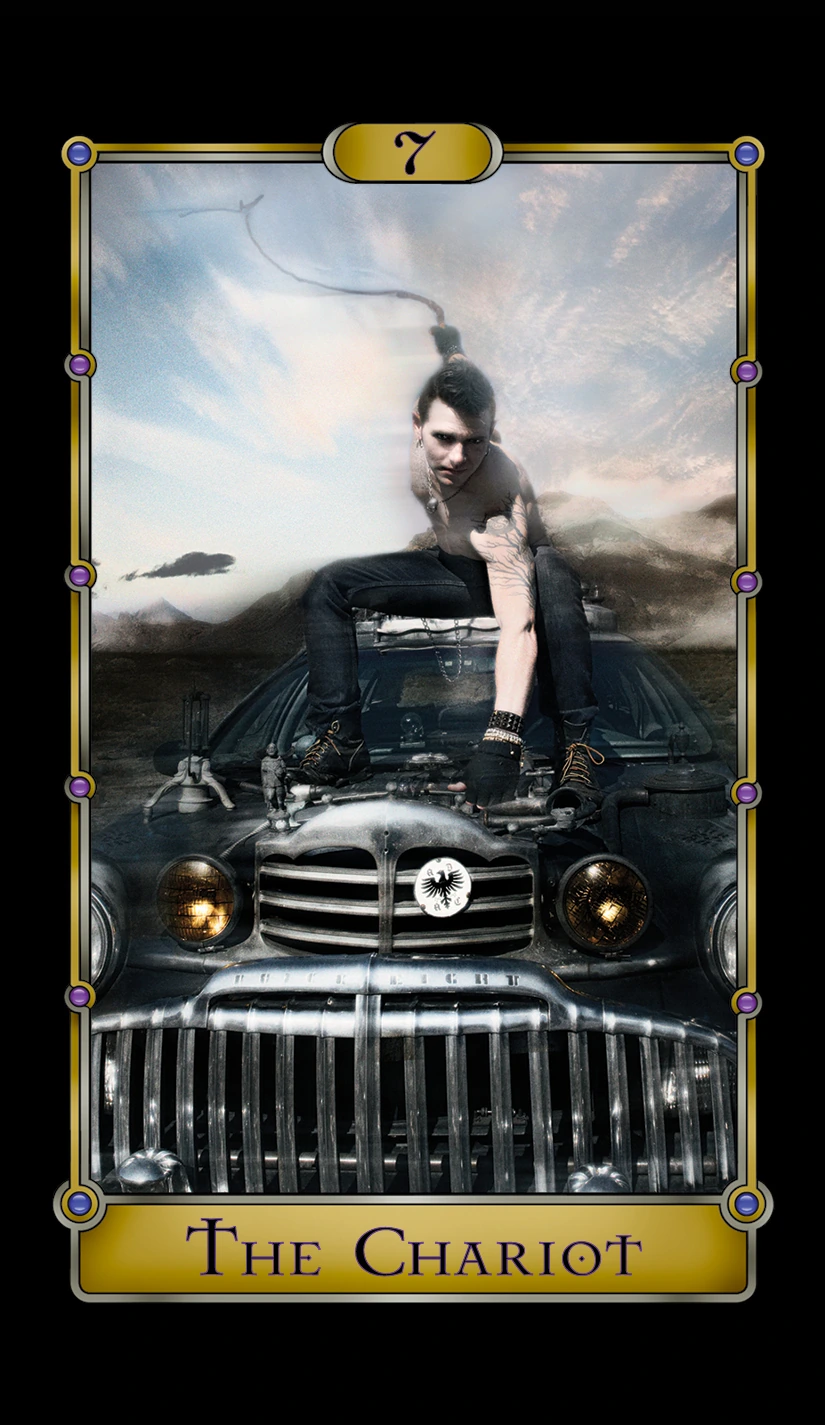
The Chariot — willpower on the hood of a machine
A tattooed young man crouches low on the hood of a weathered vintage car, one gloved hand planted forward and his eyes fixed directly on us. Boots, dark jeans, metal studs, the heavy grille, amber headlights, and distant road-like landscape replace the customary charioteer and paired animals with a machine that feels built to move.
Upright, the card makes direction physical: grip, balance, and attention have to work together before momentum becomes control. In shadow, the aggressive forward lean can become force without navigation—mistaking intensity for a destination.
How Magical Realism Tarot reads in practice
Begin with the person. Notice gaze, posture, costume, setting, and the emotional distance between the model and the viewer. Then ask what has been made strange: a vehicle becomes a chariot, a forest becomes a threshold, body paint becomes a skeleton, or a crafted crown turns a contemporary portrait into a court figure.
With the pips, reverse the process. Count the symbols, look for symmetry and density, and combine number with suit. That visual change is deliberate; it slows a reader who might otherwise race from one scenic keyword to the next.
Movement, turning, ending, awakening
Four trumps stage change at different scales: chosen momentum, the turning cycle, necessary ending, and the call to rise into a new account of yourself.
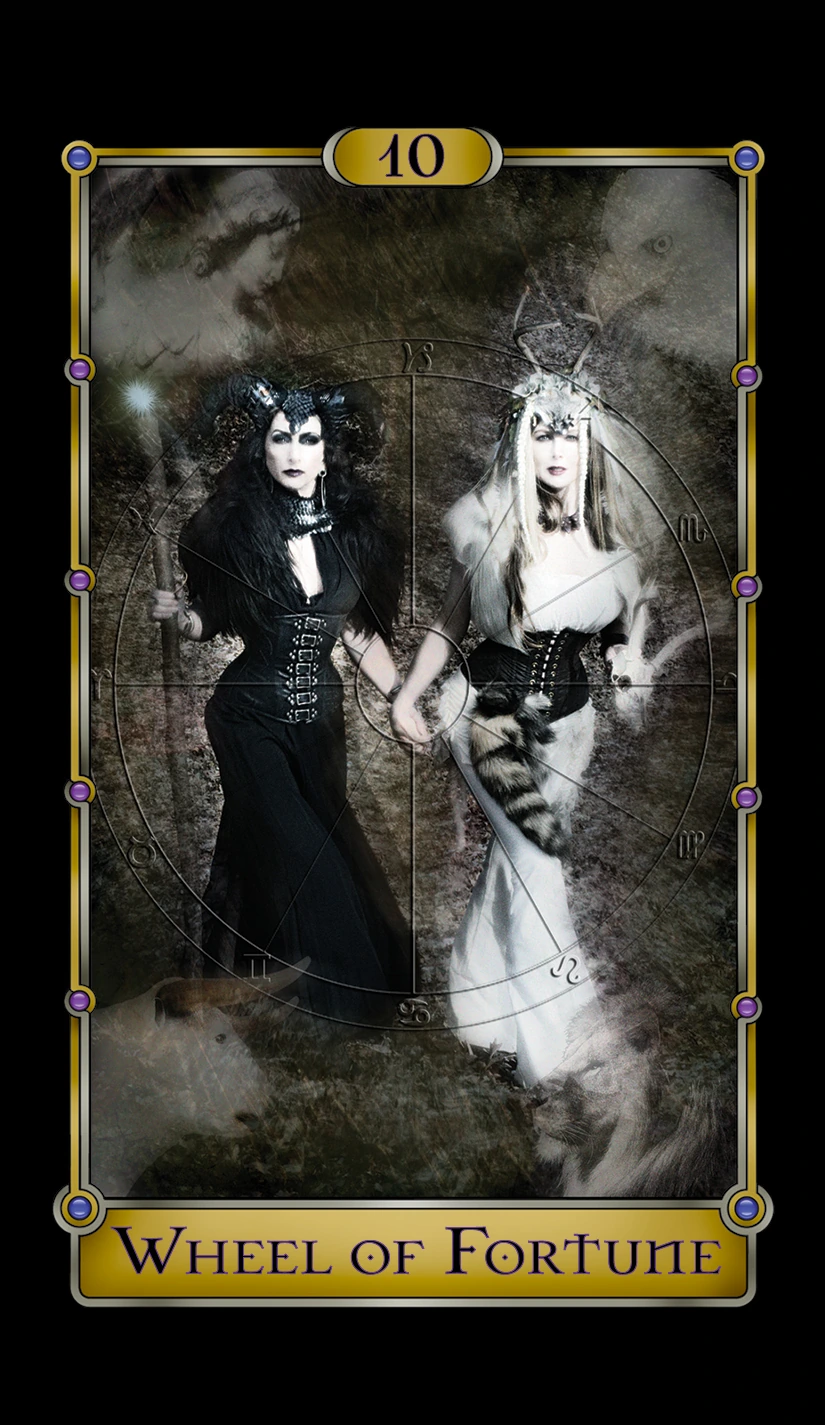
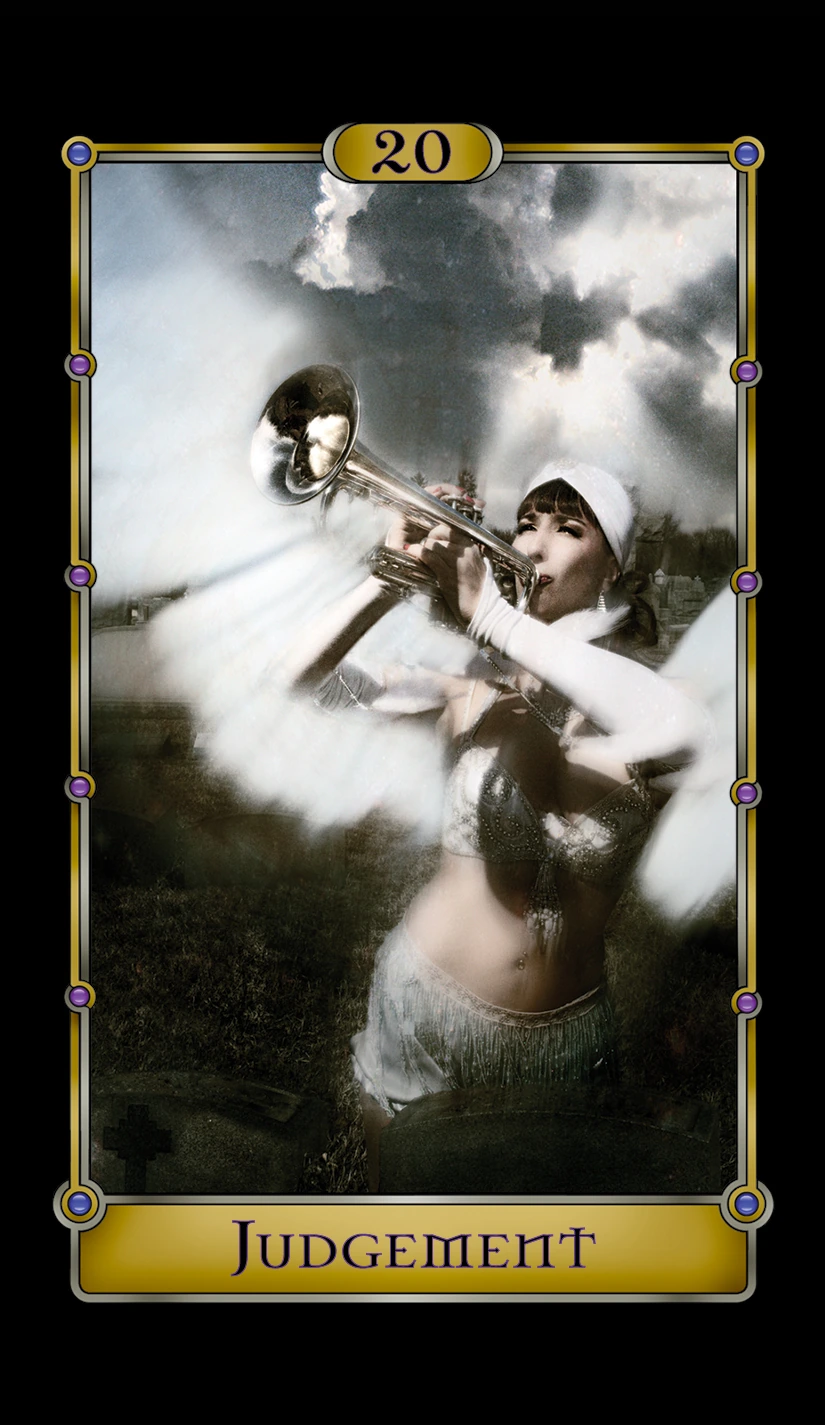
Read together, they ask whether change is being driven, endured, resisted, or finally answered.
Is Magical Realism Tarot beginner-friendly?
A beginner who likes theatrical photography can connect quickly with the Major Arcana and court cards. The numbered minors require more study because they are emblematic rather than fully illustrated scenes. A basic grasp of suit and number meanings—or the deck’s instruction booklet—will make those cards much easier to read.
Easy reading
Which role would help me meet today with more confidence?
Medium reading
What part of my situation is real, and what part is the story I have staged around it?
Deep reading
Which archetype have I outgrown, and what identity is ready to take its place?
Death — transformation looks straight through the mask
A hooded figure advances through a pale, leafless forest. Black-and-white skull paint turns the face into a fixed grin, while a large scythe arcs above the figure and dark fabric dissolves into the surrounding mist. The direct stare is the only sharp human contact in an otherwise blurred, spectral scene.
Upright, this Death is an encounter with the change that cannot be made decorative or postponed. Its useful expression is release and clean transition. In shadow, the skull mask becomes identification with loss—wearing an ending so completely that renewal cannot yet be seen.
Art style, personality, and reading tone
The personality is collaborative, dramatic, and psychologically alert. These are not anonymous stock portraits: the models’ styling, crafted objects, and expressions make the cards feel performed. That gives relationship, identity, creativity, and shadow-work readings an immediate human presence.
The deck can also be visually intense. Gothic makeup, stormy environments, metallic textures, and confrontational gazes give some spreads a serious tone. Readers who want soft watercolor reassurance may find it demanding; readers who want a cast of characters with unmistakable attitudes may love it.
Four queens, four ways of holding power
Across Wands, Cups, Swords, and Pentacles, costume, crown, gaze, and posture transform elemental temperament into four distinct forms of mature authority.
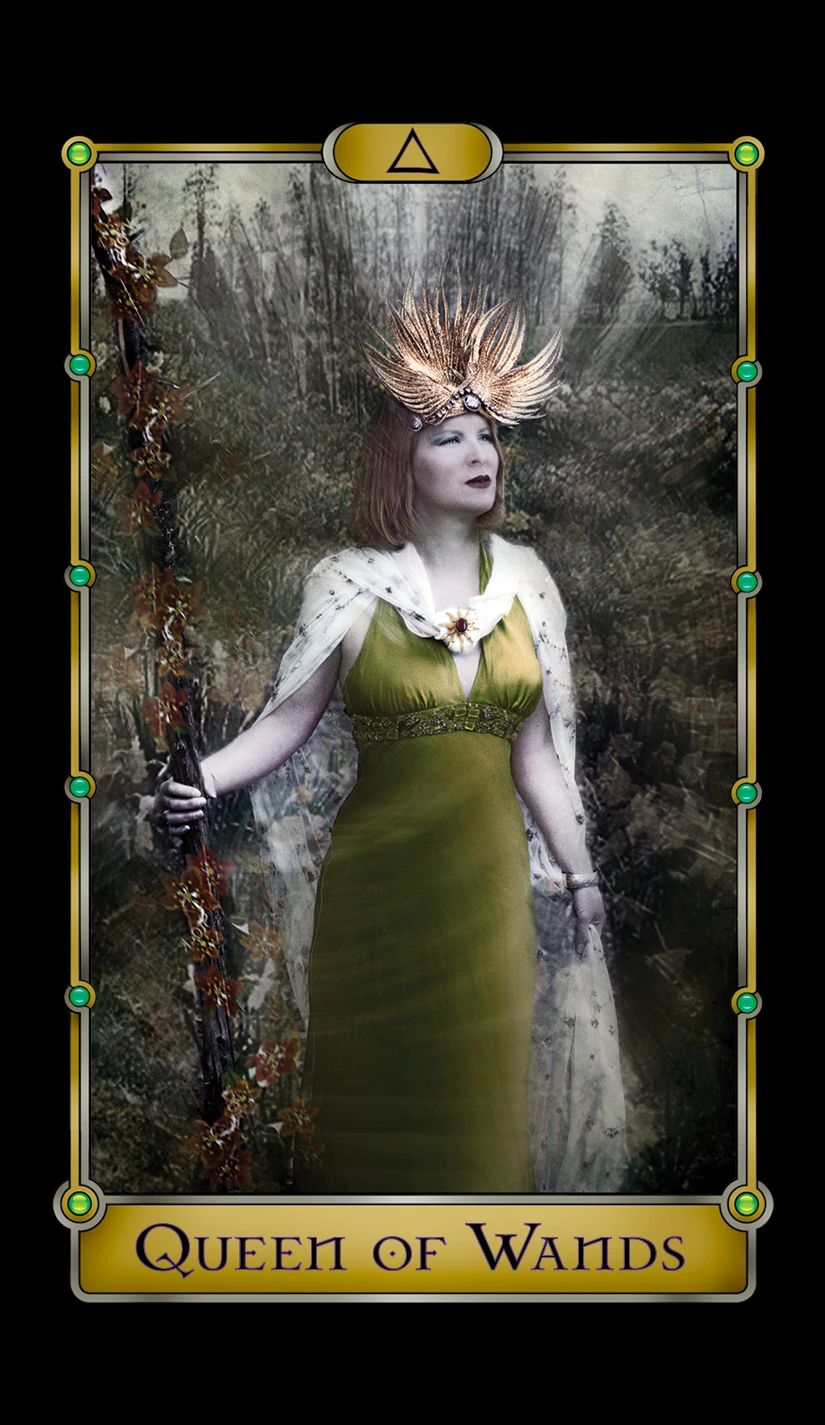

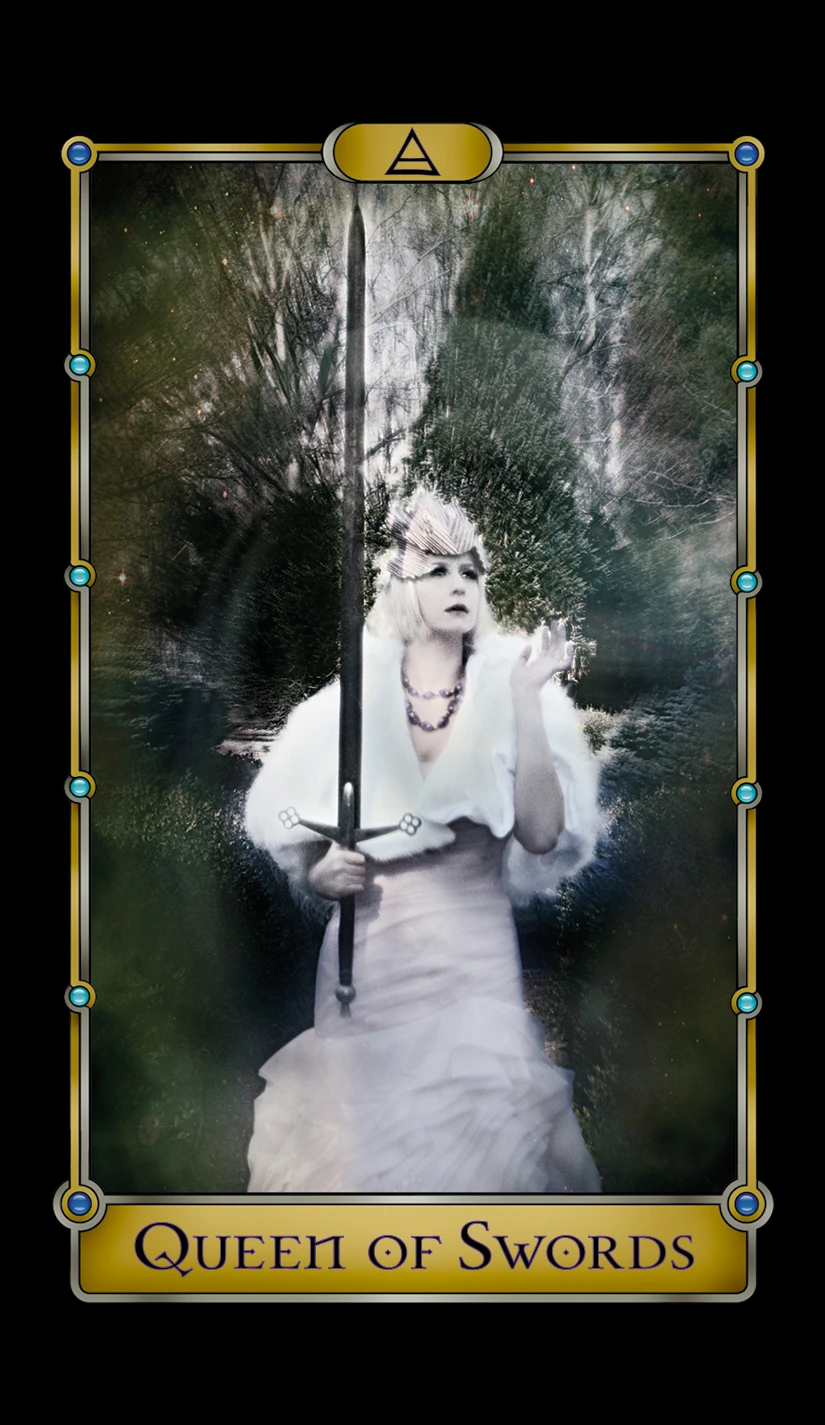
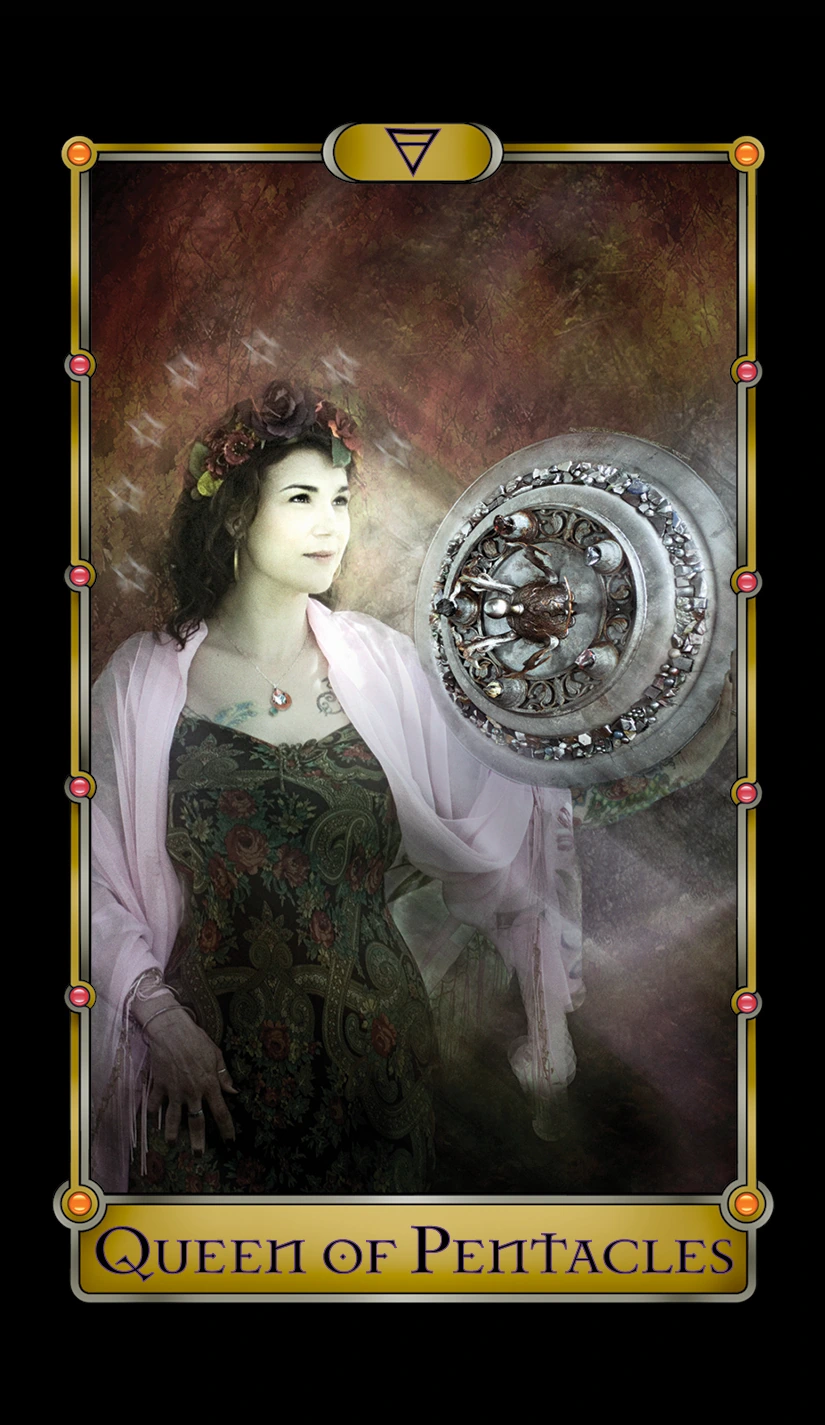
Compare what each queen holds, where she looks, and how openly or defensively she occupies the frame.
Who will connect with this deck?
It is especially suited to collectors of photographic and independently produced tarot, readers interested in contemporary archetypes, performers and visual storytellers, and anyone who enjoys mixing psychological reading with strong character work. The staged images also make useful prompts for journaling and creative writing.
It may be a harder fit if you depend on scenic Rider–Waite–Smith minors or prefer a visually uniform mood from every card. The pips ask for numerology and suit fluency, while the photographic courts and trumps ask for close observation.
Queen of Wands — creative authority rooted in the wild
The queen stands in an olive-green gown beneath a large winged gold headpiece. A translucent floral wrap softens her shoulders while one hand grips a tall branch-like wand covered with leaves. She looks upward and away into a dim, overgrown landscape rather than meeting the viewer directly.
Upright, her fire is cultivated confidence: visible, imaginative, and self-possessed without demanding attention. In shadow, the upward gaze can become distance—maintaining the image of inspiration while losing contact with the practical work at hand.
What comes with the deck?
The original boxed set is lovely and a little unusual. You get the full 78-card deck, a slim 34-page guidebook and a black suede-cloth drawstring bag, all packed inside a gold-tone metal tin. If you’re buying second-hand, look for the round Magical Realism Tarot label on the lid and the black card backs with their gold-and-silver geometric pattern.
The deck is listed on Amazon, although stock and condition can vary because this is an older independent release. Take a quick look at the seller’s photos before buying, especially if you want the tin, booklet and bag as well as the cards.
How the pips build pressure through number
The four Tens show the deck’s emblematic minor language at full density: completion is expressed through repetition, arrangement, balance, and visual weight rather than a staged human scene.
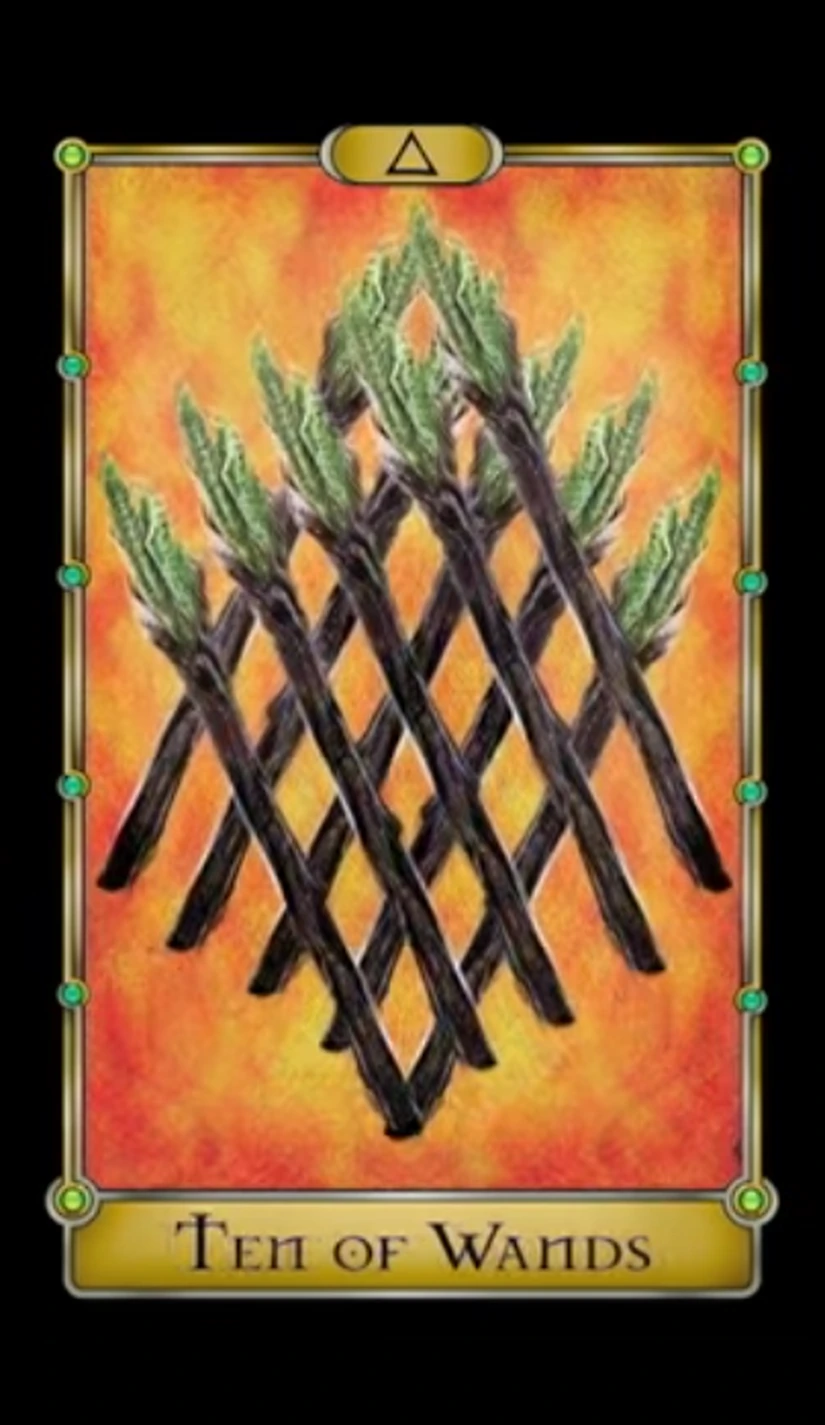
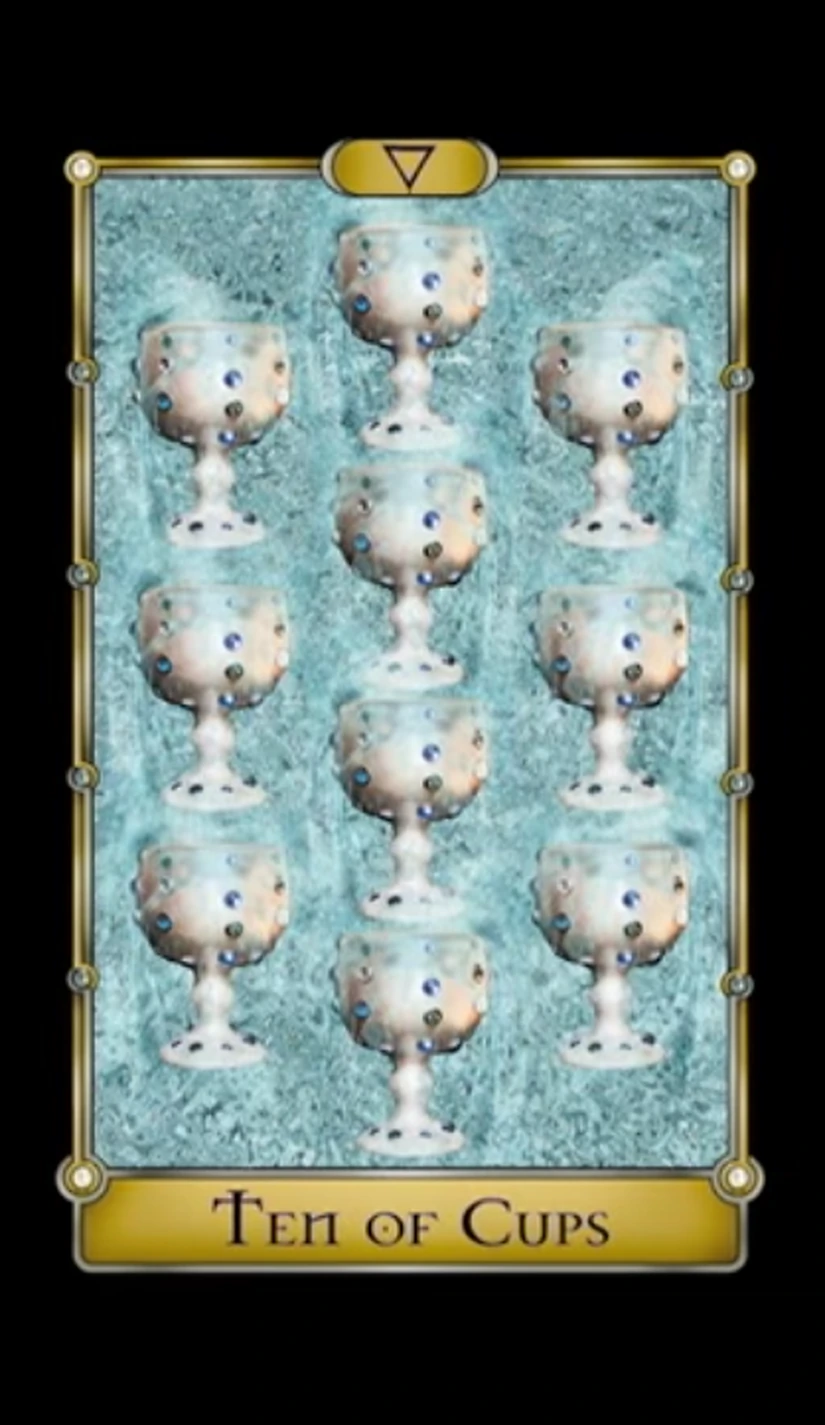

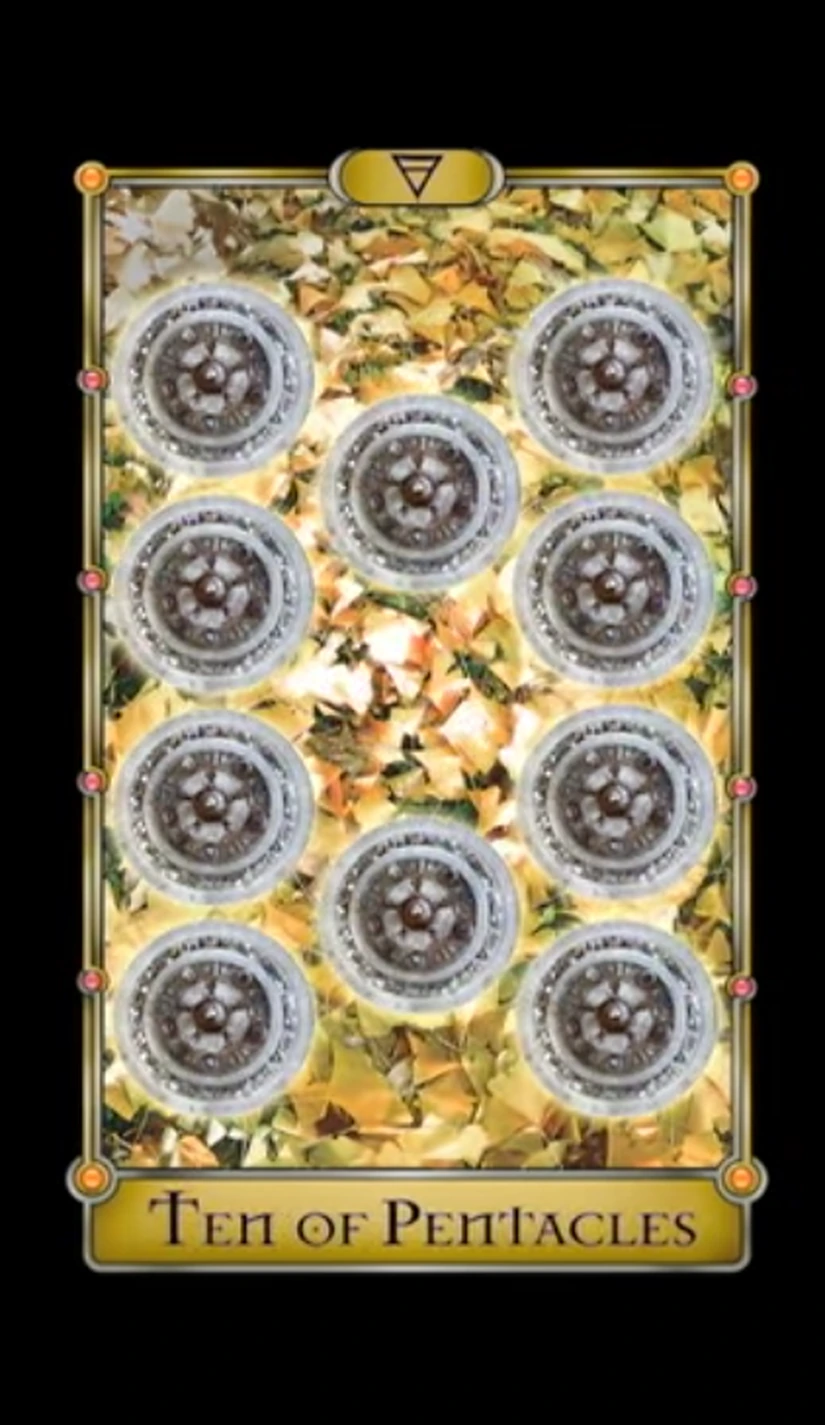
Read the suit first, then notice whether the repeated emblems feel ordered, crowded, contained, or ready to spill into the next cycle.
Aurica’s golden rule for Magical Realism Tarot
Read the performance, then read the pattern. With the portraits, ask how the model is embodying the archetype. With the pips, let number, suit, spacing, and repetition take over. The deck becomes much clearer when you do not force both halves to speak in the same visual language.
Final Thoughts
Magical Realism Tarot succeeds because its theatricality has a purpose. Contemporary people, real costumes, handmade objects, and photographed places make the archetypes feel inhabited rather than merely illustrated. The strongest cards hold the tension promised by the title: something recognizable remains real even as myth enters the frame.
Its emblematic pips create a genuine learning curve, but they also keep the deck from becoming a sequence of cinematic stills. For readers who enjoy both character-driven images and the discipline of number-and-suit reading, that contrast is the deck’s most interesting strength.

Magical Realism Tarot FAQ
Who created Magical Realism Tarot?
Photographer, filmmaker, author, and tarot reader Cheryl Fair created the deck. Paula Millet designed its borders, card backs, and graphic layout.
How many cards are in Magical Realism Tarot?
The complete published deck has 78 cards: 22 Major Arcana and 56 Minor Arcana.
Does it follow Rider–Waite–Smith imagery?
Its overall structure is familiar, but the numbered minors are emblematic pips rather than fully scenic Rider–Waite–Smith illustrations. The official deck site also compares its structure with Tarot de Marseille.
Is it a photographic tarot deck?
Yes. The Major Arcana and court cards use staged photographic portraits, costumes, locations, props, and digital composition. The numbered minors focus on arranged suit symbols.
Is Magical Realism Tarot good for beginners?
Its portraits are approachable, but beginners may need the booklet or a suit-and-number reference for the emblematic pip cards.
What is included with the boxed set?
Retail descriptions of the original presentation list the deck, a 34-page instruction booklet, a drawstring suede-cloth bag, and a gold-tone metal tin. Confirm the included components and condition with the current seller.


