
Explore the La Corte dei Tarocchi Cards
Browse the verified card fronts in tarot order. Tap any card to open the larger carousel view; uncertain or unavailable positions are never replaced with duplicates.
Showing all verified cards.
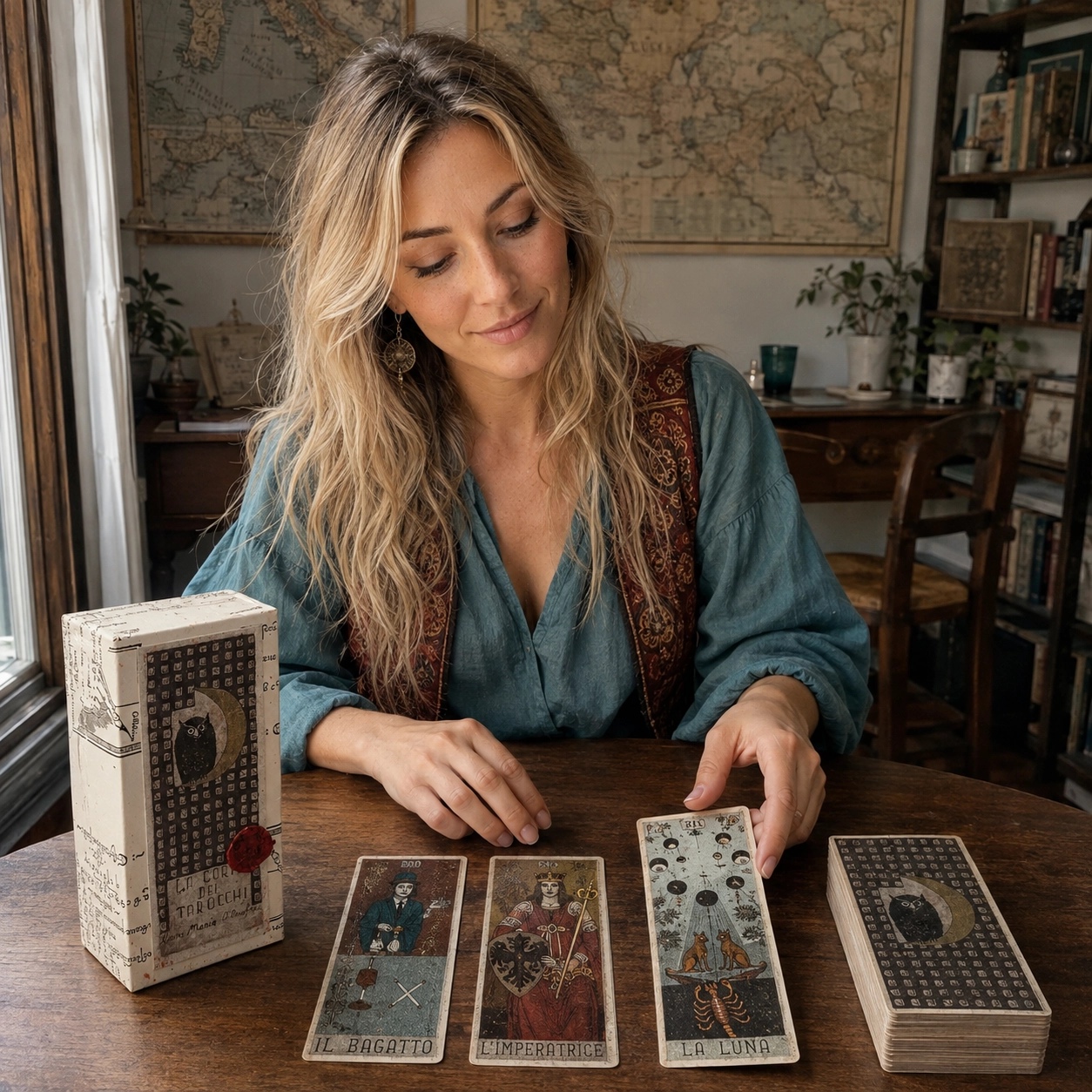
A note from Aurica
La Corte dei Tarocchi feels like opening a narrow door into a palace where every painted wall has kept a secret. Anna Maria D’Onofrio’s figures stand in their weathered robes with such solemn little faces, yet a cat, a flower, or one mischievous gesture can suddenly loosen the whole scene. I love that mixture of ceremony and wit; it makes the deck feel ancient without ever feeling asleep.
When I turn The Moon beside The Magician and The Empress, my eye moves from clever hands to composed authority and then into a sky crowded with changing lunar faces. The cards ask me who is shaping the story, who is holding the court together, and which feeling keeps changing its mask. Those questions are especially useful when a situation looks orderly on the surface but something tender or uncertain is moving underneath.
I read the trumps and court cards through gaze, posture, clothing, and the small living details around each figure. With the pip cards, I slow down and let number, suit, spacing, and repetition build the message. That way the Marseille-style structure becomes a steady floor beneath my intuition: I can follow the atmosphere without drifting away from what the card is traditionally here to do.
I would choose this deck for reflective readings about relationships, creative roles, boundaries, and the quiet politics of belonging. Its tall cards invite patience, and their worn parchment colours reward a second look rather than a hurried answer. La Corte dei Tarocchi reminds me that wisdom can arrive wearing a crown or padding softly on cat feet—and that your own place in the story is always worth meeting with courage and grace.
La Corte dei Tarocchi review — a courtly world with a sly modern pulse
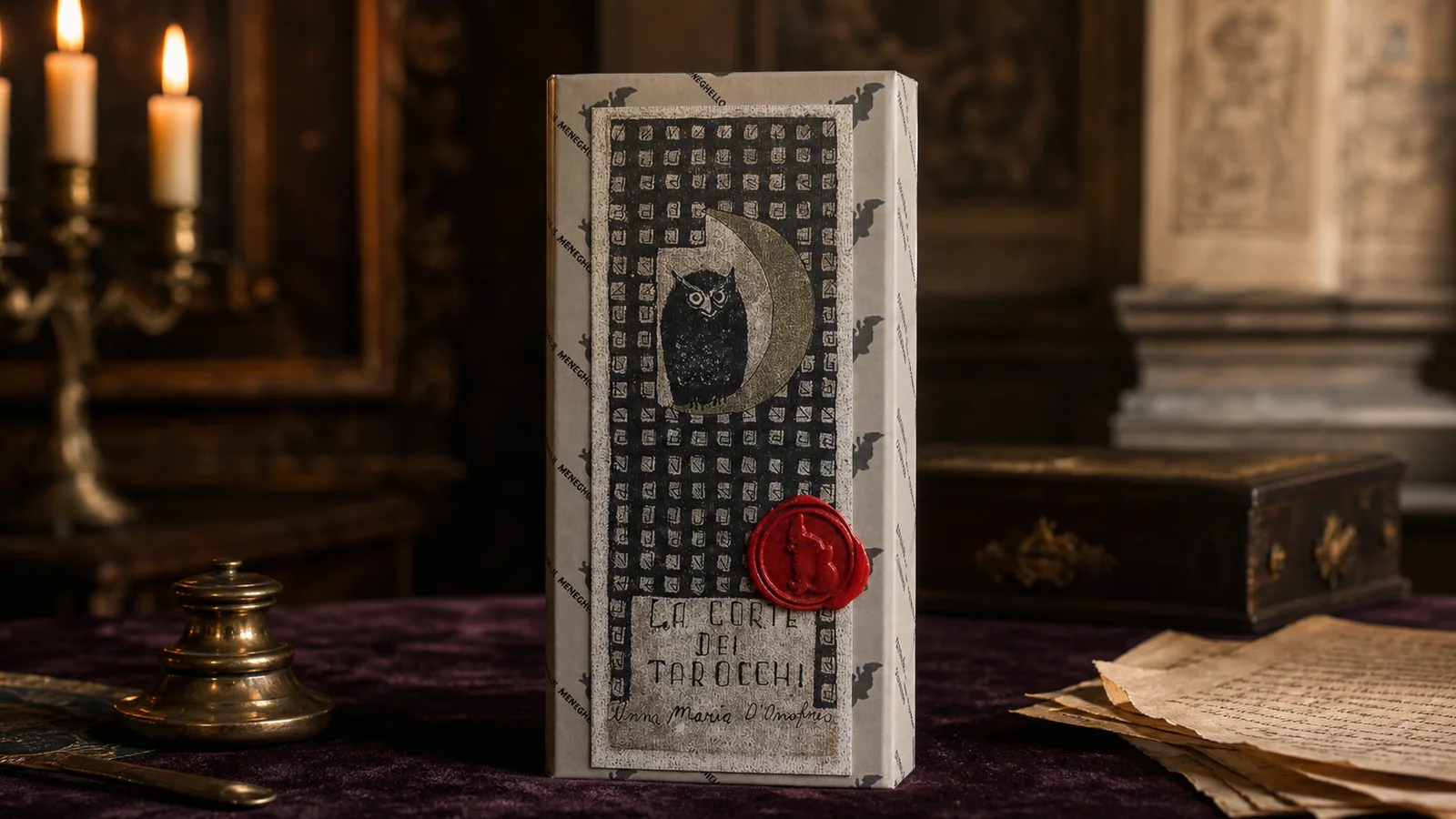
La Corte dei Tarocchi is a 78-card Italian deck designed by Anna Maria D’Onofrio and published by Il Meneghello. Its long, narrow cards resemble painted slips of aged vellum: medieval dress, heraldic emblems, palace architecture, and hand-lettered Italian titles sit inside a deliberately worn, tactile surface.
What keeps it from feeling like a museum reproduction is its wit. A black cat pads beside The Fool, the Hanged Man dangles between leafy branches, and court figures meet the eye with restrained but distinct personalities. My quick verdict: this is a beautiful choice for readers who enjoy Marseille-style pips, historical atmosphere, and images that reveal themselves slowly.
What makes Anna Maria D’Onofrio’s artwork distinctive?
The palette is quiet rather than jewel-bright: parchment beige, soot black, muted brick red, dusty blue, and weathered gold. Figures wear crowns, patterned robes, hose, capes, and armor, while the pip cards arrange wands, cups, swords, and coins as decorative emblems on textured grounds.
That split creates the deck’s central reading rhythm. The Major Arcana and courts offer character and narrative; the numbered minors ask you to notice pattern, balance, density, direction, and the emotional effect of repeated objects.
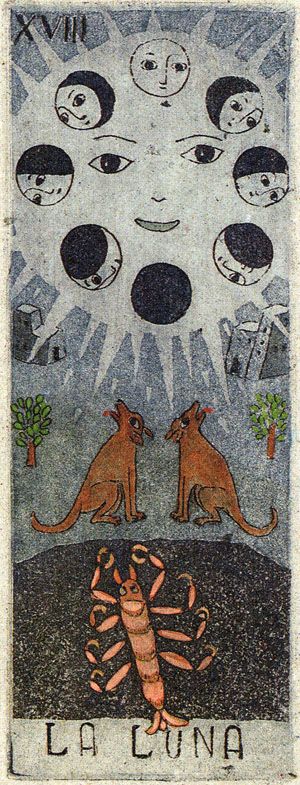
The Moon — uncertainty staged as a celestial procession
A column of changing lunar faces and phases fills the upper half of the card, while two russet animals face upward below. At the bottom, a dark crustacean-like form sits beneath sharp pale rays. The composition stacks sky, watchers, and instinct into one tall, uneasy axis.
In a reading, the card makes uncertainty feel layered rather than empty. Upright, it can describe moving through partial information while respecting instinct and recurring signals. In shadow, the repeated faces suggest projection—seeing a different story each time fear changes the light.
How La Corte dei Tarocchi reads in practice
This deck reads best when you let the image speak before reaching for a keyword. With the trumps and courts, begin with gaze, posture, clothing, animals, and architectural setting. With the pips, begin with arrangement: are the objects paired, crossed, crowded, separated, or held by a visible hand?
The Italian titles are readable once you know the sequence, but the deck is not a caption-heavy beginner tool. Its Marseille-influenced structure rewards a reader who is comfortable combining number, suit, and visual pattern.
Four faces of the court
The Empress and Emperor establish formal sovereignty; the Queen and King of Cups soften that authority through the deck’s emotional suit.
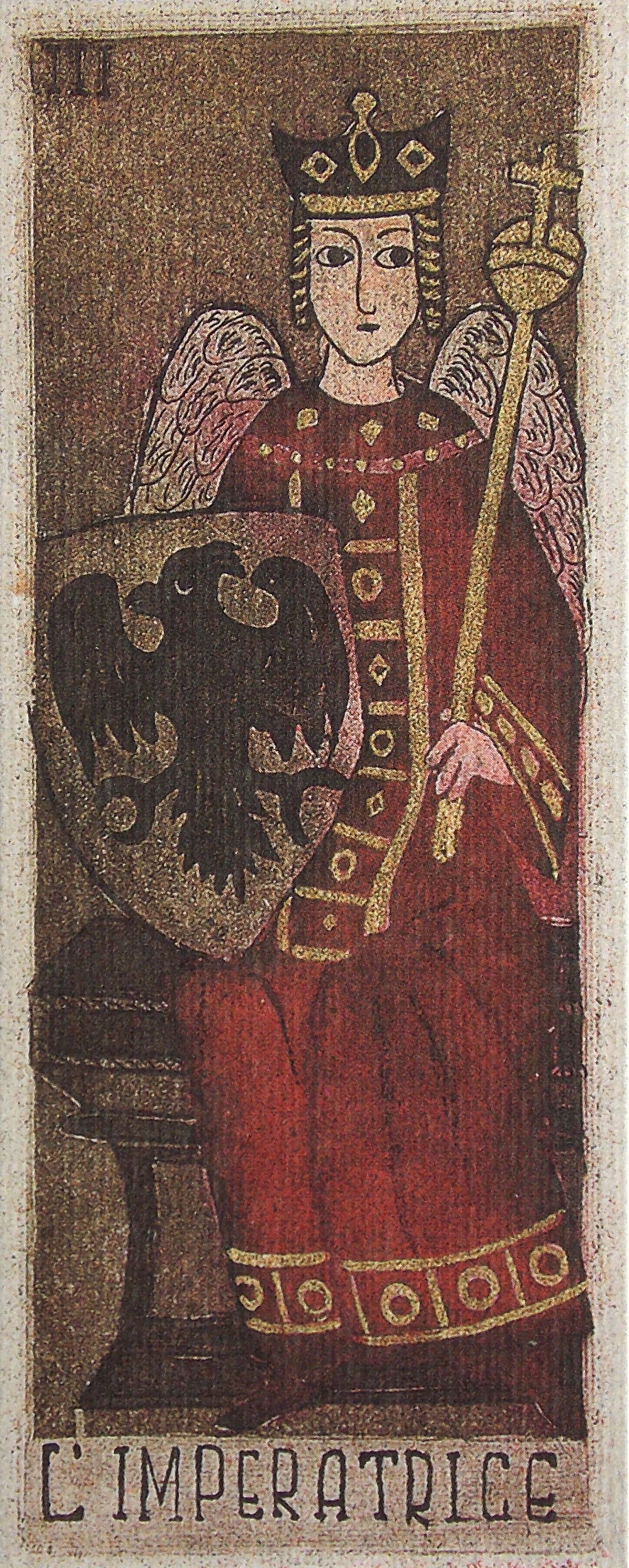

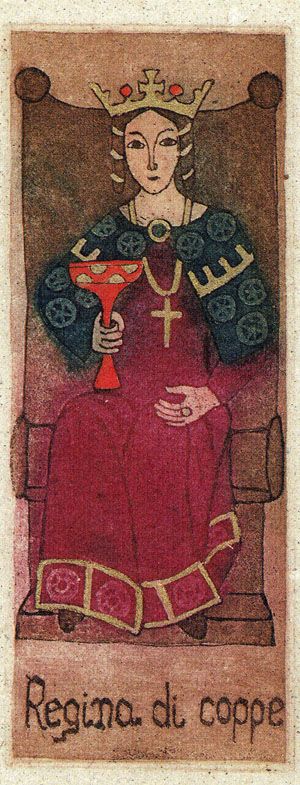
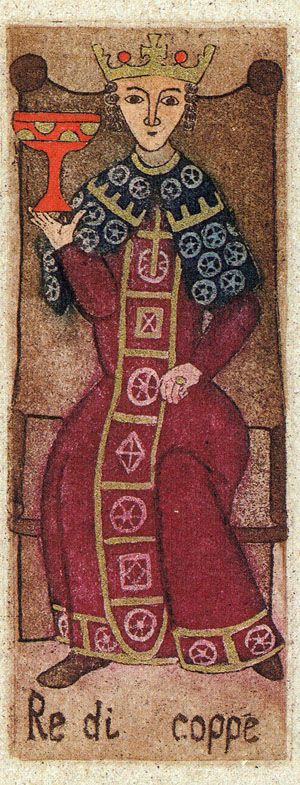
Read them as a council: what must be protected, what must be structured, what deserves compassion, and what feeling can be held without losing authority?
Is this deck beginner-friendly?
A motivated beginner can learn with it, especially if historical tarot is already the goal. A complete newcomer who expects scenic Rider–Waite–Smith minors may need a companion reference because the numbered suits are emblematic rather than fully illustrated stories.
Easy reading
What quality will help me move through today?
Medium reading
What pattern am I repeating, and what would alter its arrangement?
Deep reading
Which role have I accepted in another person’s court, and what authority do I need to reclaim?
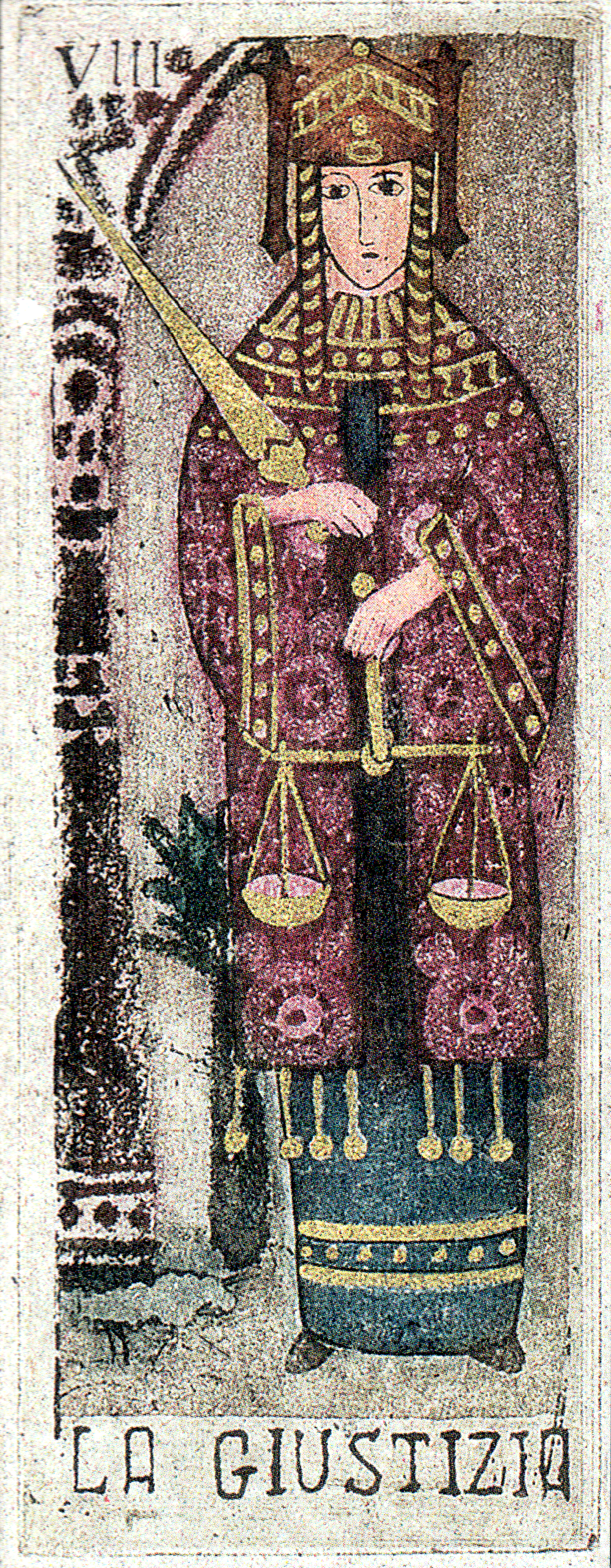
Justice — law held as both measure and edge
Justice stands frontally in a patterned robe and crown. A raised sword occupies one side of the card while a small balance hangs from the other hand; the formal symmetry makes the figure feel like a living decree rather than a private opinion.
Upright, this image asks for a decision that can survive both measurement and consequence. Its shadow is rigid certainty: using the sword before the scales have settled, or hiding a personal preference inside the costume of fairness.
Art style, personality, and reading tone
The deck’s personality is observant, reserved, and occasionally mischievous. It does not overwhelm with dramatic facial expression. Instead, meaning gathers through small contrasts: a severe robe beside a playful animal, a formal emblem held by a youthful court, or a bright celestial body over compact figures.
That makes it especially good for reflective readings, creative work, relationship dynamics, and questions about social roles. It can be less immediate for fast yes-or-no pulls because its best answers tend to arrive through composition rather than spectacle.
A sky that changes the court below
These four trumps make celestial light part of the human story: partnership under the Sun, vulnerability beneath the Star, uncertainty under the Moon, and open vitality in the Sun card itself.
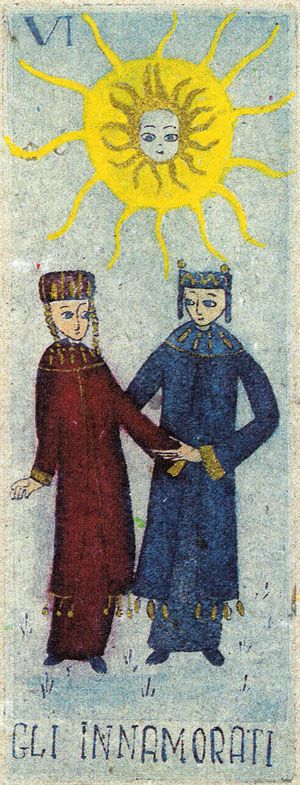
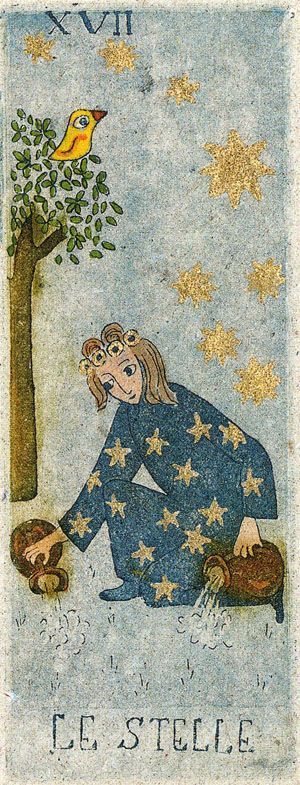
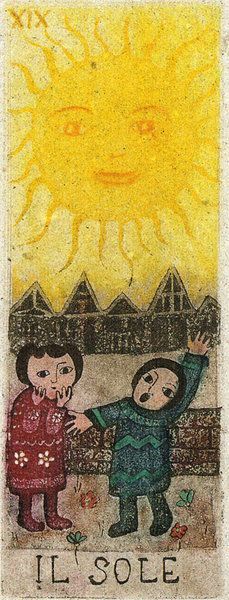
Together they ask how love, hope, ambiguity, and clarity alter the same situation when the light changes.
Who will connect with this deck?
Collectors of Italian tarot, readers drawn to medieval and Renaissance imagery, and anyone who enjoys Marseille-style pips are the clearest audience. The elongated format and handmade visual character also suit slow daily draws, altar displays, and journaling.
Before buying, check the edition and dimensions. This deck has appeared in numbered Il Meneghello editions, and the tall cards may feel unusual in smaller hands. The direct product page linked here describes a 78-card, Italian-language edition with decorated pips.
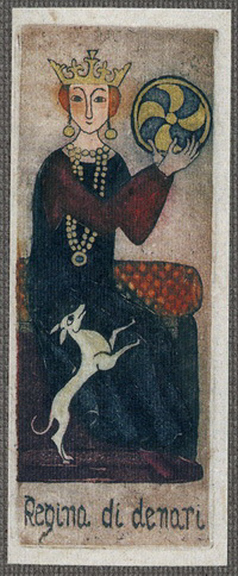
Queen of Pentacles — stewardship with a living companion
The crowned queen sits in a dark gown, holding a large blue-and-gold spiral coin upright. A small white animal rises at the hem of her robe, bringing movement and companionship into an otherwise formal portrait.
The card turns material competence into relationship: resources are not merely stored, but held in a way that supports life nearby. Upright, it favors grounded care and capable stewardship. In shadow, the emblem can become a badge—appearing secure while neglecting the small dependent reality at one’s feet.
Buying guidance and edition notes
La Corte dei Tarocchi was designed by Anna Maria D’Onofrio and first published in 1999. Retail references describe 78 cards, Italian titles, decorated pip minors, and limited numbered editions from Il Meneghello. Because collectible editions can vary, compare the seller’s photographs, box, edition statement, and card dimensions before ordering.
The linked TarotArts listing is a direct specialist-retailer product page rather than an Amazon listing. It is not presented as an affiliate link; it is used because no reliable direct Amazon product detail page was verified for this deck.
The architecture of material security
Four Pentacles cards move from a single emblem into a dense field of repeated coins, showing how the suit builds structure through number and arrangement.
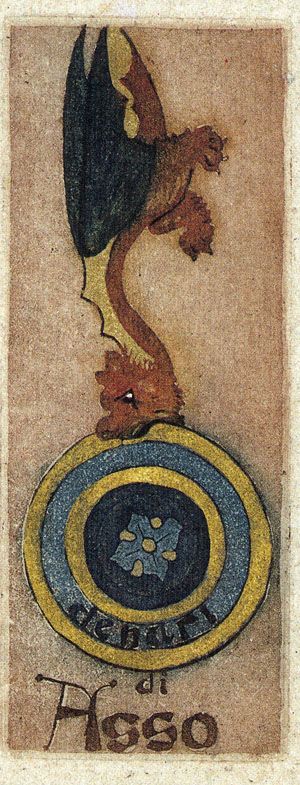
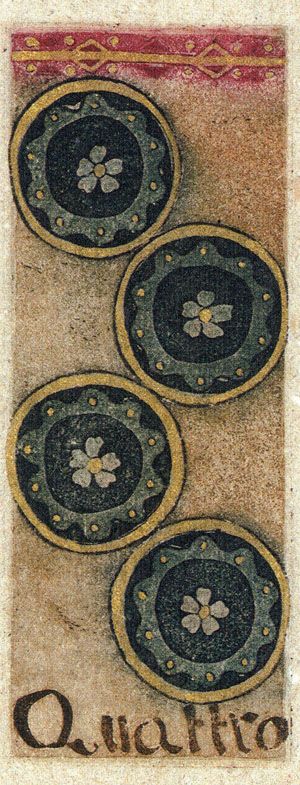
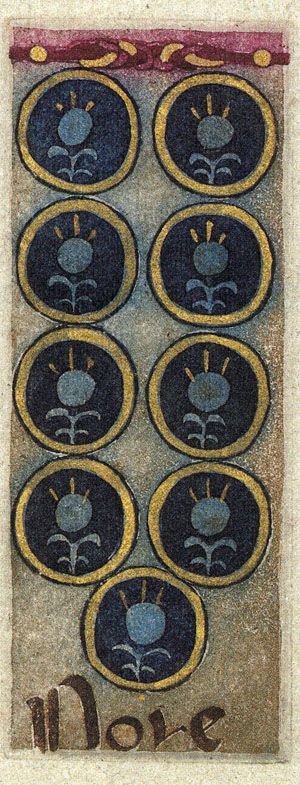
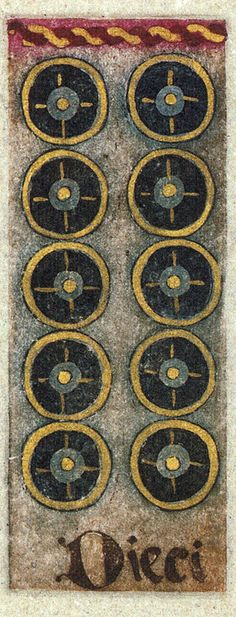
Use the sequence to ask: what resource is arriving, what needs a stable frame, what has matured, and when does abundance become visual or practical overload?
Orica’s golden rule for La Corte dei Tarocchi
Read the arrangement before the assumption. In this deck, especially across the pips, placement is part of the message. Count the objects, notice their symmetry or tension, then add the usual suit meaning.
Final Thoughts
La Corte dei Tarocchi is memorable because it treats tarot as a living court rather than a set of isolated keywords. Its aged surfaces, solemn figures, heraldic pips, and flashes of humor create a world with rules—but also with cats, creatures, glances, and small disruptions inside those rules.
It is not the fastest deck for readers who depend on fully scenic minors. For the right reader, that restraint is the attraction: every spread feels like a small arrangement of manuscript fragments waiting to be interpreted.
La Corte dei Tarocchi FAQ
Who created La Corte dei Tarocchi?
Anna Maria D’Onofrio designed the deck. Specialist retail references credit Il Meneghello as the publisher.
How many cards are in the deck?
Published references describe a 78-card structure: 22 Major Arcana and 56 Minor Arcana cards.
What language are the titles in?
The printed card titles are in Italian, including names such as Il Matto, La Papessa, and La Giustizia.
Does it follow Rider–Waite–Smith imagery?
Not closely in the numbered minors. The deck uses Marseille-influenced emblematic pips, so number, suit, and arrangement carry more weight than a fully illustrated scene.
Is La Corte dei Tarocchi good for beginners?
It can suit a beginner specifically interested in historical or Marseille-style reading. Readers expecting scenic pip cards may prefer to learn with a companion reference.
Why does the TarotFans Gallery not claim to be complete?
Only clearly verified card fronts from the supplied source are shown. Missing positions are not filled with duplicates, invented labels, or uncertain substitutes.


