
Jane Austen Tarot Card Gallery
Browse the verified card fronts in canonical deck order. The Star and The Moon remain omitted because no clean source was available, so nothing is guessed or mislabeled.
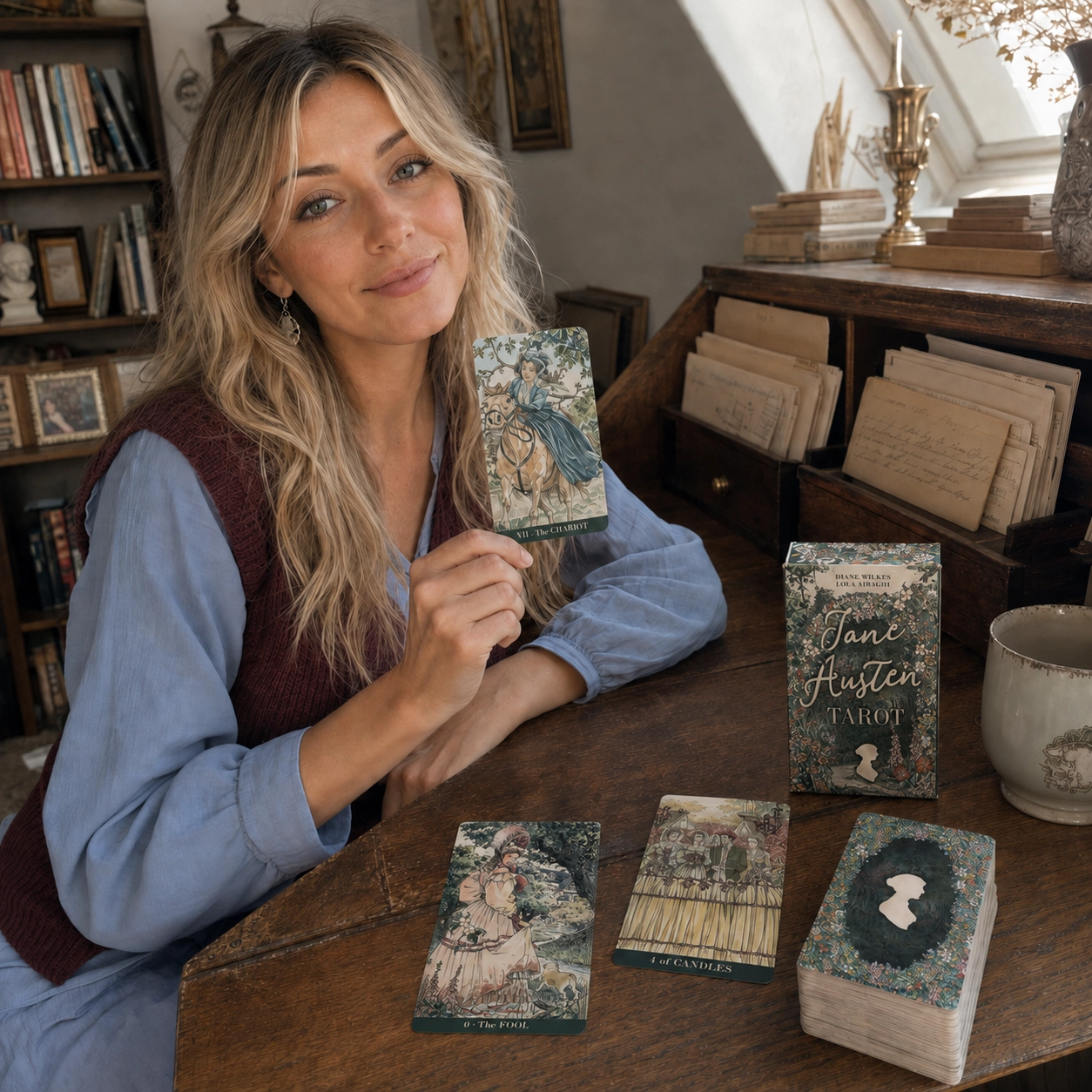
Aurica’s Quick Take
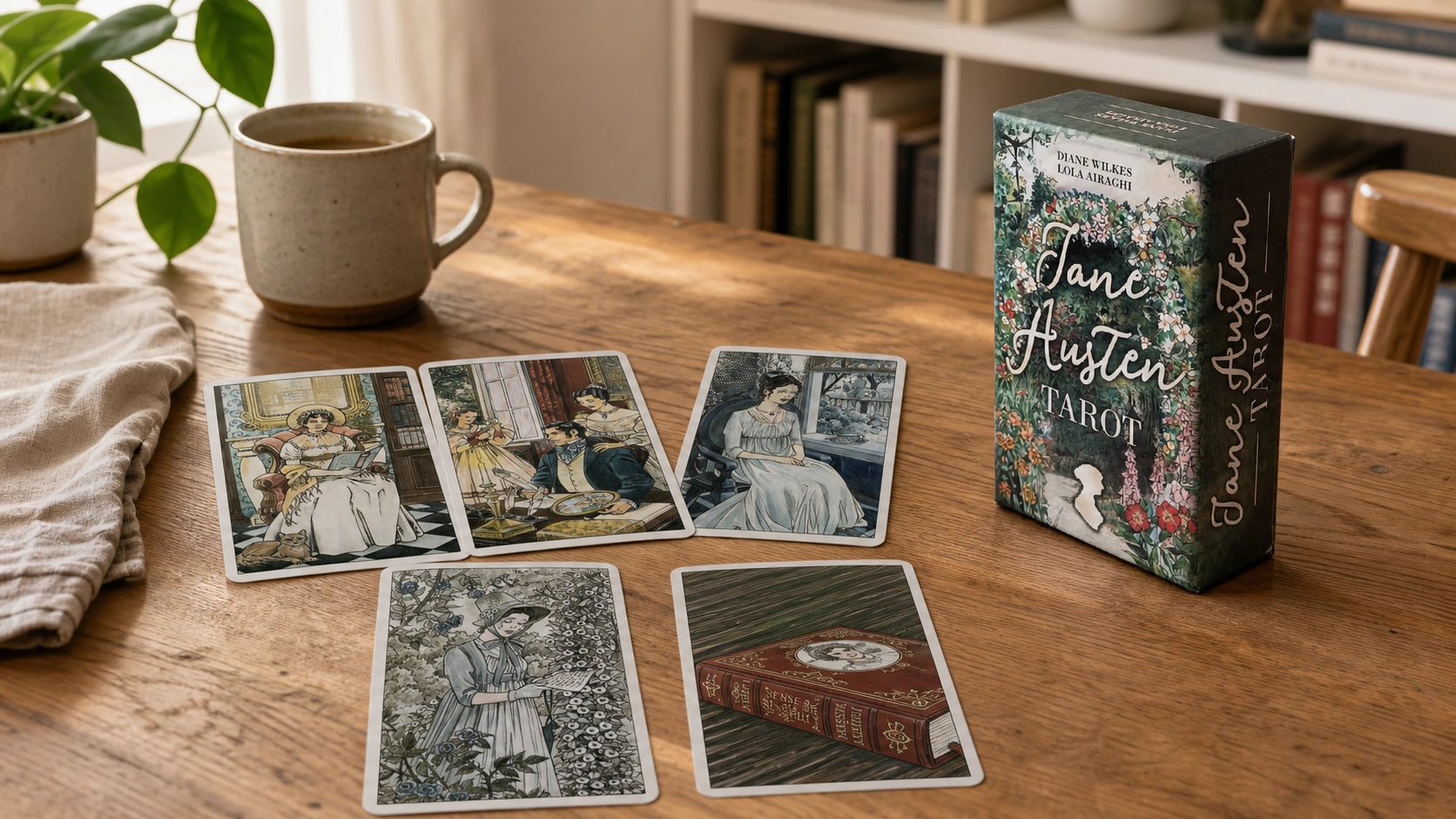
Jane Austen Tarot turns the 78-card tarot structure into a sequence of Regency-era conversations, letters, visits, proposals, misunderstandings and hard-won choices. Diane Wilkes supplies the literary framework; Lola Airaghi’s detailed line-and-watercolour scenes make posture, etiquette and social distance part of the reading.
My quick verdict: I find this an expressive choice for Austen readers, story-led intuitive readers and collectors who enjoy character psychology. It is less direct than a conventional teaching deck, but its scenes are unusually good at showing what people say, what they conceal and what social rules permit.
I read these cards by watching the room before I chase the romance. A lifted chin, a letter held too tightly, or the measured space between two figures can tell me where pride is protecting a tender feeling. Then I bring that first impression back to the card’s familiar tarot role and ask what the surrounding cards reveal about motive, timing and consequence.
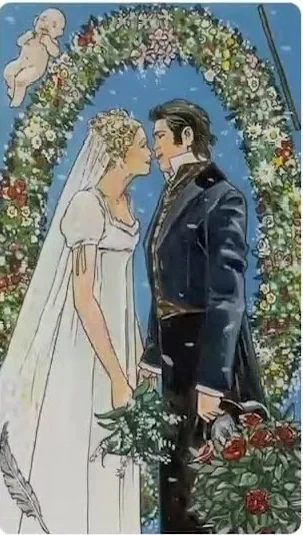
The Chariot feels especially alive here: confidence is not noise, but the courage to choose a direction while every expectation tugs at the reins. Beside The Fool and the wedding brightness of the 4 of Candles, it reminds me that a brave beginning can still be graceful, thoughtful and entirely your own. May this witty, tender deck help you trust the quiet truth in your heart—and give it a story worth stepping into.
Jane Austen Tarot review — literary wit, social pressure and emotional consequence
What is Jane Austen Tarot?
The deck draws its characters and situations from Jane Austen’s novels while retaining the familiar Major Arcana, four suits and court cards. Llewellyn describes each of the 78 cards as being based on a character or scene from Austen’s fiction.
The suits are translated into the material culture of the stories: candlesticks stand in for Wands, teacups for Cups, quills or pens for Swords, and denarii or penny coins for Pentacles. That makes the system recognizable while giving everyday objects a distinctly literary role.
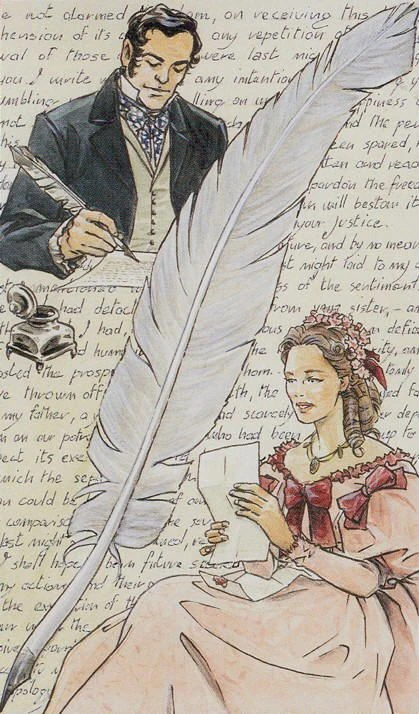
Strength: influence expressed through composure
A seated woman reads or writes while a man stands behind her, and a giant quill divides the scene. The card does not present strength as brute force. Attention, language and self-command carry the visual weight.
In a reading, begin with who controls the story and who is being observed. Strength here can mean patience, persuasion and the courage to keep one’s own voice when another person has greater social power.
How the deck reads in practice
Jane Austen Tarot works best when you read each card as a scene. Notice who faces whom, who holds a letter or cup, who is seated, who is arriving, and who has been left outside the conversation. Those details turn abstract meanings into social and emotional evidence.
Try a three-card spread called appearance / private motive / honest next step. Describe the interaction before adding memorized meanings. The deck becomes clearer when dialogue, silence and status are treated as symbols.
Courtship as conversation, not prediction
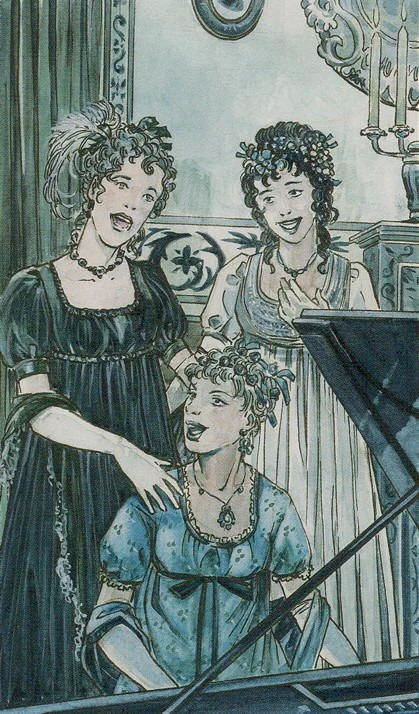
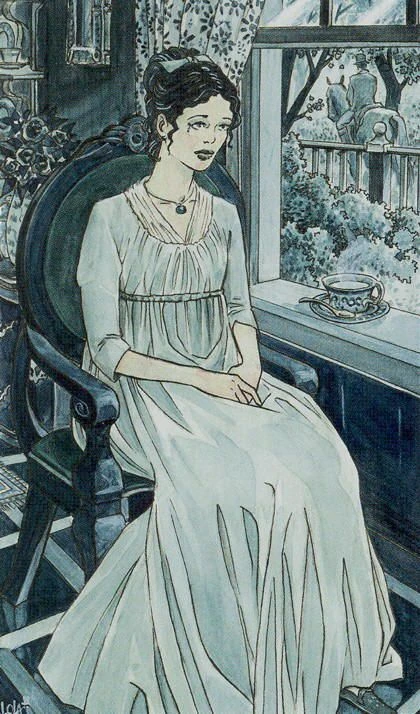
The Lovers, Two of Cups, Three of Cups and Queen of Cups move from attraction to exchange, social witness and emotional discernment. Use them to ask how a bond behaves, not merely whether it exists.
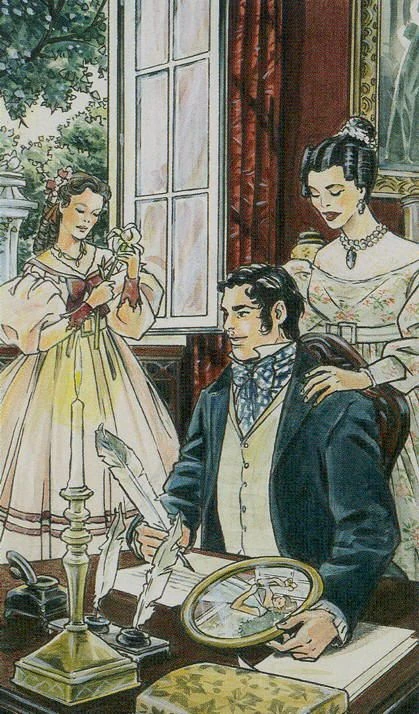
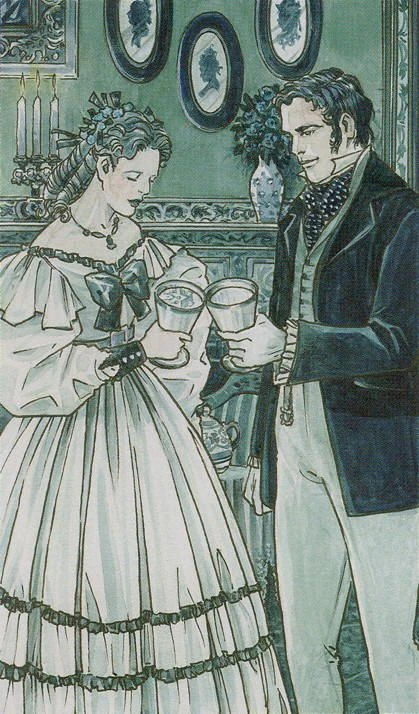
Is Jane Austen Tarot beginner-friendly?
A beginner who already loves Austen may find the literary theme more memorable than abstract symbols. The trade-off is that many scenes do not copy Rider–Waite–Smith compositions literally, so the guidebook or a separate meanings reference helps.
Easy
What social signal am I overlooking today?
Intermediate
What is being said, and what does the behaviour reveal?
Deep
Which inherited rule is shaping this choice, and is it still worthy of obedience?
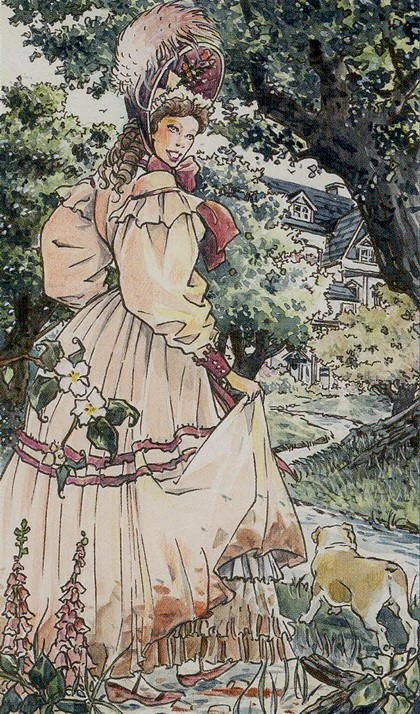
Three of Swords: a letter held inside a garden of feeling
A solitary bonneted woman stands among dense roses and flowering vines, reading a letter. There are no theatrical swords piercing a heart; grief arrives through language, privacy and the knowledge contained on the page.
The image is useful for disappointment that must first be named clearly. Ask what the message changes, which hope can no longer be maintained, and what truth allows the next chapter to begin.

Love, family and reputation readings
The deck is naturally strong for relationship readings because attraction is rarely isolated from family expectations, money, reputation or timing. It can show the difference between affection and compatibility, politeness and consent, or social approval and personal conviction.
For family questions, look at the room around the figures as carefully as the figures themselves. Doors, spectators, formal clothing and domestic objects often reveal where pressure is coming from.
Agency under social pressure
Ace, Five, Nine and Queen of Wands move from an initiating spark through friction, resilience and mature self-possession. In this deck, ambition often has to negotiate the room before it can act.


Lola Airaghi’s artwork
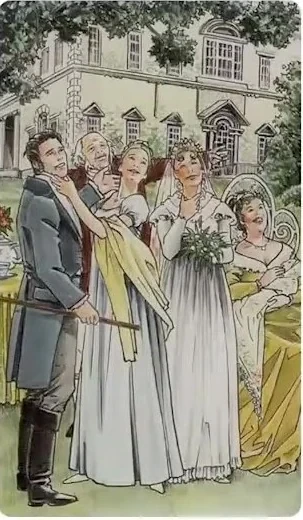
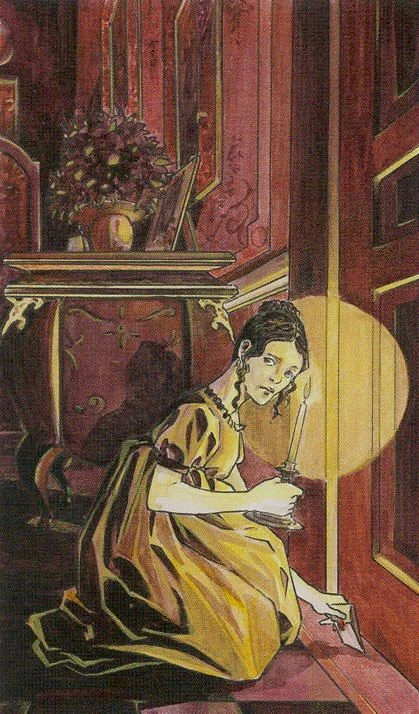
Airaghi uses fine outlines, controlled colour and densely furnished settings. The images feel closer to illustrated historical fiction than to symbolic diagrams. Faces, hand positions, architecture and clothing all contribute to the card’s tone.
The deck rewards close viewing because social meaning is distributed across the whole frame. A visitor at a doorway, a chair turned away from another figure or a letter held too tightly can matter as much as the traditional suit.
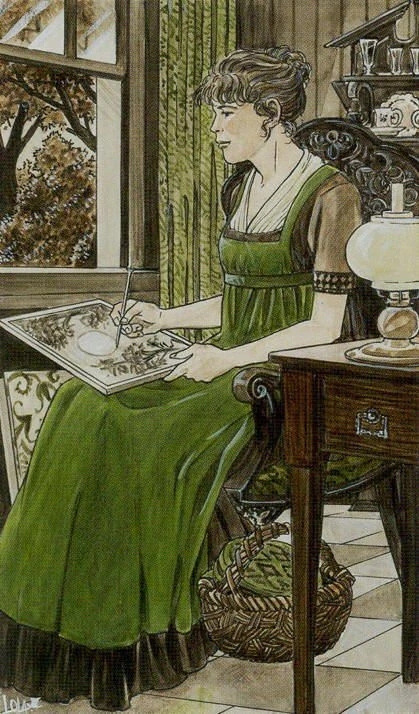
Queen of Pentacles: care made visible through patient craft
A woman in a deep green dress sits beside a broad window, calmly working with pen or brush over a large illustrated page. Autumnal foliage fills the view outside; an oil lamp, carved chair, side table and woven basket make the room feel practical, inhabited and quietly well tended.
Her attention rests on the work in her lap rather than on display. Upright, this Queen can point to stewardship that joins beauty with usefulness: care for a home, body of work or relationship expressed through steady hands. In shadow, the same devotion can become over-responsibility. In a reading, ask what deserves patient cultivation and which task can be shared.
Who will connect with this deck?
It is an easy recommendation for Austen admirers, literary-deck collectors, journalers and readers who interpret through character and narrative. It also suits readers who want relationship spreads to include power, money, family and reputation rather than reducing everything to romance.
Readers seeking bold occult geometry, minimal cards or close Rider–Waite–Smith scene reproduction may prefer another deck. The historical social world is the deck’s voice, not a decorative layer that disappears during a reading.
A life shaped by chosen chapters
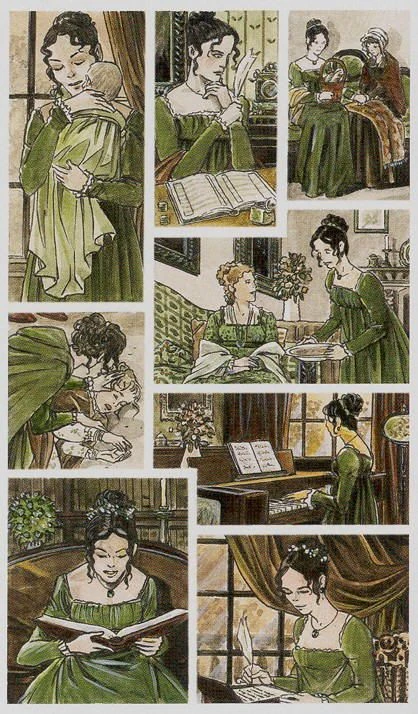
The Fool, The Chariot, Eight of Pentacles and The World trace a useful arc from first possibility to deliberate direction, practiced skill and earned completion. Together they ask which chapter you are ready to enter—and what daily choice will carry the story forward.

Edition and buying guidance
The current boxed edition is listed by Llewellyn for February 2026 with 78 cards, a 128-page guidebook and ISBN-13 9780738783888. It is a Lo Scarabeo partner title distributed through Llewellyn.
Older editions and imported copies may carry different packaging or identifiers. Before buying second-hand, confirm that all 78 cards are present and compare the box, ISBN, guidebook language and publisher information. The Gallery above shows card art; it is not a substitute for checking the physical contents of a listing.
Read the room before reading the romance
Start with distance, gaze, entrances, exits and witnesses. Then ask what politeness hides and what action changes the balance. In Jane Austen Tarot, the emotional truth is often visible in the social arrangement.
Final Thoughts
Jane Austen Tarot succeeds when it is treated as a deck of relationships between people, language and circumstance. Its literary world sharpens questions about agency: what can be said, what must be risked, and which judgement belongs to the self rather than society.
It is not the quickest beginner deck, but patient readers receive a coherent visual language and a strong narrative voice. If Austen’s characters already help you think about pride, persuasion, money and choice, this deck gives those concerns a practical place in a spread.
Jane Austen Tarot FAQ
Who created Jane Austen Tarot?
Diane Wilkes authored the deck concept and text, and Italian artist Lola Airaghi created the artwork. The deck is published through Lo Scarabeo and Llewellyn.
How many cards are in Jane Austen Tarot?
The complete deck contains 78 cards: 22 Major Arcana and 56 Minor Arcana.
Why does the TarotFans Gallery show 76 cards?
TarotFans publishes only clean, confidently identified fronts. The Star and The Moon were not available as clean source images in this release, so they are listed as missing rather than guessed or shown under the wrong names.
What are the suits called in Jane Austen Tarot?
The familiar four-suit structure is rethemed through Austen’s world: candlesticks for Wands, teacups for Cups, quills or pens for Swords, and coins or denarii for Pentacles.
Is Jane Austen Tarot suitable for beginners?
It can work for an Austen reader learning tarot, but the literary scenes are less literal than a conventional Rider–Waite–Smith teaching deck. A meanings reference and the guidebook are useful at first.
What comes with the 2026 edition?
Llewellyn lists the February 2026 boxed edition as a 78-card deck with a 128-page guidebook. Its ISBN-13 is 9780738783888.
Is this deck only for romance readings?
No. Courtship and social dynamics are natural strengths, but its scenes also support questions about reputation, family, money, communication, personal agency and creative work.


