
THE IMPRESSIONIST TAROT
Explore the Impressionist Tarot Cards
Move through the verified card artwork in traditional tarot order. Choose a family below, or select any card to open the larger viewer.

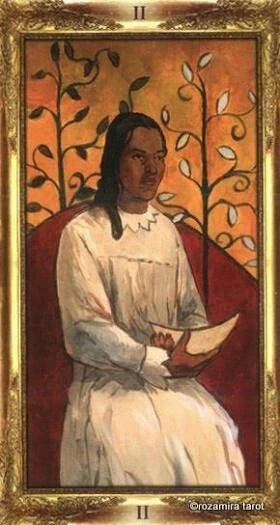
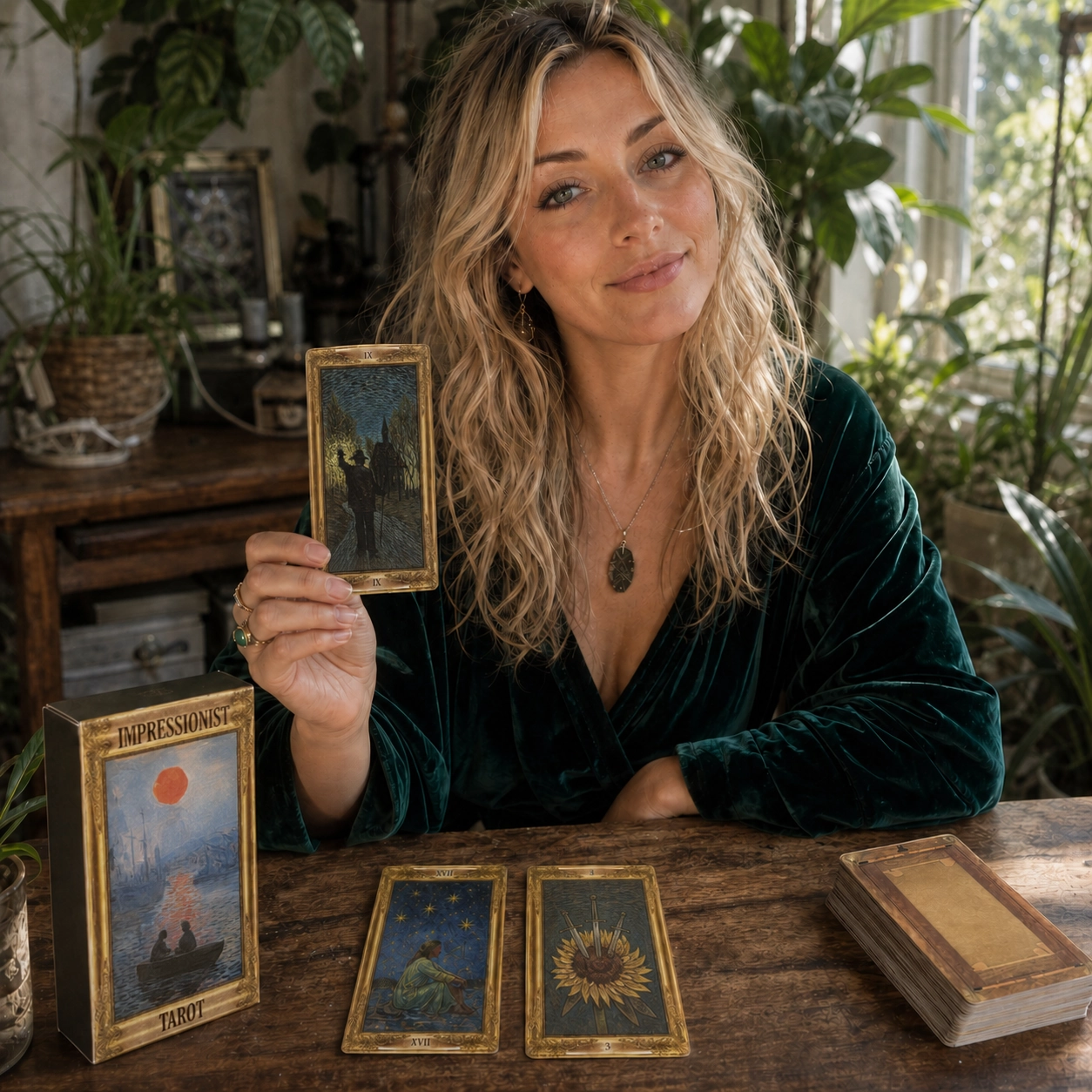
Aurica’s Quick Take
This deck feels like a quiet museum after closing. I notice the red sun, lonely road and turned shoulders before the symbols.
I follow whichever detail catches me, compare it with the card’s traditional role, then ask what practical action the surrounding cards support.
Its images deepen reflection, while wellbeing or money questions still deserve qualified care or advice alongside the cards.
I love how these painted scenes leave a little light on the path: even when the road is uncertain, one honest detail can help you find a hopeful next step.
What makes the Impressionist Tarot different?
The deck does not repaint one artist in seventy-eight variations. Instead, it gathers a broad impressionist and post-impressionist visual vocabulary: broken colour, outdoor light, private interiors, city haze, fields, water, portraits and moments that feel caught rather than posed. Ornate gold frames make each card look like a miniature painting hung in the same gallery.
That framing creates a lovely tension. The border is formal and almost ceremonial, while the scenes inside it breathe, shimmer and sometimes blur. In a reading, this invites two questions at once: what role does the tarot card traditionally play, and what feeling does this particular painted moment place around it?

The Hermit — a small lamp on a road already dark
A solitary figure stands on a deep blue road, arm raised with a tiny light. Tall trees and a narrow tower press into the distance, while the thick sky seems to move in short, restless strokes. Nothing here feels comfortably still; solitude is an active walk into uncertainty.
Upright, this Hermit asks for enough inner light to take the next step, not a perfect map. In shadow, the road can become isolation for its own sake. If this card appears, ask whether quiet is restoring your judgement or simply keeping other voices away.
How this deck reads in practice
Begin with colour and distance. Is the figure close enough to meet your gaze, or already walking away? Is the horizon open, hidden or crowded? Impressionist images often make the air itself meaningful, so the space around a person may say as much as the person.
Then return to the card’s traditional function. Let the painting change the temperature of the meaning without erasing its structure. A cup is still a cup and a sword is still a sword, but cool water, heavy cloud or a warm red field tells you how that element is being lived.
Four ways light changes a reading
These four cards move from private skill to distant hope, emotional opening and full illumination.
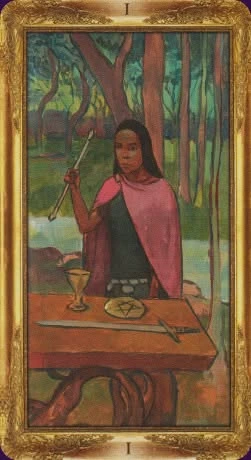
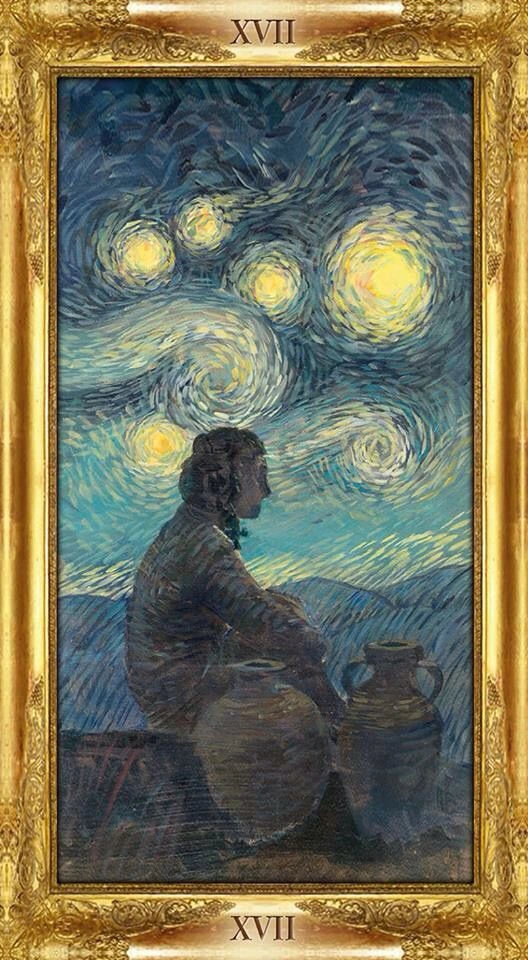
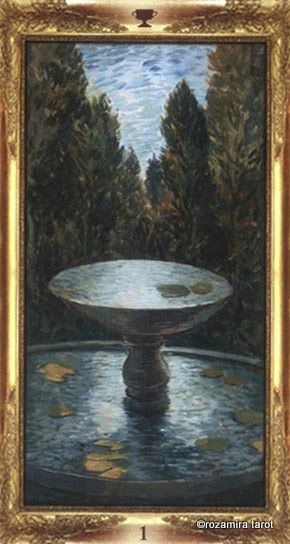
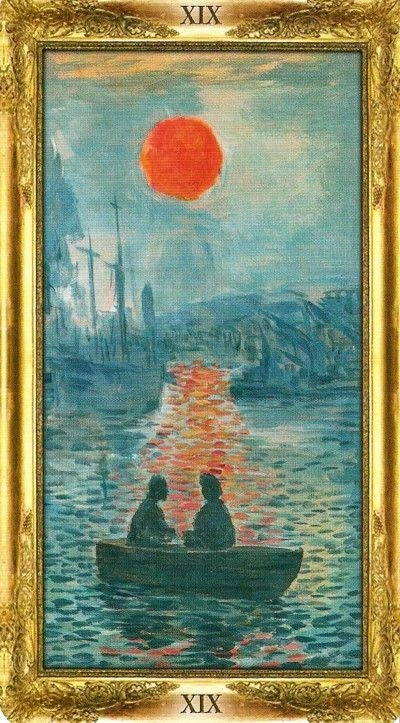
The Magician works at a table beneath trees; The Star turns a turbulent night sky into a field of living light; the Ace of Cups becomes a quiet basin holding sky and water; and The Sun burns red above a small boat. Together they show that clarity may arrive as craft, faith, receptivity or a moment too bright to ignore.
Is Impressionist Tarot beginner-friendly?
The titles, numbers and suit symbols keep the deck anchored in a familiar seventy-eight-card system, so a beginner is not learning an entirely new structure. The challenge is visual translation. Some scenes echo a classic meaning immediately; others communicate through mood rather than a familiar Rider–Waite–Smith tableau.
If you are new, pull one card and write down three things before opening a guidebook: the first colour you notice, the emotional distance of the main figure, and one practical action the picture suggests. That small ritual keeps intuition grounded in what is actually visible.
Easy reading
What colour describes the mood I am carrying today?
Medium reading
What detail in this situation have I been too hurried to notice?
Deep reading
Which story have I softened because the truth feels less beautiful?
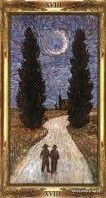
The Moon — companionship inside a narrow night path
A pale path rises between two dark, upright trees toward a thin crescent moon. Two small figures walk together near the centre, dwarfed by the night and by the tall shapes holding the road. The scene is spare, blue-black and quietly uncanny.
Upright, this Moon does not promise that uncertainty disappears; it offers companionship and a visible path through it. In shadow, the two figures may reinforce one another’s fear. Ask whether you are sharing honest observation or only making the same anxious story feel safer.
Art style, personality and reading tone
The deck’s personality is observant, wistful and surprisingly intimate. Even when a card contains a grand landscape, the feeling often lives in one human scale detail: a figure at a window, two people beside water, a boat under a red sun, a body angled away from us.
The gold frames keep spreads coherent, but the art inside them ranges from smoky brown interiors to electric blue skies and scarlet fields. That variety makes the deck useful for emotional comparison. In a multi-card reading, repeated colours can become a thread: where does blue cool the question, where does red demand attention, and where does gold feel earned rather than decorative?
People, distance and the space between them
Four cards show relationship through arrangement rather than explanation.

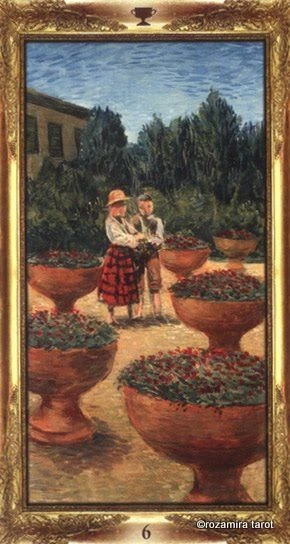

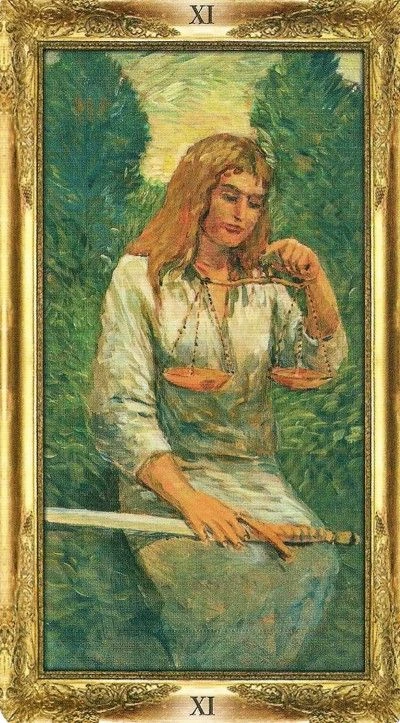
The Queen of Wands stands alone and self-possessed; the Six of Cups places two children among abundant flowers; the Two of Cups looks outward over water; and Justice sits in a green field with the sword laid across her lap. Connection, memory, partnership and fairness each have a different distance and posture.
Who will connect with this deck?
It is a beautiful match for art lovers, museum wanderers, journalers, intuitive readers and creative people who naturally notice colour, composition and atmosphere. It is also rewarding for readers who dislike crowded symbolism and prefer a single scene with room to breathe.
It may be less comfortable for anyone who needs every minor card to reproduce a familiar RWS scene, or who wants keywords printed directly on the card. Some of the recovered source images are modest in resolution, so collectors judging a physical edition should seek current seller photographs rather than treating web scans as proof of print quality.
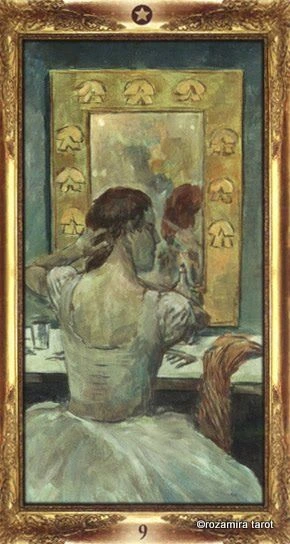
Nine of Pentacles — abundance seen in the mirror
A woman in a pale dress sits with her back to us before a large framed mirror. Her face appears only in reflection, while repeated golden leaf-like forms decorate the mirror’s border. The room feels private, cultivated and quietly self-aware.
Upright, the card makes self-sufficiency reflective rather than showy: enjoy what you have built, and recognise the person who built it. In shadow, the mirror can turn pleasure into constant self-evaluation. Ask whether refinement is nourishing you or keeping you busy measuring your own image.
Buying and edition guidance
Lo Scarabeo published Impressionist Tarot in 2015, with concept and text by Corrine Kenner and artwork by Arturo Picca. The deck-only edition contains seventy-eight cards and a multilingual booklet. Its cards measure approximately 66 × 120 mm and follow a Rider–Waite–Smith-based structure, while the faces use numerals, ranks and suit emblems rather than printed card titles.
The deck-only Amazon listing is ASIN 8865273631. A separate kit uses ASIN 886527364X and packages the same deck with a larger guidebook, so compare the listing and box before ordering. The currently verified online Gallery contains seventy-four exact fronts; The Fool, Judgement, Ten of Wands and Seven of Pentacles were unavailable in the supplied collection and have not been replaced with uncertain images. Amazon availability and price can change.
Motion, heartbreak, judgement and release
These cards turn movement into four different emotional pressures.

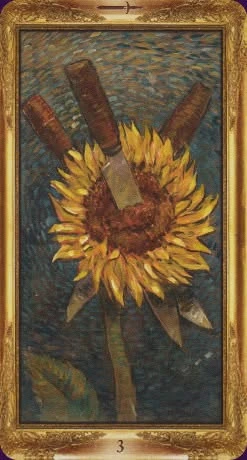
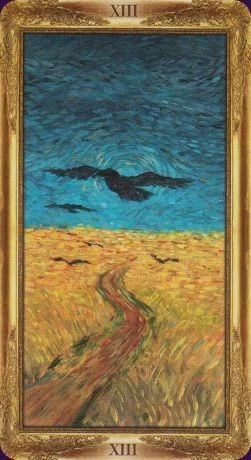
Masts crowd the Eight of Wands like a harbour ready to move; three blades meet inside a sunflower on the Three of Swords; Justice pauses with her sword across her lap; and Death becomes a dark bird flying over a bright harvested field. Speed, pain, decision and ending form a complete arc rather than four isolated predictions.
Aurica’s golden rule for Impressionist Tarot
Read the atmosphere, then name the action. Let the colour and brushwork tell you how the card feels, but do not stop at beauty. Finish every interpretation with one clear verb: wait, speak, leave, protect, practise, forgive, decide. The deck becomes practical when the painted mood is allowed to move.
Final thoughts
Impressionist Tarot succeeds because it trusts images to whisper. It does not pin every emotion to the page; it gives you light, weather, posture and distance, then lets meaning gather around them. The best cards feel familiar in the way a half-remembered dream feels familiar—close enough to touch, but still alive with ambiguity.
That softness needs an attentive reader, not a passive one. Look slowly, keep the traditional card structure beside you, and ask what the scene changes about the question in front of you. If art is already one of the ways you understand feeling, this deck can become an unusually eloquent reading companion.

Impressionist Tarot FAQ
Who created Impressionist Tarot?
Corrine Kenner developed the concept and text, Arturo Picca created the artwork, and Lo Scarabeo published the deck in 2015.
How many cards are in the deck?
It contains seventy-eight cards: twenty-two Major Arcana and fifty-six Minor Arcana in a Rider–Waite–Smith-based structure.
Why are some cards missing from the online Gallery?
The supplied source exposed seventy-four verified card fronts. The Fool, Judgement, Ten of Wands and Seven of Pentacles were not available there, so uncertain substitutes were not used.
Is Impressionist Tarot good for beginners?
Yes for visual beginners who enjoy learning through colour and mood. Readers who need exact Rider–Waite–Smith scenes may want a reference deck or keyword guide beside it at first.
What readings suit this deck best?
It is especially expressive for relationships, creativity, emotional reflection, journaling and questions where atmosphere or an unspoken feeling matters.
Where can I buy Impressionist Tarot?
The exact deck-only edition is sold under ASIN 8865273631. A separate kit uses ASIN 886527364X, so compare the box and included guidebook before ordering.


