The Gothic Tarot Card Gallery
Explore Joseph Vargo’s complete Gothic Tarot in canonical order, then filter the deck by Major Arcana or suit. Select any card to open the full-size Lightbox.
Aurica’s Quick Take
Joseph Vargo’s Gothic Tarot feels like entering a ruined chapel just after midnight: cold stone, a candle still burning, and the sense that every shadow is carrying a message. It is dramatic, but it is not empty theatre. Beneath the vampires, gargoyles, ghosts and dark angels sits a readable traditional tarot structure, so the deck can speak with real clarity when you let the atmosphere deepen the question rather than overwhelm it.
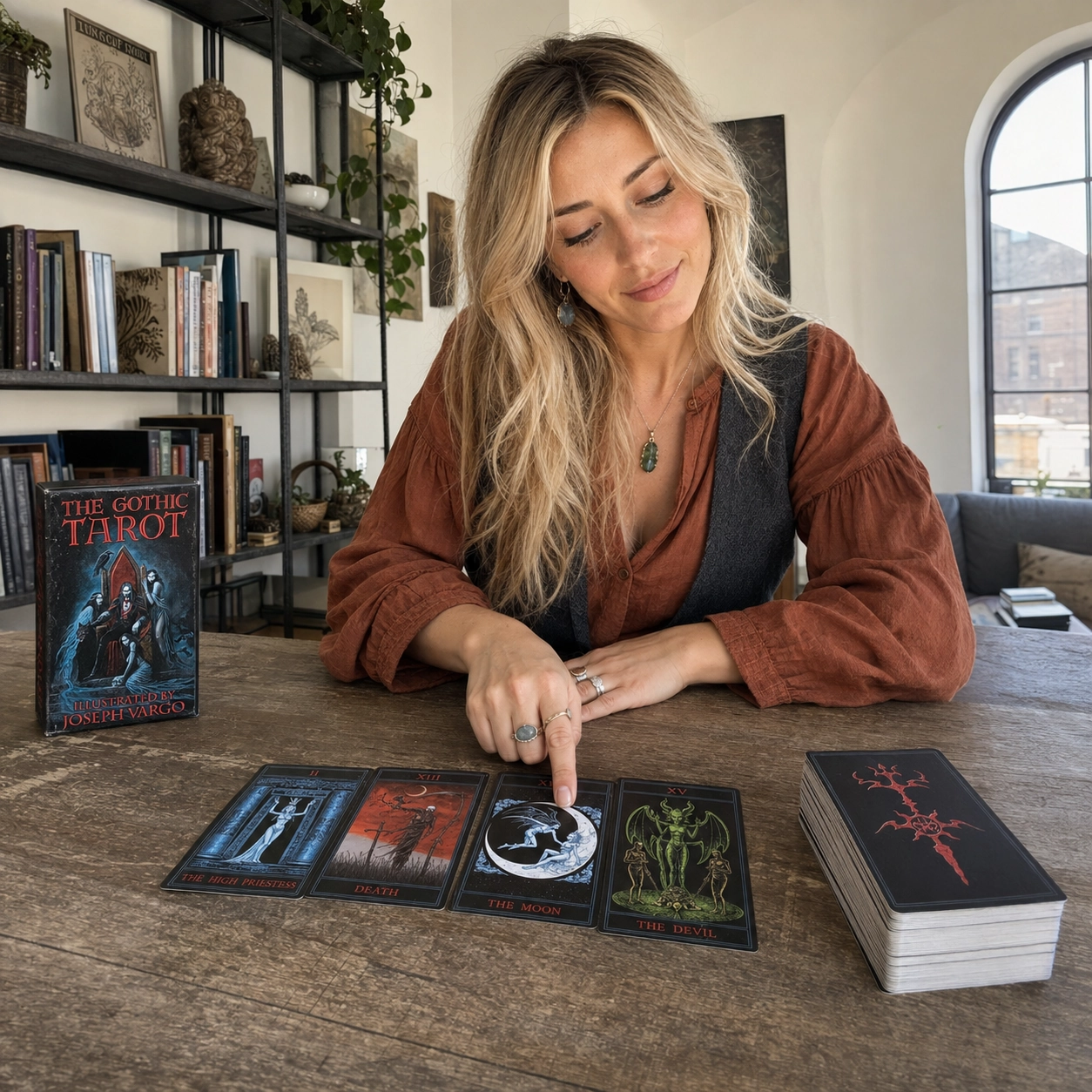
I am especially drawn to the conversation between The High Priestess and The Moon. One stands like a pale guardian inside carved stone; the other gathers two figures into the curve of a luminous crescent. Together they make uncertainty feel less like an empty room and more like a threshold. I ask what is being protected, what is only half-seen, and whether the surrounding cards offer a key, a warning, or the courage to wait.
In a reading, I begin with the colour that catches me—the blue chill of a crypt, the red flare of danger, the green glow around a horned figure—then return to the card’s familiar tarot role. That small return matters. It keeps the deck’s gothic beauty from turning every message into doom and helps me tell the difference between genuine shadow, useful caution, and a fear that has simply dressed itself in dramatic clothes.
I love this deck most when a question asks for honesty without cruelty. Its darkness can name what has been avoided, while its careful symbols show where choice still lives. Walk slowly through these painted shadows, and you may discover that the light you need has been travelling beside you all along.
A Gothic Tarot built from darkness and light
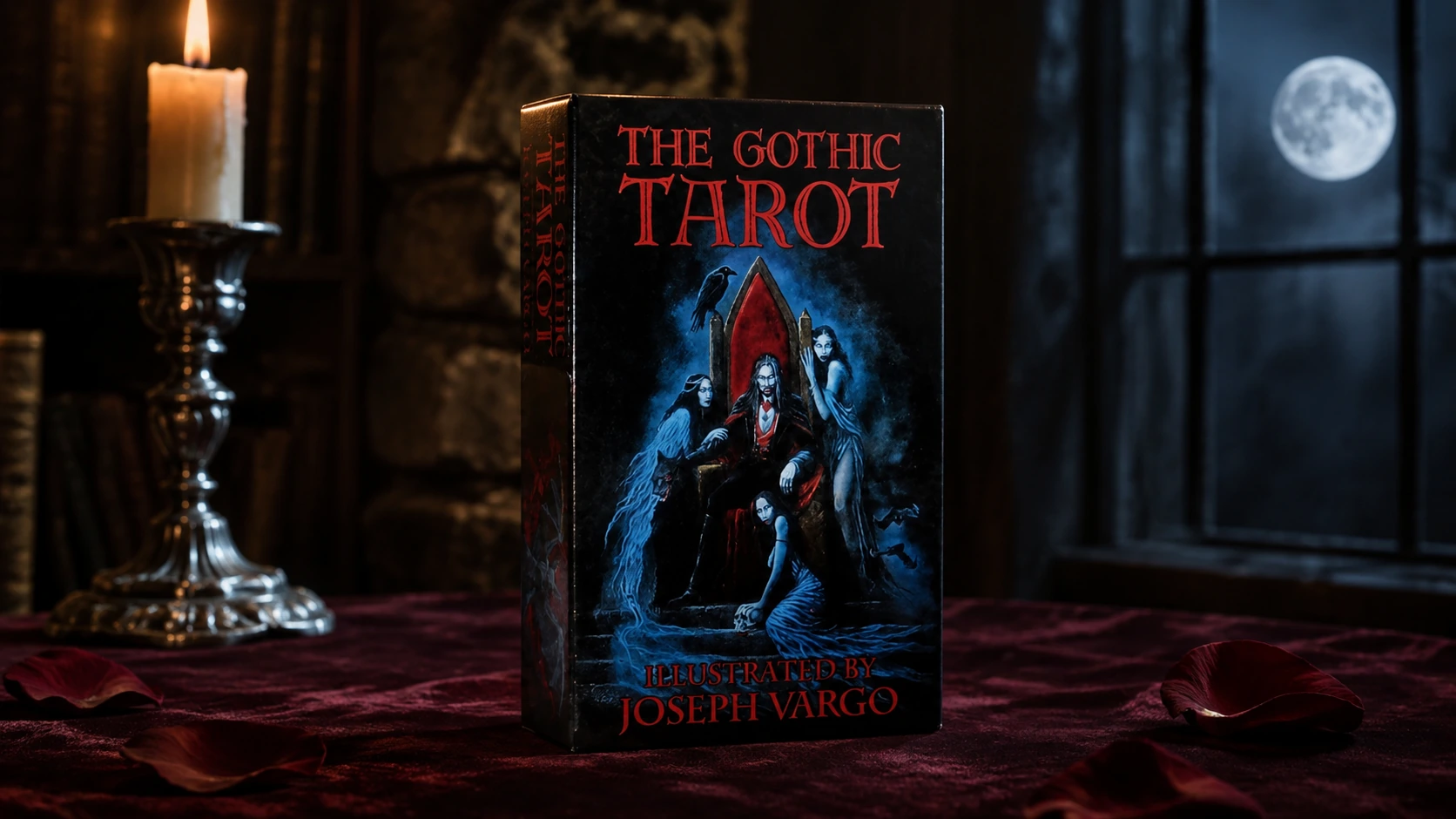
Joseph Vargo wrote and illustrated this independent 78-card deck, first published by Monolith Graphics in 2002. The boxed set includes every Major and Minor Arcana card, with a small instruction booklet; the separate Gothic Tarot Compendium is the fuller companion book, not the deck itself. That distinction matters when shopping, because the book and deck have different product identifiers.
The system is familiar enough for Rider–Waite–Smith readers, including fully illustrated Minor Arcana, but Vargo gives it an older numbering choice: Justice is VIII and Strength is XI. The courts use Knave rather than Page. Those small changes are easy to learn, while the imagery—moonlit ruins, winged guardians, iron gates and mist—changes the emotional temperature of a spread immediately.
CARD STUDY
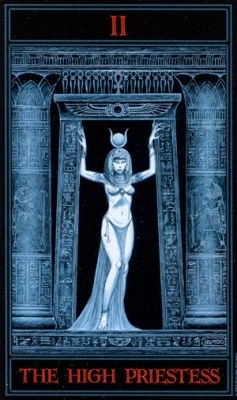
The High Priestess: silence with a pulse
Vargo places her in an Egyptian-styled stone doorway, pale against a black interior. A crescent-and-disc symbol rises above her head while her lifted arms make the whole image feel ceremonial rather than passive. Cool blue-white stone, narrow columns and the dark opening behind her turn intuition into a threshold you must choose to enter.
In a reading, I would treat this High Priestess as protected knowledge. Upright, she asks for stillness, privacy and trust in what has not yet found words. In shadow, the same sealed doorway can become secrecy, emotional distance or fascination with mystery for its own sake. Ask what your body already knows—and what evidence would make that knowing safer to follow.
How the deck reads in practice
This deck is excellent when a question has emotional weight. Its darkness slows the eye down. Instead of skimming a cheerful surface, you notice who is guarding the doorway, what is chained, where the light enters, and whether a figure is approaching or withdrawing. That makes it especially strong for boundaries, grief, desire, creative blocks, endings and the hidden motive beneath a choice.
I would not read every black sky as bad news. Vargo often uses darkness as contrast: pale figures become visible, red details become urgent, and a single moon or flame becomes enough to navigate by. The most useful question is not “What should I fear?” but “What becomes visible when the distractions go quiet?”
FOUR-CARD MOMENT
Four doors into the shadow
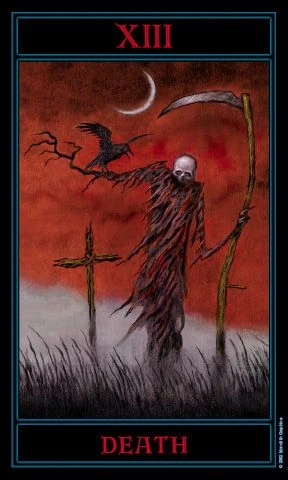
These four cards show how Vargo changes the traditional tarot journey into a nocturnal passage: curiosity crosses the threshold, Death clears the field, the Moon speaks in symbols, and the Devil reveals the chain.


Is The Gothic Tarot beginner-friendly?
Yes, with one gentle caution. The traditional structure and illustrated pips give beginners a dependable path, but the atmosphere can tempt you to make every card heavier than it is. Keep a basic meaning beside the image, then add the gothic mood as a second layer. The Ten of Cups is still fulfilment; the Sun is still illumination; shadow-rich artwork does not erase the card’s range.
Three useful prompts are: easy—what truth is ready to step into the light? medium—what boundary protects me, and which one isolates me? deep—what desire gains power when I refuse to name it?

CARD STUDY
Three of Swords: the clean shape of pain
There is nowhere for the eye to hide: a bright crimson heart floats in blackness while three blades pierce it. The central sword runs straight through the heart and the two angled blades create a rigid, almost heraldic symmetry. Vargo removes the human figure, leaving the wound itself as the entire landscape.
That simplicity makes the card blunt without making it cruel. It can name heartbreak, separation or a truth that has finally broken the surface. Its useful expression is honest grief; its shadow is repeatedly pressing the blade into an old story. In practice, ask what hurts, what is fact, and what part of the pain has become expectation rather than present reality.
Vargo’s visual language
The palette leans into black, blue-grey, bone-white and sudden crimson. Stone arches make decisions feel like crossings. Wings can suggest guardianship, burden or hunger depending on the figure wearing them. Mist softens certainty, while blades and pentacles arrive with crisp, hard edges. Even when a scene feels theatrical, its emotional grammar is usually direct.
The card frames are consistent and almost architectural, with red numerals or court titles against black. That continuity helps a full spread feel like one nocturnal world rather than a collection of unrelated fantasy paintings.
FOUR-CARD MOMENT
Love, ache and the stories we tell at night
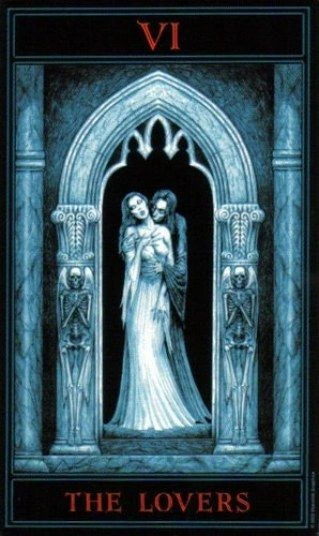
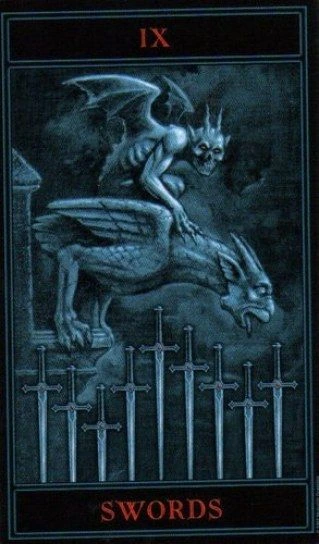
The Lovers brings intimacy beneath a stone arch; the Queen of Cups raises emotion into ritual; the Three and Nine of Swords show what happens when pain moves from the heart into the mind. Together they make a strong relationship check-in without pretending that intensity is the same as safety.

Who will connect with this deck?
I would recommend it to readers who love gothic art, vampires, gargoyles, dark angels and romantic melancholy—but also want a deck that can do more than decorate a shelf. It suits shadow work, relationship readings, creative practice, seasonal autumn or winter work, and questions where the querent already knows the polite answer but needs the honest one.
It may be less comfortable for someone who wants bright daylight, diverse modern everyday scenes or very literal visual cues. The cards are also larger than many standard decks, at roughly three by five inches, so small hands may prefer overhand shuffling or dividing the pack.
CARD STUDY
Queen of Cups: tenderness in the mist
A pale woman in a long black gown stands alone in blue-grey mist. One arm lifts a chalice toward the open sky while the other sleeve falls like a dark wing. Her face tilts upward, giving the gesture the feeling of an offering, a vow or a quiet conversation with something unseen.
She is emotionally open, but not unguarded. Upright, she invites compassionate listening and the courage to receive a feeling without rushing to fix it. In shadow, the fog can blur boundaries and turn empathy into absorption. When she appears, I would ask whose emotion is being carried—and whether the cup needs filling, sharing or gently setting down.
What I like most—and what to know before buying
What stays with me is the tenderness inside the darkness. The Lovers are intimate beneath a stone arch; the Queen of Cups lifts her chalice into the mist; even the Nine of Swords turns mental anguish into watchful gargoyles rather than a generic bedroom scene. The deck understands that fear, devotion and beauty can occupy the same room.
| What works beautifully | What to consider |
|---|---|
| Complete illustrated Major and Minor Arcana | Large cards may require a different shuffle |
| Traditional meanings remain readable | Justice VIII and Strength XI differ from many RWS decks |
| Consistent gothic world and dramatic color | Dark glossy surfaces can show wear more readily |
| Excellent for emotional and shadow-focused questions | The included booklet is brief; the Compendium is separate |
FOUR-CARD MOMENT
Mystery, desire, authority and risk
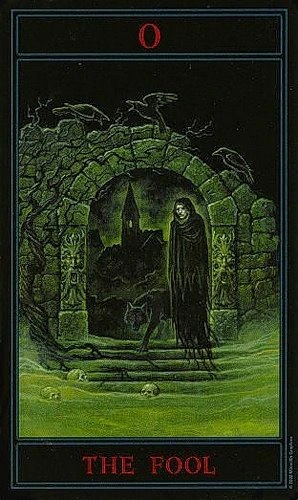
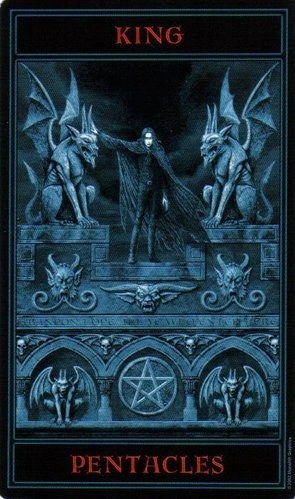
The High Priestess guards the unseen, the Devil exposes appetite and attachment, the King of Pentacles sits inside hard-won structure, and the Fool steps beyond the known wall. Read them as four different relationships with power: withheld, compulsive, established and untested.
The golden rule for reading The Gothic Tarot
Let the darkness reveal contrast; do not let it decide the verdict. Start with the traditional card function, observe where Vargo places the light, and only then add the creature, ruin or night sky. This keeps a beautiful gothic image from turning every reading into a warning.
Final Thoughts
The Gothic Tarot is a rare themed deck whose atmosphere and structure strengthen each other. Vargo’s world is unmistakable, yet the cards remain practical enough for real spreads. If you want a tarot that can sit beside grief without flinching, explore desire without moral panic, and still recognize hope when it appears as one pale light in a black room, this deck has a powerful voice.
The Gothic Tarot FAQ
Who created The Gothic Tarot?
The deck was written and illustrated by gothic fantasy artist Joseph Vargo and published independently by Monolith Graphics.
How many cards are in Joseph Vargo’s Gothic Tarot?
It is a complete 78-card tarot with 22 Major Arcana and 56 Minor Arcana cards.
Does it follow Rider–Waite–Smith meanings?
Its structure and fully illustrated Minors are broadly familiar to RWS readers. Justice is numbered VIII, Strength XI, and the court rank normally called Page is printed as Knave.
Does the deck include a guidebook?
The boxed deck includes a short instruction booklet. The 224-page Gothic Tarot Compendium is a separate companion book, so check the listing carefully if you want both.
Is the deck only suitable for shadow work?
No. It is especially expressive with shadow, grief and desire, but the traditional card range remains intact. Positive cards still carry hope, connection, clarity and fulfilment.
Is this the Anne Stokes Gothic Tarot?
No. This review and Gallery cover Joseph Vargo’s The Gothic Tarot from Monolith Graphics. It is a different deck from Anne Stokes’ Gothic Tarot.