Arthurian Tarot Cards
Browse this verified partial archive by the deck’s official groups, then open any card in the larger accessible Lightbox. Missing artwork is not padded or invented.
A note from Aurica
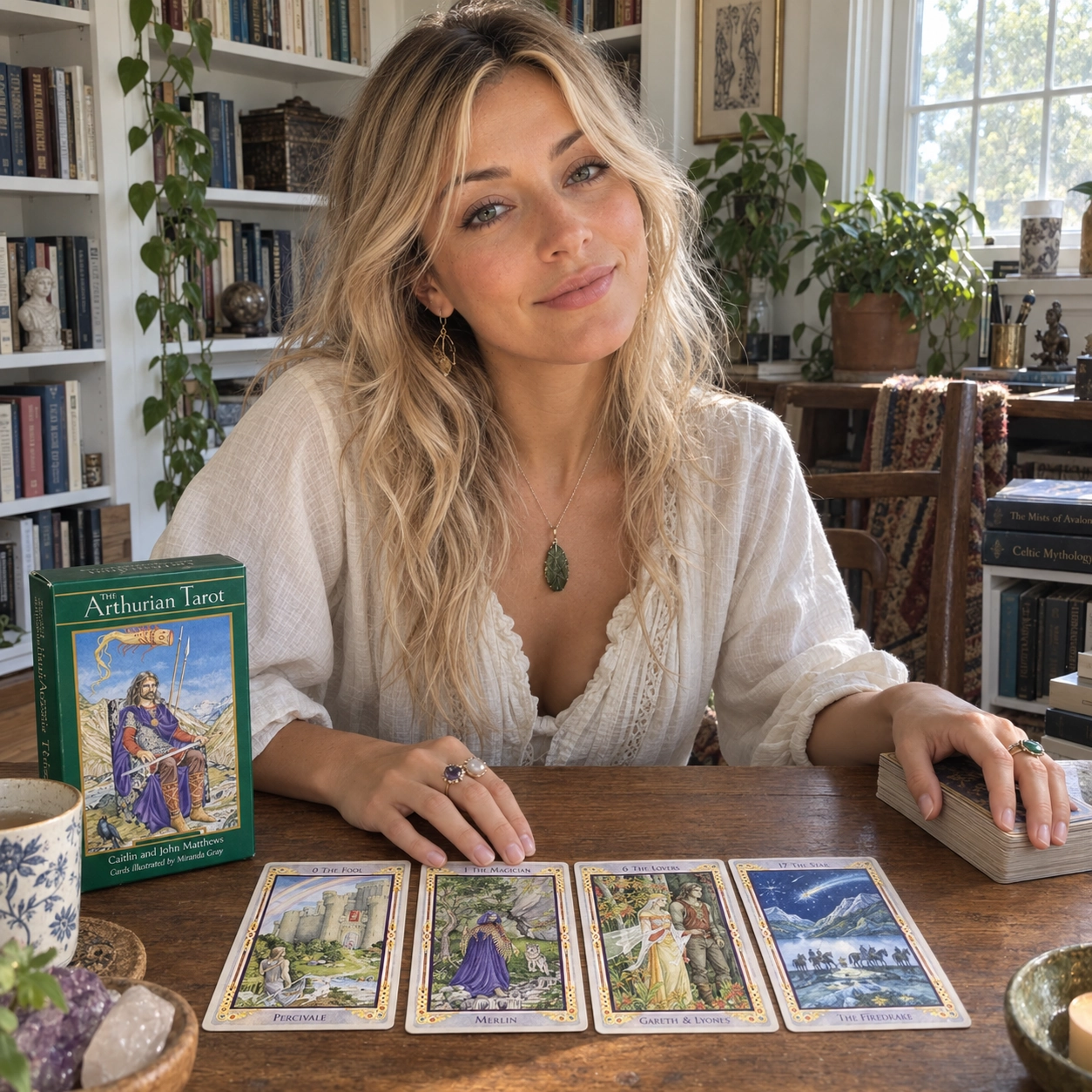
The first thing I feel with the Arthurian Tarot is that I have stepped into a story already in motion. Percivale does not arrive as a blank beginning; he stands before a castle, carrying innocence into a world of vows, tests, and consequences. Merlin feels just as grounded in place. These cards ask me to read character as carefully as symbol.
I especially love the names beneath the familiar archetypes. They do not replace the tarot meanings for me; they give them a human voice. The Fool becomes someone who must discover what courage costs, while the Magician becomes a guide whose knowledge can illuminate or complicate the road ahead. In a reading, that makes every position feel like a chapter rather than a label.
The misty watercolours and fine Celtic borders reward a slower gaze. I notice who faces the path, who turns away, where water gathers, and whether a figure is protected by walls or exposed to weather. I begin with that physical scene, then let the traditional card meaning enter. The result is often more specific, and more emotionally honest, than starting with a memorised keyword.
This is a deck I would reach for when a question involves loyalty, belonging, responsibility, or a decision that affects more than one person. Its courtly atmosphere can sound grand, yet the best readings stay intimate: What promise am I making? Which part of the quest is truly mine? Am I listening to wise counsel, or only to the version of the story I hoped to hear?
My favourite way to begin is with two cards: one for the role you have been playing and one for the quality the journey now asks you to embody. Let the figures meet across the table before you search for a verdict. The Arthurian stories endure because bravery is rarely perfect; it is renewed each time we choose the next honest step.
I read the Arthurian Tarot as a mythic quest deck with a very practical heart. It brings King Arthur, Camelot, Merlin, the Lady of the Lake, sacred halls, wild roads, and Grail-search symbolism into tarot without making the reading feel trapped in a museum. The mood is old Britain, mist, vows, hidden tests, and the question every good quest asks: what kind of person am I becoming through this choice?
This is the kind of deck I reach for when a question feels like more than a quick mood check. It is great for decisions about loyalty, courage, timing, friendship, purpose, and the difference between chasing glory and following a real calling. The art has a storybook, legendary feeling, but I still read it in everyday language. If someone asks about school, work, love, family, or a confusing next step, I let the Camelot symbols become simple advice: keep your promise, choose your road, speak honestly, rest before battle, or stop pretending the quest is still yours.
The TarotFans native gallery currently shows 77 available Arthurian Tarot card-front images. I am treating that count honestly as a near-complete partial gallery instead of claiming every card image is displayed. The missing image does not stop the deck’s voice from coming through clearly: majors as mythic archetypes, Spears for fire and action, Cups for the Grail-heart, Swords for truth and conflict, and Shields for the body, land, money, and daily life.
What makes the Arthurian Tarot different?
The deck’s strongest feature is how it turns tarot into a round-table story. The majors feel like archetypal meetings: the brave beginner, the magician-guide, the ruler, the wounded seeker, the shadowed wilderness, the star of hope. Even when a card keeps its familiar name, the Arthurian setting changes the flavor. The Fool is not only “new beginning.” It becomes the first step out of the village. The Chariot is not only “willpower.” It becomes the knight deciding which road deserves discipline. The Hermit feels like counsel from a cave, chapel, or lonely hill where the noise of court finally goes quiet.
Deck-specific card study
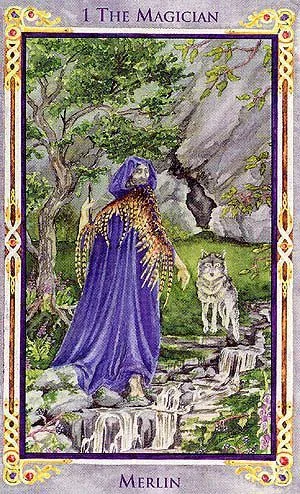
The Magician: Merlin energy with real-world focus
The Magician is where I feel the Merlin side of this deck most strongly. I do not read it as “magic fixes everything.” I read it as skill, timing, words, and focused will. In an everyday reading, this card asks what tools are already on the table. Do you need to send the message, make the plan, study the craft, or stop waiting for permission? The Arthurian mood makes The Magician feel like wise strategy before the quest begins.
I also like the way the suits make daily decisions feel like sacred tests. Spears are the fire of action, ambition, defense, and courage. Cups hold emotion, longing, friendship, healing, and Grail desire. Swords bring the hard air of truth, conflict, strategy, and words that cannot be unsaid. Shields feel earthy and protective: resources, home, health, craft, patience, and the real cost of a promise. That structure makes the deck easy to use even if the mythic setting feels big at first.
Choosing the quest instead of the performance
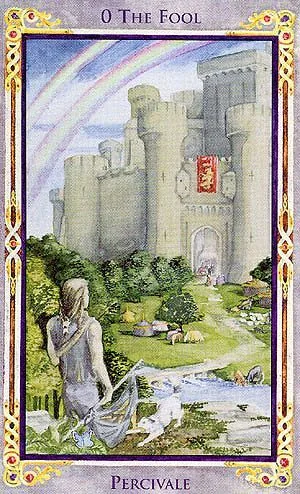
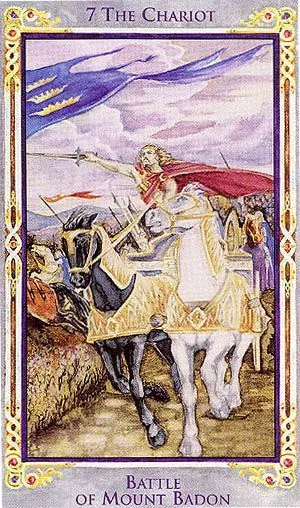
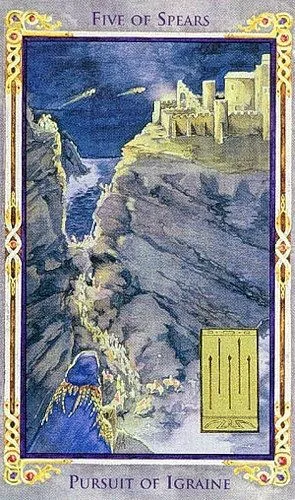
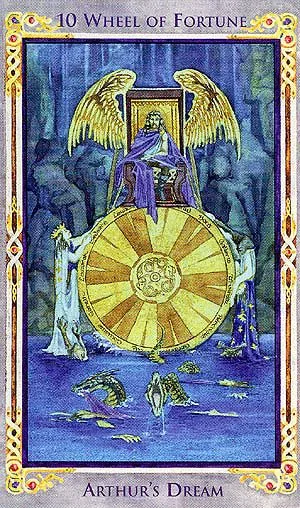
This line starts with a new road, adds discipline, then shows conflict, competition, or pride, and ends with a turning wheel. I would read it as a warning not to confuse the quest with the applause. The next step needs courage, but it also needs flexibility when the road changes.
For beginners, Arthurian Tarot may take a little patience because the images ask you to think symbolically. It is not as instantly literal as a modern everyday deck. Still, the story helps. Most people understand quests, tests, kings, queens, helpers, rivals, sacred cups, broken vows, and the need to choose wisely. If you already know tarot, this deck gives the cards a deep mythic skin without losing the core meanings.
How I use this deck in real readings
My favorite Arthurian Tarot questions are grounded but meaningful: “What is the honorable next step?” “Where am I acting from pride instead of purpose?” “What is my Grail in this situation?” “Which ally, boundary, or skill do I need now?” The deck can handle romance, but I do not read it as soft fantasy romance only. Camelot stories include loyalty, temptation, duty, grief, friendship, public choices, private wounds, and the price of ignoring the truth.
Deck-specific card study
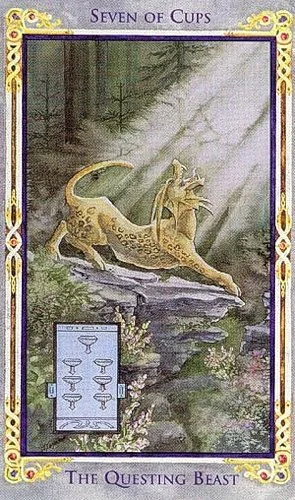
Seven of Cups: the Grail search can become a maze
The Seven of Cups is perfect in this deck because the Grail quest is full of visions, temptations, and almost-right paths. I read it as a beautiful warning: not every shining cup is the true cup. In love, it can show fantasy before commitment. In work, it can show too many dreams and no chosen road. The advice is not to kill the imagination. It is to ask which vision can survive contact with real life.
When a reading feels stuck, I ask the deck to separate the quest from the costume. The costume is what looks heroic from the outside. The quest is what actually grows the soul. A Spears card may say to act, but not to rush. A Cups card may ask what the heart is really seeking. A Swords card may demand a clean conversation. A Shields card may say the answer is not dramatic at all; it is sleep, savings, study, food, repair, or steady work.
A Grail question in love or friendship
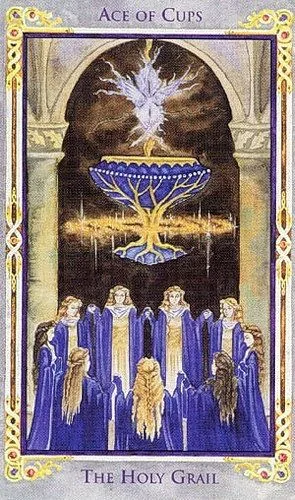
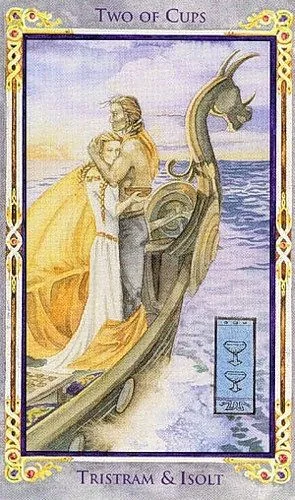
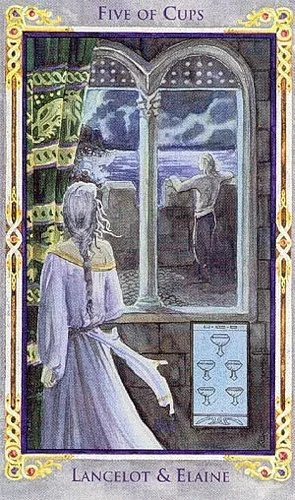
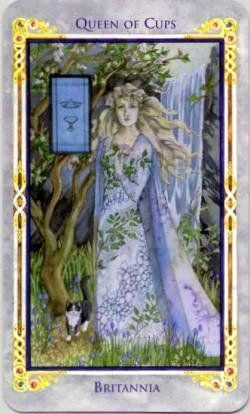
Here the cup opens, connection appears, grief enters, and emotional wisdom answers. I would use this for a friendship repair or relationship question. The message is not “everything is perfect.” It is “feel what is true, honor the loss, and respond from maturity instead of panic.”
Who will enjoy this deck?
I think Arthurian Tarot is best for readers who love myth, folklore, quests, courtly choices, Celtic-flavored atmosphere, and tarot that feels like a story with moral weight. If you enjoy asking “What is the lesson?” or “What is the honorable road?” this deck gives you a rich language for that. It is also a strong match for journaling, pathworking, seasonal readings, character archetype work, and spreads about personal purpose.
Truth before the round table
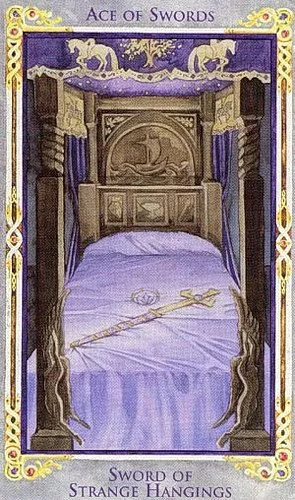
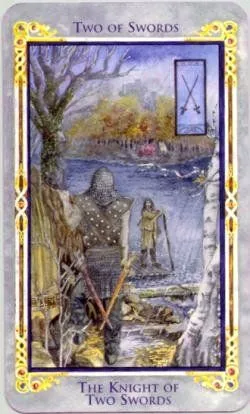
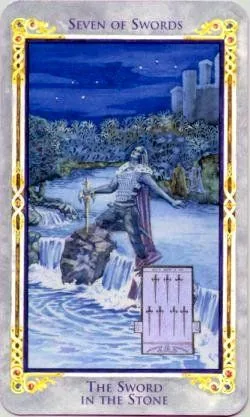
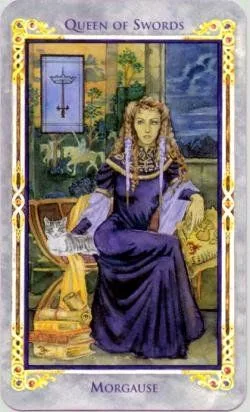
This moment is about speech and strategy. A clean truth appears, then someone hesitates, then secrecy or clever avoidance complicates the room. The Queen of Swords says the answer is calm, precise honesty. No shouting, no riddles, no court gossip. Say the thing clearly.
It may not be the best first choice if you want bright modern scenes, very simple keywords, or a deck that looks exactly like standard Rider-Waite-Smith symbolism in every card. Some cards ask you to sit with the image and let the myth speak. For me, that is part of the charm. The deck slows the reading down just enough to make the question feel important.
My favorite spread for Arthurian Tarot
My favorite spread for this deck is four cards: the quest, the test, the ally, and the honorable next step. The quest names what the reading is really about. The test shows the challenge or temptation. The ally may be a person, skill, boundary, or inner strength. The honorable next step keeps the reading practical. It stops the deck from becoming only legend and brings the message back to real life.
Deck-specific card study
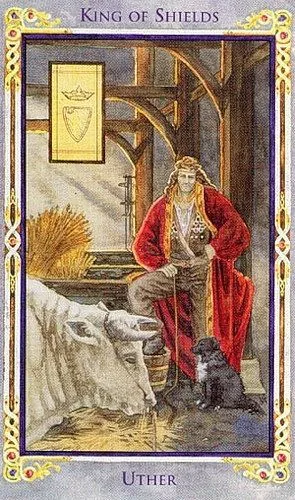
King of Shields: stewardship over status
The King of Shields is not flashy, but he matters. In this deck I read him as stewardship: caring for the land, the body, the home, the budget, and the people who depend on steady choices. If this card appears in a career reading, I ask about responsibility and long-term trust. In a family or relationship reading, it can show the need to protect what is real instead of chasing applause.
For reversals, I read the mythic energy as blocked, misused, delayed, or turned inward. A reversed Spear may show courage turning into impatience. A reversed Cup may show the Grail being chased in the wrong place. A reversed Sword may show truth withheld or weaponized. A reversed Shield may show poor stewardship of time, money, health, or trust. That keeps reversals useful without making them scary.
Building a kingdom one steady choice at a time
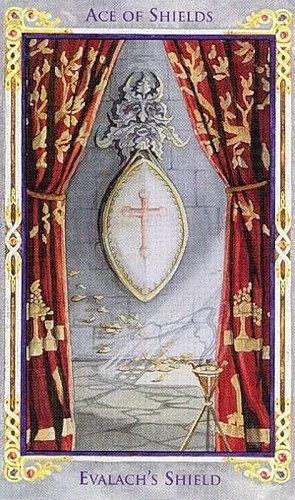
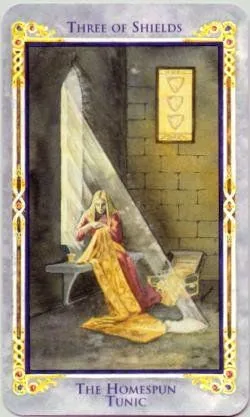
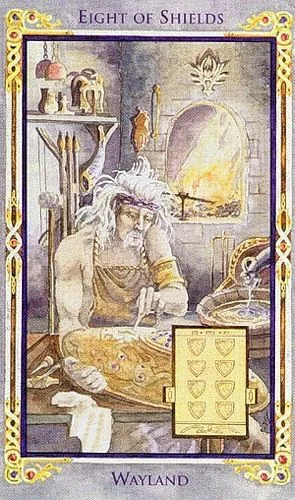
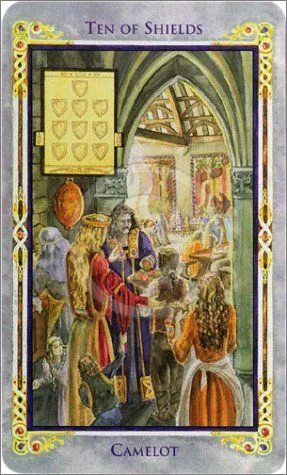
This is the most practical Camelot line. It begins with a real opportunity, adds teamwork, then asks for practice, and ends with long-term stability. I would use it for school, business, home, health, or money. The kingdom is not built by one dramatic sword swing. It is built by steady craft.
Final thoughts
The Arthurian Tarot is a beautiful deck for people who want tarot to feel like a quest, not just a quick answer. Its best gift is helping me ask better questions. What vow matters here? What temptation is distracting me? What cup am I really seeking? What truth belongs at the round table? What kind of kingdom am I building through small choices?
I would not use it when I need a super-fast, ultra-literal pull. I would use it when the question deserves space, symbolism, and a little courage. If you love Camelot, Grail stories, Merlin-style wisdom, and readings that turn myth into action, Arthurian Tarot still has a strong voice.
Arthurian Tarot FAQ
Is the Arthurian Tarot good for beginners?
It can work for beginners who enjoy myth and story-based reading, especially with the guidebook nearby. It is less instantly literal than some modern decks, but the quest imagery makes the cards memorable.
What kinds of readings fit the Arthurian Tarot best?
I like it most for purpose, loyalty, conflict, courage, spiritual growth, relationship choices, career direction, and questions where the querent needs an honorable next step instead of a quick yes or no.
Does the deck only work if I know King Arthur stories?
No. Knowing the legends adds depth, but the images still speak through familiar ideas like quests, helpers, tests, choices, wounds, healing, and responsibility. You can read it practically without being an Arthurian expert.
How do the suits feel in this deck?
Spears feel fiery and active, Cups carry emotion and Grail longing, Swords bring truth and conflict, and Shields handle earth matters like resources, home, health, protection, and steady work.
Is Arthurian Tarot good for love readings?
Yes, especially when the love question involves loyalty, honesty, temptation, repair, emotional maturity, or choosing the right path. I would not use it for fluffy romance only; it is stronger when the relationship question has real depth.
Does this TarotFans gallery show every card?
No. This is a verified partial archive, and missing card artwork is not padded with uncertain images.